
Startled by a sorry-looking supermarket salmon sale, I once turned a mediocre fillet into a restaurant-level dinner in under 30 minutes, and my family ate seconds without asking. This recipe gives you a reliable, creamy garlic sauce that adds 3 cups of baby spinach and bright lemon to a simple pan-seared salmon, delivering roughly 30 grams of protein per serving and a vivid aroma of browned butter and garlic. If you want a spicier sibling recipe, check my Cajun twist for the same garlic cream vibe at Cajun shrimp and salmon variation.
Print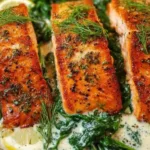
Pan-Seared Salmon with Creamy Garlic Sauce
- Total Time: 30 minutes
- Yield: 4 servings 1x
- Diet: Pescatarian
Description
A quick and foolproof pan-seared salmon with a creamy garlic sauce, baby spinach, and bright lemon, delivering a delightful flavor combination.
Ingredients
- 4 (6-ounce) salmon fillets
- Kosher salt (to taste)
- Freshly ground black pepper (to taste)
- 1 1/2 tablespoons unsalted butter
- 2 cloves garlic (minced)
- 1 medium shallot (diced)
- 2 tablespoons all-purpose flour
- 1/4 cup dry white wine
- 3/4 cup chicken stock
- 3/4 cup half and half
- 3 cups baby spinach
- 2 tablespoons chopped fresh dill
- 1 lemon (cut in wedges)
Instructions
- Pat both sides of the salmon fillets dry; season with salt and pepper.
- Melt butter in a large cast iron skillet over medium heat. Add salmon fillets, skin side up, and cook until golden brown, about 4-5 minutes.
- Flip the salmon and cook for an additional 4-5 minutes, or until desired doneness.
- Remove salmon and keep warm.
- Reduce heat; add garlic and shallots to the skillet, cooking until fragrant, about 2 minutes.
- Whisk in flour until lightly browned, about 1 minute.
- Stir in wine, scraping the bottom of the skillet to incorporate browned bits.
- Add chicken stock and half and half, stirring until slightly thickened, about 2-3 minutes and season with salt and pepper to taste.
- Stir in spinach until wilted, about 1-2 minutes. Return salmon to the skillet and sprinkle with dill.
- Serve immediately with lemon wedges.
Notes
For a lower-calorie option, use lighter milk instead of half-and-half. Adding a squeeze of lemon brightens the dish.
- Prep Time: 10 minutes
- Cook Time: 20 minutes
- Category: Main Course
- Method: Pan-Searing
- Cuisine: American
Nutrition
- Serving Size: 1 salmon fillet with sauce
- Calories: 520
- Sugar: 1g
- Sodium: 500mg
- Fat: 36g
- Saturated Fat: 14g
- Unsaturated Fat: 20g
- Trans Fat: 0g
- Carbohydrates: 8g
- Fiber: 1.5g
- Protein: 32g
- Cholesterol: 100mg
Why This Salmon with Garlic Cream Sauce Never Fails
This dish is foolproof because it relies on contrasts: a crisp, golden sear on the salmon and a silky, slightly tangy cream sauce to balance it. The cooking window is forgiving; even slightly overcooked salmon still shines under the sauce. Think of the method as two mini-recipes in parallel — sear, then sauce — which makes timing easy and results repeatable for weeknights and guests alike.
Ingredient Lineup
- 4 (6-ounce) salmon fillets
- Kosher salt and freshly ground black pepper (to taste)
- 1 1/2 tablespoons unsalted butter
- 2 cloves garlic (minced)
- 1 medium shallot (diced)
- 2 tablespoons all-purpose flour
- 1/4 cup dry white wine*
- 3/4 cup chicken stock
- 3/4 cup half and half*
- 3 cups baby spinach
- 2 tablespoons chopped fresh dill
- 1 lemon (cut in wedges)
Step-by-Step Method
- Using paper towels, pat both sides of the salmon fillets dry; season with 1 teaspoon salt and 1/2 teaspoon pepper. (Pro tip: Dry fish sears better; pat until the towel no longer picks up moisture.)
- Melt butter in a large cast iron skillet over medium heat. Add salmon fillets to the skillet, skin side up, and cook until golden brown and a crust has formed, about 4-5 minutes. (Pro tip: Hear a steady sizzle but not furious popping; adjust heat to keep the crust even.)
- Using a fish turner, flip, and cook for an additional 4-5 minutes, or until desired doneness. (Pro tip: For medium, aim for an internal temp of 125 to 130 F; the fish will carryover cook when resting.)
- Remove and keep warm. (Pro tip: Tent loosely with foil to preserve heat without steaming the crust.)
- Reduce heat to low; add garlic and shallots, and cook, stirring frequently, until fragrant, about 2 minutes. (Pro tip: Keep stirring so garlic browns evenly and does not burn, which tastes bitter.)
- Whisk in flour until lightly browned, about 1 minute. (Pro tip: Cook the flour long enough to remove raw taste but not so long that it darkens to an undesirable color.)
- Stir in wine, scraping any browned bits from the bottom of the skillet. (Pro tip: Scraping those bits — fond — is flavor gold; let the wine reduce briefly to concentrate flavor.)
- Stir in chicken stock and half and half until slightly thickened, about 2-3 minutes; season with salt and pepper, to taste. (Pro tip: If the sauce gets too thick, thin with a splash of chicken stock rather than water to keep flavor.)
- Stir in spinach until wilted, about 1-2 minutes. Return salmon to the skillet; sprinkle with dill. (Pro tip: Add spinach last so it wilts quickly and keeps color and texture.)
- Serve immediately with lemon wedges. (Pro tip: A squeeze of lemon just before eating brightens the sauce and cuts through the richness.)
- If you want a low-cream alternative, try tossing the finished sauce with pasta and vegetables; it makes a light pasta dinner. (Pro tip: Use a large pan and reserve some pasta water to adjust sauce consistency.)
After the main steps, a reminder: for a cream-free creamy effect, there are ways to swap in avocado or extra chicken stock — see an alternate creamy avocado idea in my other recipe for inspiration at salmon pasta without cream.
Nutrition Breakdown
Per serving (one 6-ounce fillet plus sauce and spinach): serving size about 1 plate; approximately 520 calories; protein around 32 grams; carbohydrates roughly 8 grams; fat about 36 grams; fiber 1.5 grams. This is a protein-forward dinner with moderate fat from butter and half and half; swapping half-and-half for a lighter milk or using less butter lowers calories and fat while keeping the protein respectable.
Short health insight: Salmon is rich in omega-3s and high-quality protein, and the spinach and lemon add vitamin C and iron absorption benefits, making this a balanced dish when paired with a whole-grain side or simple salad.
Perfect Pairings
Serve this salmon family-style straight from the skillet or plate individually with lemon wedges on the side. Crisp options: a light arugula salad with shaved fennel and a lemon vinaigrette, roasted fingerling potatoes tossed with rosemary, or simple buttered quinoa.
For a casual pasta night, toss the sauce with al dente linguine and extra spinach.
If you want a creamy alternative pairing, my creamy avocado variation plays nicely on the same plate and adds a green, silky contrast, see the creamy avocado salmon sauce idea at creamy avocado salmon sauce. This dish also performs well for spring dinners when asparagus is in season or cozy winter meals with roasted root vegetables.
How to Store It Right
Fridge: Cool the salmon and sauce to room temperature for no more than 2 hours, then store in an airtight container for up to 3 days. To keep fillets intact, store sauce separate from fish if possible.
Freezer: You can freeze cooked salmon in sauce for up to 1 month in a freezer-safe container, but texture will soften after thawing.
Reheat: Thaw overnight in the fridge if frozen. Reheat gently in a skillet over low heat covered, or microwave at 30-second intervals until warm; add a splash of chicken stock to loosen the sauce and protect the fish from drying.
Freshness tip: Add a fresh squeeze of lemon before serving leftovers to revive flavors and brightness.
Expert Tips
- Control the crust: Pat the salmon completely dry and give the skillet time to get hot; a medium-hot cast iron gives the best even crust without burning.
- Sauce texture: Whisk the flour into the fat and cook until it smells toasty; when you add liquid, whisk constantly to avoid lumps and achieve a silky finish.
- Timing trick: Start the sauce while the salmon rests; the residual heat finishes the fish and keeps everything hot for plating.
- Flavor layering: Finish with fresh dill and lemon; the fresh herbs wake up the cream and make the dish taste lighter and more complex.
Easy Variations
- Seasonal (spring): Swap dill for tarragon and stir in blanched asparagus tips with the spinach for a spring-forward plate.
- Gourmet: Add a tablespoon of capers and finish with a drizzle of high-quality extra virgin olive oil and a flake salt sprinkle for a briny, restaurant-style finish.
- Playful: Stir in a spoonful of harissa or smoked paprika into the sauce for a smoky-spicy twist that kids can pass on if preferred.
Mistakes to Avoid
- Mistake: Cooking wet salmon in a cold pan. Fix: Always dry the fish and preheat the pan; that golden crust depends on dryness and heat.
- Mistake: Burning the garlic. Fix: Lower the heat to low for garlic and shallot and stir constantly; burnt garlic ruins the sauce.
- Mistake: Lumpy sauce when adding liquids. Fix: Whisk the roux thoroughly and add liquids gradually while whisking to keep it smooth.
- Mistake: Overcrowding the pan when searing. Fix: Cook in batches or use a larger skillet so each fillet gets proper contact with the surface for even browning.
What to Do with Leftovers
- Salmon salad: Flake leftover salmon and toss with a little of the cream sauce, lemon zest, diced celery, and greens for a quick lunch.
- Creamy salmon pasta: Warm the sauce, toss with short pasta and flaked salmon, add a handful of peas, and serve with grated Parmesan.
- Savory toast: Spoon warm flaked salmon and sauce over toasted sourdough, top with arugula and an extra squeeze of lemon for an open-faced sandwich.
FAQs
Q: Can I use frozen salmon for this recipe?
A: Yes, but thaw completely and pat very dry before seasoning; partially frozen fish steams rather than sears, which prevents you from getting that desirable crust. Aim to thaw in the fridge overnight for best texture.
Q: What can I substitute for half and half?
A: Substitute equal parts milk plus a tablespoon of butter or use light cream for a richer sauce. For a lower-calorie option, use whole milk and reduce the butter slightly, but the sauce will be thinner and may need a bit more flour to thicken.
Q: Can I make this dairy-free?
A: Use dairy-free butter and swap half and half for full-fat canned coconut milk or a cashew cream for richness. Keep the technique identical and finish with lemon and dill to balance the swap.
Q: How do I tell when the salmon is done without a thermometer?
A: Pierce at the thickest part; the flesh should flake easily but still look slightly translucent in the center for medium doneness. Resting will finish the cooking to perfect doneness.