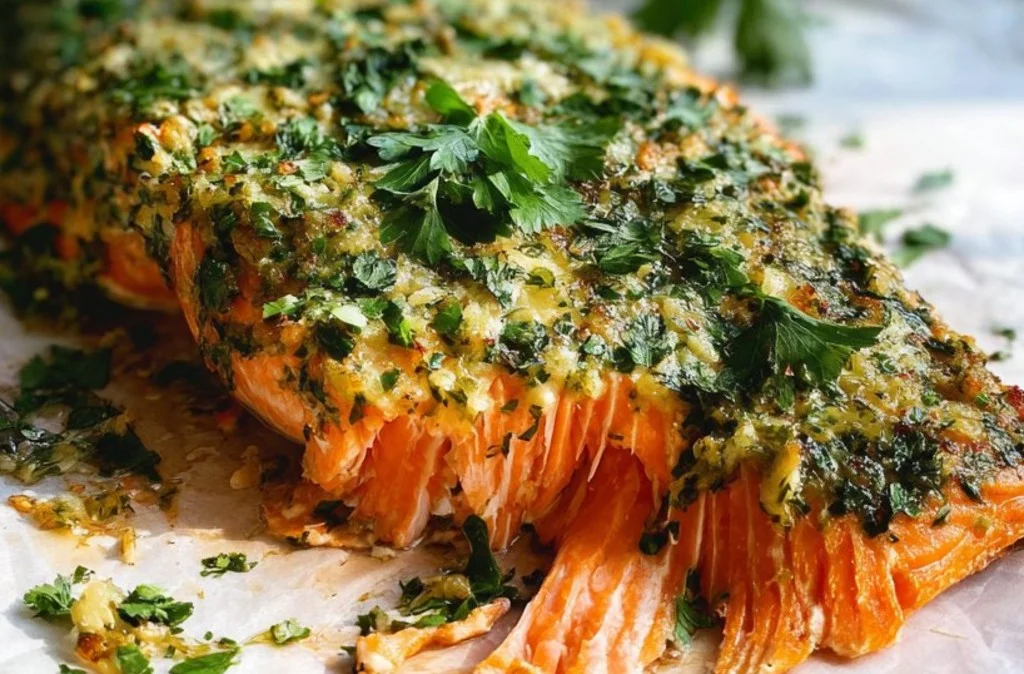
Startled by too-many-kitchen-fails, I once ruined a prized filet by overbaking it to cardboard in front of guests, lesson learned, and now I treat Dijon baked salmon like a reliable weekday hero. Packed with omega-3s and about 30 to 40 grams of protein per serving, this dish is both nutritious and fast, and you’ll smell the bright lemon and garlic as it roasts. If you need a quick upgrade to a standard sheet-pan dinner, my method simplifies timing and flavor; for an ultra-fast variation try my 25-minute oven baked salmon approach that speeds things up without sacrificing succulence.
Print
Dijon Baked Salmon
- Total Time: 30 minutes
- Yield: 4 servings 1x
- Diet: Paleo
Description
A reliable and nutritious Dijon baked salmon recipe, featuring a tangy mustard glaze that keeps the fish moist and flavorful.
Ingredients
- 1 1/2 pounds salmon (King, Sockeye, or Coho)
- 1/4 cup fresh parsley, finely chopped
- 1/4 cup Dijon mustard
- 1 tablespoon lemon juice
- 1 tablespoon extra-virgin olive oil
- 3 garlic cloves, finely chopped
- Salt and pepper, to taste
Instructions
- Preheat your oven to 375°F (190°C).
- Mix together Dijon mustard, parsley, lemon juice, olive oil, garlic, salt, and pepper in a small bowl until well emulsified.
- Place the salmon on a parchment-lined baking tray and coat the top of the salmon generously with the mustard mixture.
- Bake the salmon for 18 to 20 minutes, depending on thickness, or until it reaches an internal temperature of 125 to 130°F for medium-rare.
- Let the salmon rest for 2 minutes before slicing and serving.
Notes
For best results, ensure the salmon is even in thickness for uniform baking.
- Prep Time: 10 minutes
- Cook Time: 20 minutes
- Category: Main Course
- Method: Baking
- Cuisine: American
Nutrition
- Serving Size: 1 serving
- Calories: 350
- Sugar: 5g
- Sodium: 400mg
- Fat: 20g
- Saturated Fat: 3g
- Unsaturated Fat: 15g
- Trans Fat: 0g
- Carbohydrates: 6g
- Fiber: 0g
- Protein: 40g
- Cholesterol: 80mg
Why This Dijon Baked Salmon Never Fails
There’s a reason this recipe is a go-to: Dijon mustard creates a thin, caramelizing crust that protects the salmon from drying while adding tang and depth. Consider mustard the humble bodyguard of the fish—sharp enough to cut through richness but gentle enough to highlight the salmon’s natural flavor. I like to think of the technique as a tiny bit of chemistry and a lot of common sense: the oil and mustard emulsify, garlic and parsley bring fresh aromatics, and a short, hot bake leaves the center moist. Read on and you’ll see how timing, texture, and a handful of pantry staples make this practically foolproof.
Ingredient Breakdown
- 1 1/2 pounds salmon (King, Sockeye, or Coho)
- 1/4 cup fresh parsley, finely chopped
- 1/4 cup Dijon mustard
- 1 tablespoon lemon juice
- 1 tablespoon extra-virgin olive oil
- 3 garlic cloves, finely chopped
- salt and pepper, to taste accurately
Keep descriptions short and practical: choose a thick, even filet so baking time is predictable, and use fresh parsley and garlic for the brightest flavor.
Step-by-Step Method
- Preheat your oven to 375 degrees Fahrenheit; ensuring the oven hits this exact temperature avoids dry edges and undercooked middles – use an oven thermometer if yours runs hot or cool.
- Mix together the Dijon mustard, parsley, lemon juice, olive oil, garlic, salt, and pepper in a small bowl; emulsify well so the mustard coats the fish evenly – this prevents patchy browning.
- Place the salmon on a parchment-lined baking tray and generously coat the top of the salmon with the herbed mustard mixture; press the mixture lightly so it adheres and seals the surface.
- Bake the salmon for 18 to 20 minutes depending on size and thickness; aim for an internal temperature of 125 to 130 degrees Fahrenheit for medium-rare, or up to 140 degrees if you prefer fully cooked, and rotate the tray at 10 minutes for even color.
- Slice it into individual portions and serve immediately; let it rest for 2 minutes before slicing to keep juices from running out and to make neat portions.
Nutrition Breakdown
A typical serving size here is about 6 ounces of cooked salmon. That gives roughly 350 to 420 calories depending on the species of salmon and trim, with approximately 34 to 40 grams of protein, 2 to 6 grams of carbohydrates mostly from the mustard and garlic, and 18 to 26 grams of fat, primarily heart-healthy omega-3s and olive oil. Fiber is minimal at less than 1 gram unless you serve with vegetable sides. This dish offers a solid protein-to-calorie ratio and a generous dose of vitamin D, B vitamins, and selenium.
Health insight: it’s an efficient way to get anti-inflammatory fats and satiating protein without a lot of added sugars or processed ingredients, making it a smart fit for balanced weeknight eating. For other protein-forward salmon ideas, see this tasty parmesan crusted salmon variation.
Perfect Pairings
Serve this Dijon salmon as the centerpiece of a bright, balanced plate. It loves crisp, acidic sides that cut through the richness: think lemony arugula salad, a quick fennel slaw, or roasted asparagus with a squeeze of citrus.
For carbs, smashed fingerling potatoes or a simple herbed quinoa make excellent companions; in spring and summer, chilled new potatoes with dill are textbook-perfect.
This dish also shines at casual dinner parties or weeknight celebrations when you want something that looks composed but doesn’t demand babysitting.
If you want a heartier finish, try it alongside a parmesan-herb crusted side for complementary textures and flavors, inspired by this parmesan-herb crusted salmon idea.
How to Store It Right
Short-term storage: cool the salmon to room temperature within 1 hour, then slide it into an airtight container and refrigerate for up to 3 days.
For freezer storage: wrap each portion tightly in plastic wrap, then in foil or a freezer bag, and freeze for up to 2 months to preserve texture and flavor.
Smart reheating: gently rewarm in a low oven set to 275 to 300 degrees Fahrenheit for 8 to 12 minutes, covered loosely with foil to retain moisture; finish with a 1-minute broil if you want to refresh the glaze.
Freshness tip: add a lemon wedge to the storage container when reheating to restore a bright finish and mask any stale notes.
Expert Tips
- Use even-thickness filets – they bake uniformly, reducing guesswork and preventing parts from overcooking.
- Let the glaze sit for 10 minutes before baking – the mustard and lemon bond with the fish for a subtler, integrated flavor rather than a surface smear.
- Time by thickness not weight – a 1-inch thick filet will typically need 12 to 18 minutes; a 1 1/2-inch thick piece may need the full 18 to 20 minutes.
- Finish with acid and texture – a squeeze of lemon and a few crunchy toasted breadcrumbs or chopped pistachios on top just before serving lift the dish from good to memorable.
Flavor Experiments
- Seasonal: Spring Lemon-Herb Boost – fold chopped tarragon and chives into the mustard mix and finish with a lemon zest shower for a fresh Easter or spring dinner.
- Gourmet: Honey-Dijon and Shallot Caramel – add 1 teaspoon of honey and sautéed shallowly caramelized shallots to the mustard for a glossy, slightly sweet glaze that pairs beautifully with risotto.
- Playful: Maple-Sriracha Twist – swap half the Dijon for pure maple syrup and stir in 1/2 teaspoon of Sriracha for a sweet-heat glaze that kids and spice-lovers both enjoy.
Mistakes to Avoid
- Mistake: Overbaking until the salmon flakes aggressively and dries out. Fix: Use an instant-read thermometer and pull at 125 to 130 F for moist results, allowing carryover heat to finish cooking.
- Mistake: Patchy mustard coverage that burns in spots. Fix: Apply a thin, even layer and press gently so the mustard adheres; a brush helps with distribution.
- Mistake: Baking from frozen or very cold straight from the fridge. Fix: Let the filet sit at room temperature for 15 to 20 minutes before baking to promote even cooking.
- Mistake: Too much salt in the glaze. Fix: Taste the mustard mixture before it hits the fish when possible, and remember the salmon itself may be seasoned or brined.
Creative Second-Day Ideas
- Salmon Salad Niçoise-style: flake leftover salmon into a composed salad with haricots verts, boiled eggs, baby potatoes, olives, and Dijon vinaigrette for a quick, satisfying lunch.
- Salmon Croquettes: mix flaked salmon with mashed potato or panko, a beaten egg, scallion, and a touch of mustard, form patties, and pan-fry until golden for a crunchy reimagining.
- Salmon & Herb Pasta: toss flaked salmon with al dente pasta, peas, lemon zest, a splash of pasta water, and a drizzle of olive oil for 15-minute comfort food.
Quick Questions
Q: How do I know when the salmon is done?
A: Look for an opaque, lightly flaking exterior with a slightly translucent center and an internal temperature of 125 to 130 degrees Fahrenheit for moist texture. If you prefer firmer fish, aim for 135 to 140 degrees F. Rest 2 minutes before serving.
Q: Can I use pre-minced garlic or dried parsley in a pinch?
A: Yes, but fresh ingredients give a brighter, cleaner flavor. If using pre-minced garlic, use about 1/2 teaspoon per clove; for dried parsley, reduce quantity to 1 tablespoon and stir into the mustard so it rehydrates while baking.
Q: Will this method work for individual portion filets or skin-on salmon?
A: Absolutely. For skin-on pieces, bake skin-side down directly and use the same timing; crisping the skin under a broiler for 1 to 2 minutes at the end gives a lovely texture contrast.
Q: Can I make this ahead for a dinner party?
A: You can prep the mustard-parsley mixture up to a day in advance and keep refrigerated. Apply to the salmon and bake just before guests arrive so the fish is warm and the crust is fresh.