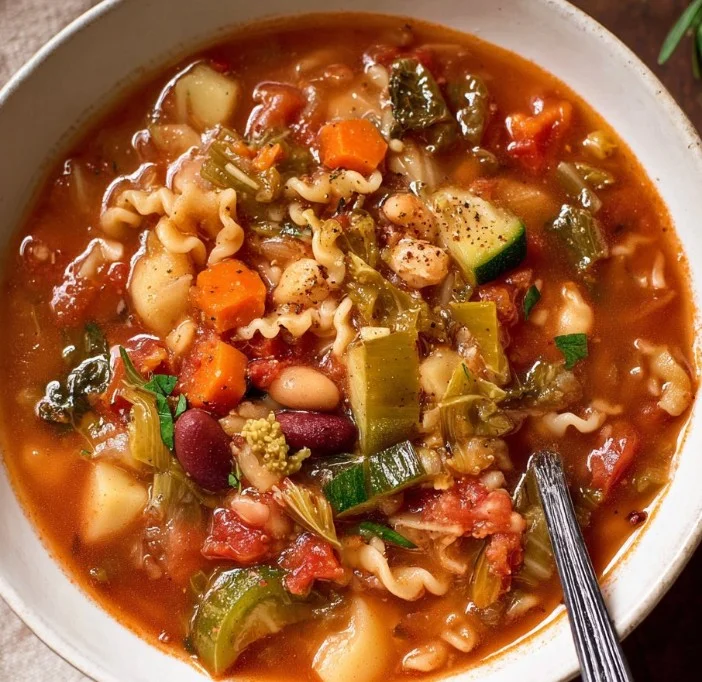
Start with a quick challenge: make a deeply flavored, vegetable-packed minestrone that feels like it simmered all day but is done in under an hour. Packed with fiber, plant protein and iron from beans and greens, this one-pot approach delivers on nutrition and comfort; you’ll notice the fennel’s sweet aroma and the bright parsley at the end. If you like brothy, savory soups that don’t require babysitting, try my take, it’s as forgiving as it is delicious, and it pairs nicely with a lighter soup like creamy leek soup without potatoes for a multi-course vegetable menu.
Print
One-Pot Vegan Minestrone Soup with Potatoes & Beans
- Total Time: 45 minutes
- Yield: 4 servings 1x
- Diet: Vegan
Description
A deeply flavored, vegetable-packed minestrone soup that’s ready in under an hour, delivering on nutrition and comfort with a blend of beans, greens, and aromatic spices.
Ingredients
- 3 tablespoons olive oil
- 1 medium yellow onion, small dice
- 2 medium carrots, small dice
- 2 sticks celery, small dice
- 1 small fennel bulb, cored and diced small (about 250 grams)
- Sea salt and ground black pepper, to taste
- 5 cloves garlic, minced
- 1 tablespoon fresh rosemary, minced
- 1 teaspoon dried oregano
- ½ teaspoon smoked paprika
- ½ teaspoon red pepper flakes
- ¼ cup tomato paste
- 2 medium Yukon gold potatoes, chopped (about 300 grams)
- ½ small green cabbage, chopped (about 400 grams)
- 3 cups cooked beans, drained and rinsed (from two 15.5 oz cans)
- 1 can (28-oz or 794 grams) diced fire-roasted tomatoes
- 8 cups vegetable stock
- 1 medium zucchini, chopped
- 1 cup chopped green beans
- 1 ½ cups dry, small pasta (about 100 grams)
- 1 tablespoon light miso
- 1 cup flat leaf parsley leaves, chopped
Instructions
- Heat a large, heavy pot over medium heat and add olive oil.
- Add onions and sauté until soft and translucent (about 7-8 minutes).
- Add carrots, celery, and fennel, then season with salt and pepper. Sauté for 5 minutes.
- Add garlic, rosemary, oregano, smoked paprika, and red pepper flakes; stir until fragrant (about 1 minute).
- Add tomato paste and cook for about 1-2 minutes until it darkens slightly.
- Add potatoes, cabbage, and beans; stir and season with salt and pepper.
- Add diced tomatoes, stir, and then add vegetable stock.
- Bring to a boil, then lower the heat to a strong simmer for 12 minutes.
- Add zucchini, green beans, and pasta. Cook until pasta is tender (about 12 minutes).
- Dissolve miso in a bowl with hot stock and bring back into the pot; stir to combine.
- Add parsley and adjust seasoning to taste. Serve hot.
Notes
Temperature control is key to avoid mushy vegetables. Use fire-roasted tomatoes for depth of flavor.
- Prep Time: 15 minutes
- Cook Time: 30 minutes
- Category: Soup
- Method: Stovetop
- Cuisine: Italian
Nutrition
- Serving Size: 1 generous bowl (about 2 cups)
- Calories: 370
- Sugar: 7g
- Sodium: 600mg
- Fat: 12g
- Saturated Fat: 2g
- Unsaturated Fat: 8g
- Trans Fat: 0g
- Carbohydrates: 60g
- Fiber: 10g
- Protein: 15g
- Cholesterol: 0mg
Quick Tips to Make One-Pot Vegan Minestrone Soup with Potatoes & Beans Effortless
This is the kind of soup that rewards a relaxed approach: good oil, slow-sweated aromatics, and patience while the potatoes soften. I want you to feel confident—this recipe is engineered to avoid mushy vegetables and gummy pasta, so with one pot and a sensible simmer you’ll end up with a bright, layered soup every time. Read these few notes and you’ll be halfway to dinner before you know it.
What You’ll Need
- 3 tablespoons olive oil
- 1 medium yellow onion, small dice
- 2 medium carrots, small dice
- 2 sticks celery, small dice
- 1 small fennel bulb, cored and diced small ((about 250 grams))
- sea salt and ground black pepper, to taste
- 5 cloves garlic, minced
- 1 tablespoon fresh rosemary, minced
- 1 teaspoon dried oregano
- ½ teaspoon smoked paprika
- ½ teaspoon red pepper flakes
- ¼ cup tomato paste
- 2 medium Yukon gold potatoes, chopped ((about 300 grams))
- ½ small green cabbage, chopped ((about 400 grams))
- 3 cups cooked beans, drained and rinsed ((from two 15.5 oz cans))
- 1 28-oz can (794 grams) diced fire-roasted tomatoes
- 8 cups vegetable stock
- 1 medium zucchini, chopped
- 1 cup chopped green beans
- 1 ½ cups dry, small pasta ((about 100 grams))
- 1 tablespoon light miso
- 1 cup flat leaf parsley leaves, chopped
The Smart Sequence
- Heat a large, heavy pot over medium heat. Once hot, pour in the olive oil and swirl it around. Tip: test the oil by dropping a small piece of onion in—if it sizzles gently, you’re ready.
- Add the onions and sauté until very soft and translucent, about 7-8 minutes. If they’re starting to brown, lower the heat. Tip: low and slow preserves sweetness without bitter char.
- Add the carrots, celery, and fennel to the pot and season with salt and pepper. Stir and sauté until celery is bright green and fennel has softened slightly, about 5 minutes. Tip: push the veg to the sides occasionally so the onion continues to sweat and build the base.
- Add the garlic, rosemary, dried oregano, smoked paprika, and dried chili to the pot. Stir until very fragrant, about 1 minute. Tip: keep stirring—burnt garlic will wreck the soup faster than anything else.
- Add the tomato paste to the pot and stir. Keep stirring and cooking out the “raw” flavour from the tomato paste for about 1-2 minutes. Tip: you want the paste to darken slightly; that caramelized note adds depth.
- Add the potatoes, cabbage and beans to the pot. Give everything a stir and season with salt and pepper again. Add the diced tomatoes and stir once more. Tip: season in layers so you don’t under-salt by the end.
- Add the vegetable stock to the pot and stir to combine. Place a lid on top of the pot and bring everything to a boil. Once boiling, set the lid aside slightly so that steam can escape. Lower the heat to a strong simmer. Cook until potatoes are just starting to get tender, about 12 minutes. Tip: a slightly ajar lid keeps the broth concentrated and prevents a rolling boil that breaks down the vegetables.
- Add the zucchini, green beans, and pasta to the pot and stir. Bring to a boil again and then simmer until pasta is tender, about 12 minutes. Tip: choose small pasta shapes that will cook evenly; stir gently to prevent clumping.
- Once the pasta is cooked, place the miso in a medium bowl to the side. Ladle a couple spoonfuls of hot stock from the pot over the miso. Using a spoon, “mash” and stir the miso with the hot stock until it dissolves. Add this mixture back into the pot and stir. Tip: tempering miso prevents clumps and preserves its subtle umami.
- Add the parsley to the minestrone and stir. Check the soup for seasoning and adjust if necessary. Pasta and potatoes soak up a lot of salt, so you may need more. Tip: taste at the end and brighten with a final pinch of salt or a splash of good vinegar if it tastes flat.
- Serve hot. Tip: warm bowls first so the soup stays hot on the table and the pasta doesn’t clump into cold globs.
- Optional finish: drizzle with extra virgin olive oil or add a grind of black pepper right before serving. Tip: fat at the end amplifies flavor; a little goes a long way.
Nutrition Breakdown
- Serving size: about 1 generous bowl (roughly 2 cups).
- Calories: approximately 320–420 per serving depending on pasta portion.
- Protein: around 12–15 grams, mainly from beans.
- Carbohydrates: roughly 50–60 grams, from potatoes, pasta and vegetables.
- Fat: about 9–12 grams, from olive oil.
- Fiber: 8–12 grams thanks to beans, cabbage and root veg.
- Short health insight: This soup is a balanced plant-forward meal—high in fiber for sustained fullness, moderate in protein, and low in saturated fat. The miso adds a touch of umami and a small amount of sodium, so taste before you salt more.
Perfect Pairings
- Serve with crusty whole-grain bread or seeded rolls to mop up the broth and add crunch.
- A simple green salad dressed with lemon and olive oil keeps the meal bright and contrasts the warm, savory soup.
- For an autumnal moment, pair with roasted squash slices and a glass of light-bodied red wine or warm herbal tea.
- Family dinner idea: set out grated vegan Parmesan, chili flakes and extra parsley so everyone customizes their bowl.
How to Store It Right
- Fridge: cool to room temperature and transfer to an airtight container; keep up to 4 days.
- Freezer: for longer storage, freeze in portions in freezer-safe containers or bags for up to 3 months.
- Reheat: stovetop gently over medium-low heat until steaming, adding a splash of stock or water if too thick. Microwave in a covered bowl, stirring halfway through.
- Freshness tip: store pasta separately if you know you’ll have leftovers—the noodles absorb broth and will get soggy; if already combined, reheat with extra liquid and a short simmer to refresh texture.
Expert Tips
- Cook pasta al dente: undercook the pasta by 1–2 minutes if you plan to refrigerate leftovers; it will finish softening on reheating.
- Use fire-roasted tomatoes for depth, but if you prefer a cleaner tomato flavor, substitute plain diced tomatoes.
- Balance salt slowly: because the beans, miso, and stock add sodium, season in stages and taste after the miso step.
- Texture control: add the cabbage early for a soft, integrated texture or later for more bite.
- Herb timing: add parsley at the end to keep its fresh color and lift the soup.
Flavor Experiments
- Seasonal (fall): swap zucchini for diced butternut squash and add a pinch of ground nutmeg for a cozy autumn twist.
- Gourmet: finish each bowl with a spoonful of preserved lemon brine and a scattering of toasted pine nuts for bright complexity and crunch.
- Playful: stir in small cubes of smoked tofu or a spoonful of harissa for smoky heat and extra protein.
Mistakes to Avoid
- Over-salting early: fix by diluting with more stock or adding a peeled raw potato to absorb excess salt while simmering, then discard.
- Boiling too vigorously after adding pasta: causes pasta to break down and release starch; reduce to a gentle simmer and stir occasionally.
- Adding delicate greens too soon: they will turn to mush; add them in the last few minutes of cooking.
- Not cooking tomato paste enough: raw tomato paste tastes bitter; cook it until it darkens slightly for depth.
What to Do with Leftovers
- Second-day slurp: reheat on the stove, add a splash of stock, and finish with fresh lemon zest and parsley to revive flavors.
- Minestrone grain bowl: spoon leftover soup over warmed quinoa or farro, sprinkle toasted seeds, and enjoy as a hearty lunch.
- Thick stew conversion: simmer uncovered to reduce broth, then serve over polenta for a comforting repurpose.
FAQs
Q: Can I make this minestrone gluten-free?
A: Yes. Swap the small pasta for a gluten-free small-shaped pasta or use extra beans and a handful of quinoa. Cook the quinoa separately and stir in at the end so it doesn’t overcook and become gummy.
Q: How do I prevent the cabbage from turning gray and limp?
A: Add cabbage when the potatoes are nearly tender but still firm, and avoid boiling. A gentle simmer preserves color and texture; finish with parsley to refresh the greens.
Q: Can I use dried beans instead of canned?
A: Absolutely. Cook 1 ½ cups dried beans until tender (or use 3 cups cooked), rinse and add them when you add the potatoes; adjust salt since home-cooked beans are less salty than canned.
Q: Is miso necessary, and can I skip it?
A: Miso is not mandatory but it adds subtle umami that brightens the broth. If you skip it, taste and adjust with a splash of soy sauce or a teaspoon of marmite-style seasoning for depth.