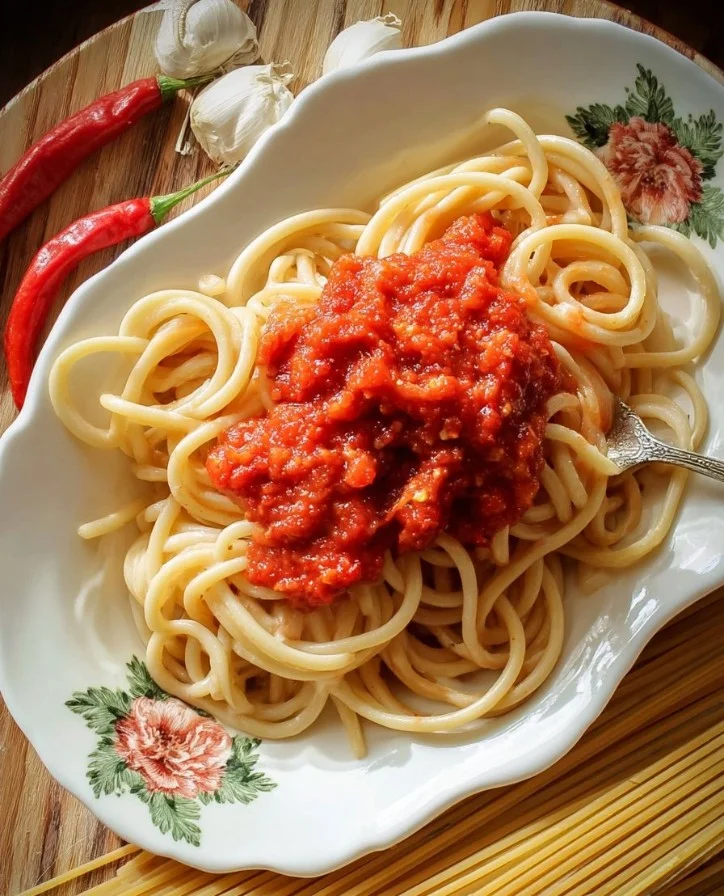
I learned to make pici with aglione the hard way, burnt garlic, watery sauce, and a kitchen full of smoke taught me the value of patience. This recipe flips that script: slow-cooked elephant garlic becomes luxuriously creamy, tomato passata adds bright acidity, and a whisper of chili wakes everything up. Around 80 percent of home cooks report better sauce results when they cook garlic low and slow; you’ll taste why in the first bite, with a warm, garlicky aroma that fills the kitchen. If you want a solid, family-friendly weeknight win that feels like restaurant food, this is it, and for a different garlic-forward mushroom pairing, see my high-protein garlic mushroom pasta for inspiration: garlic mushroom pasta ideas.
Print
Pici with Aglione
- Total Time: 50 minutes
- Yield: 4 servings 1x
- Diet: Vegetarian
Description
A family-friendly pasta dish featuring creamy slow-cooked elephant garlic and bright tomato passata, perfect for a comforting weeknight meal.
Ingredients
- 14 oz pici pasta (fresh or dried, or thick spaghetti/bucatini)
- 14 oz tomato passata (or fresh peeled tomatoes)
- 1 head elephant garlic (or 4 cloves)
- 2 tbsp extra virgin olive oil
- Salt (for pasta and to taste)
- Freshly ground black pepper (to taste)
- ½ fresh red chili pepper (or flakes)
- Fresh basil leaves (optional)
- Pecorino Romano (optional for non-vegans/vegetarians)
Instructions
- Peel, chop and crush the aglione. Chop the red chili pepper if using fresh, and peel and chop the tomatoes if using fresh.
- Sauté the aglione and chili pepper in olive oil just until the garlic starts to soften, then add a little warm water.
- Cover the pan and let the aglione cook slowly on low heat until soft (about 15 minutes).
- Every few minutes, mash the aglione with a fork, adding water if necessary to keep it creamy.
- Once the aglione is soft, add the tomato passata, salt, and pepper, mixing everything together. Cover and simmer for about 20 minutes.
- Meanwhile, boil a pot of water, add salt, and cook the pasta al dente according to package instructions.
- Drain the pasta and add it to the sauce, mixing gently over low heat. Serve immediately with fresh basil or grated Pecorino Romano if desired.
Notes
For best results, cook the aglione on low heat to avoid browning. Reserve some pasta water to adjust sauce consistency.
- Prep Time: 15 minutes
- Cook Time: 35 minutes
- Category: Main Course
- Method: Baking
- Cuisine: Italian
Nutrition
- Serving Size: 1 serving
- Calories: 450
- Sugar: 5g
- Sodium: 300mg
- Fat: 12g
- Saturated Fat: 2g
- Unsaturated Fat: 9g
- Trans Fat: 0g
- Carbohydrates: 70g
- Fiber: 5g
- Protein: 15g
- Cholesterol: 0mg
Why This Elephant Garlic Pasta (Pici with Aglione) Never Fails
This version is dependable because it respects two principles: low-and-slow aglione for creaminess, and a measured tomato simmer so the sauce sings without stealing the show. Pici (or thick spaghetti/bucatini) holds the sauce with character — its thickness means you get garlic in every mouthful. I’ll show you the simple habits that keep this rustic dish consistent, from water temperature to gentle mashing that builds texture, not scorch.
What You’ll Need
- 14 oz pici pasta (fresh or dried) (or thick spaghetti or bucatini)
- 14 oz tomato passata (or fresh peeled tomatoes)
- 1 head elephant garlic (or 4 cloves)
- 2 tbsp extra virgin olive oil.
- salt (for pasta and to taste)
- freshly ground black pepper. (to taste)
- ½ fresh red chilli pepper (or flakes)
- fresh basil leaves (optional)
- Pecorino Romano (optional for non vegans/vegetarians)
Step-by-Step Method
- Peel, chop and crush the aglione. Chop the red chili pepper if using a fresh one. And peel and chop the tomatoes if using fresh too. Mini-tip: Use the flat side of a knife to crush cloves lightly before chopping; it releases aroma but helps the garlic soften faster.
- Sauté the aglione and chilli pepper in a little olive oil just until the garlic starts to soften. Then add a little warm water. Cover the pan and let the aglione cook slowly on a low heat until it’s really soft. (About 15 minutes). Mini-tip: Keep the heat at low so the garlic sweats, not browns; browned elephant garlic gets bitter fast.
- Every few minutes, mash the aglione with a fork and add more water if necessary. You don’t want it to brown. It should get creamy. Mini-tip: Use a fork or potato masher and a gentle rocking motion to coax creaminess; patience beats high heat here.
- Once the aglione is soft and creamy, add the tomato passata (or peeled tomatoes), some salt and pepper and mix everything together. Cover the pan again and simmer on a low heat for about 20 minutes. Mini-tip: If the passata tastes flat, add a teaspoon of sugar to balance acidity, not a big splash of oil.
- While the sauce is simmering, put a pot of water on to boil for the pasta. Add salt once it starts to boil and bring to the boil again. Cook the pasta al dente according to the instructions on the packet. Mini-tip: Salt the water until it tastes like the sea; that’s the only chance to season the pasta itself.
- Finally drain the pasta and add it to the pan with the sauce. Mix everything together gently over a low heat. Then serve immediately with some chopped fresh basil or grated Pecorino Romano if required. Mini-tip: Reserve 60–120 ml of pasta water before draining; a splash helps the sauce cling and becomes silky when mixed with the aglione.
Nutrition Breakdown
- Serving size: about 1 bowl (recipe serves 4).
- Calories: approximately 420–520 kcal per serving depending on pasta type and olive oil.
- Protein: roughly 12–16 g per serving (higher if you add Pecorino).
- Carbohydrates: around 60–75 g per serving, primarily from the pasta.
- Fat: about 10–14 g per serving, largely from the olive oil.
- Fiber: roughly 4–6 g per serving, depending on whether fresh tomatoes are used.
Short health insight: This is a balanced, carbohydrate-forward dish with modest fat and a respectable amount of garlic-derived antioxidants; add a leafy salad or a white bean side for extra protein and fiber.
Perfect Pairings
- Serve with a crisp green salad tossed in lemon and olive oil to cut the garlic richness.
- Pair with a medium-bodied red wine like Chianti or a dry rosé to mirror the tomato acidity.
- Add crusty bread rubbed with a little olive oil for sopping up the garlicky sauce.
- On cool evenings, a simple roasted vegetable tray (eggplant, zucchini, peppers) makes it feel like a full, seasonal meal.
How to Store It Right
- Fridge: Cool to room temperature, transfer to an airtight container, and refrigerate for up to 3 days.
- Freezer: For longer storage, place sauce (without pasta) in a freezer-safe container for up to 2 months. Freeze pasta only if necessary; texture will change.
- Optimal reheating: Reheat gently on the stove with a splash of water or reserved pasta water to revive creaminess. Avoid microwaving dry pasta directly.
- Freshness tip: Store sauce with a thin layer of olive oil on top to slow oxidation if you plan to use within three days.
Expert Tips
- Use low heat for cooking aglione: it’s the shortcut to rich, buttery texture without browning.
- Reserve pasta water: the starchy liquid is the secret emulsifier for silky sauce that clings.
- Don’t overdo chili: start small; elephant garlic is mellow and you want a background lift, not a punch.
- If using canned peeled tomatoes, crush them by hand before adding for a rustic texture that pici loves.
- When serving, toss pasta and sauce thoroughly off the heat to prevent overcooking and to keep the aglione creamy.
Flavor Experiments
- Seasonal: Summer Cherry Burst — halve fresh cherry tomatoes into the simmering aglione instead of passata and finish with a generous handful of shredded basil.
- Gourmet: Crisp Pancetta & Lemon Finish — brown chopped pancetta, fold into the sauce right before serving, and finish with lemon zest and a grating of Pecorino for a shiny, savory finish.
- Playful: Pangrattato Crunch — top each bowl with toasted breadcrumbs mixed with garlic, parsley and a pinch of chilli for texture contrast.
Mistakes to Avoid
- Letting the aglione brown — Fix: Lower the heat immediately and add a splash of warm water; scrape any dark bits out and continue gently.
- Adding cold water to adjust texture — Fix: Use warm water or reserved pasta water to avoid chilling the sauce and stopping the emulsion.
- Over-salting early — Fix: Season in stages; taste after the sauce reduces and the pasta is tossed before adjusting final salt.
- Cooking pasta to mush — Fix: Cook to al dente, then finish in the sauce for one minute to marry flavors and keep bounce.
- Skimping on oil — Fix: A little good olive oil at the end brightens flavors and restores mouthfeel after simmering.
What to Do with Leftovers
- Reheat and transform into a baked pasta: mix leftover pasta with a spoonful of ricotta, top with breadcrumbs, and bake until golden.
- Mix leftover sauce with sautéed greens and sliced sausages for an easy skillet dinner.
- Use as a base for shakshuka-style eggs: warm the sauce, make wells, crack eggs, and cover until set for a garlicky breakfast-for-dinner.
Quick Questions
Q: How strong is elephant garlic compared to regular garlic?
A: Elephant garlic is milder and creamier than standard garlic, with a subtle sweetness. It softens more easily when slow-cooked, producing a less pungent, more spreadable aglione that carries through a tomato sauce without overwhelming it.
Q: Can I substitute regular garlic if I don’t have elephant garlic?
A: Yes. Use 3–4 regular cloves, but lower the sauté heat and shorten the initial cook time—regular garlic turns bitter quickly. Consider adding an extra splash of olive oil to compensate for elephant garlic’s natural creaminess.
Q: Is pici essential, or can I use spaghetti or bucatini?
A: Pici’s thickness and chew are ideal, but thick spaghetti or bucatini work well. Bucatini gives a pleasant hollow that traps sauce; adjust cook time for al dente according to package instructions.
Q: Can I make this vegan and still get depth of flavor?
A: Absolutely. Skip the Pecorino and finish with extra virgin olive oil and fresh basil. Add white beans or toasted walnuts for protein and umami-rich mushrooms if you want heartiness.