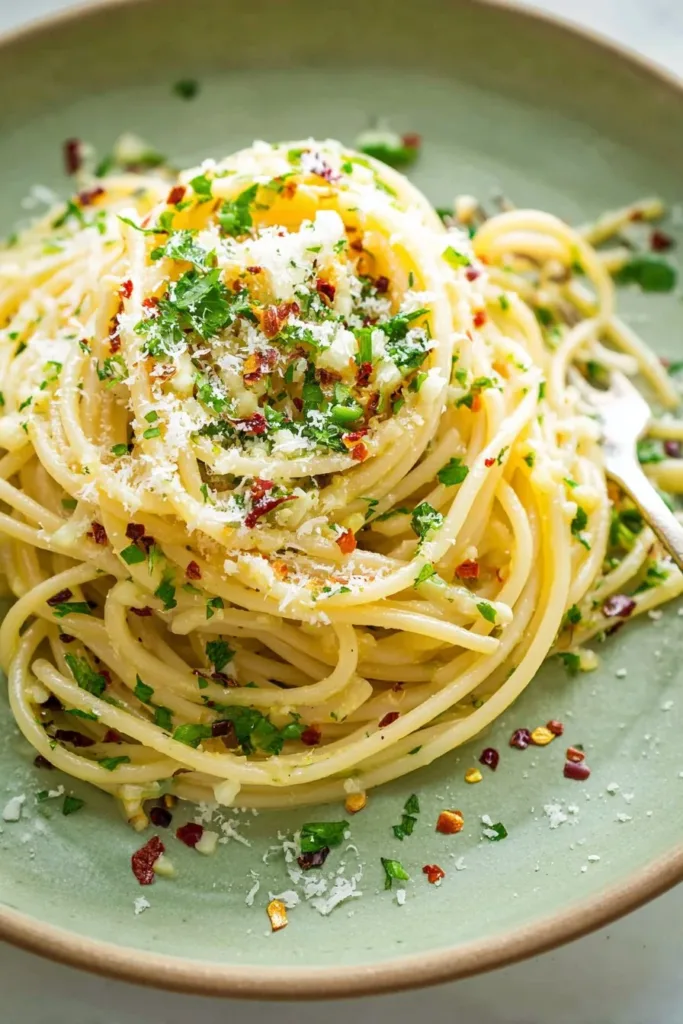
Start with the scent of garlic sizzling in warm olive oil, that little sound and smell tell you dinner is minutes away. More than half of home cooks say simple pasta recipes are their go-to weeknight fix, and this version delivers maximum flavor with minimal fuss and about 8 minutes of active attention. It’s nourishing too: wholesome carbs, heart-healthy olive oil, and a sprinkle of parsley for vitamin K and freshness. If you want a mushroom-forward riff that stays lightning fast, check this 15-minute mushroom and garlic spaghetti for inspiration.
Print
Spaghetti with Garlic and Olive Oil
- Total Time: 20 minutes
- Yield: 4 servings 1x
- Diet: Vegetarian
Description
A simple yet flavorful dish featuring spaghetti tossed with gently cooked garlic, extra virgin olive oil, and a touch of heat from chili flakes.
Ingredients
- 1 lb (450 grams) spaghetti or other long pasta
- 1/2 cup (120 ml) extra virgin olive oil
- 4–5 garlic cloves, finely sliced
- 1 tsp dried chili flakes, or to taste
- 1/4 cup fresh parsley, coarsely chopped
- 1/4 cup grated parmesan cheese, optional
- Salt, to taste
Instructions
- Bring a pot of salted water to a boil and add spaghetti. Cook until al dente.
- While the spaghetti is cooking, heat the olive oil gently in a frying pan. Add the sliced garlic and chili flakes, cooking until the garlic is pale gold.
- Drain the spaghetti, reserving 1/2 cup of the cooking water.
- Add spaghetti to the frying pan and stir well to coat with the oil, adding reserved cooking water as needed to keep the pasta moist.
- Sprinkle with chopped parsley and grated parmesan before serving. Enjoy!
Notes
Use good quality extra virgin olive oil for the best flavor. Reserve starchy pasta water to help the sauce cling to the pasta.
- Prep Time: 8 minutes
- Cook Time: 12 minutes
- Category: Main Course
- Method: Boiling, Sautéing
- Cuisine: Italian
Nutrition
- Serving Size: 1 cup
- Calories: 480
- Sugar: 1g
- Sodium: 400mg
- Fat: 25g
- Saturated Fat: 3g
- Unsaturated Fat: 20g
- Trans Fat: 0g
- Carbohydrates: 70g
- Fiber: 3g
- Protein: 15g
- Cholesterol: 10mg
Why This Spaghetti With Garlic and Olive Oil Never Fails
This dish is proof that fewer ingredients, treated with respect, beat a crowded pan of competing flavors. When garlic is cooked gently in good olive oil it becomes mellow and nutty, infusing each strand of spaghetti with slippery, savory taste. The method demands timing and a little reserve pasta water — those two things are the secret to glossy, clinging sauce. Treat it like a small ritual: salt the water well, watch the garlic, and finish the pasta in the pan.
Ingredient Lineup
- 1 lb (450 grams) spaghetti, or other long pasta
- 1/2 cup (120 ml) extra virgin olive oil
- 4-5 garlic cloves, finely sliced
- 1 tsp dried chili flakes, or to taste ((or 3 fresh chillies))
- 1/4 cup fresh parsley, coarsely chopped
- 1/4 cup grated parmesan cheese, plus more to serve ((optional, if you don’t keep it vegan))
- salt, to taste accurately
Step-by-Step Method
- Bring a pot of salted water to the boil and add spaghetti. Cook until al dente: the spaghetti is soft but still has a little bite. Expert tip: Use roughly 1 tablespoon of salt per 4 quarts of water so the pasta tastes seasoned from the inside out.
- While the spaghetti is cooking make the sauce: If you don’t use dried chili flakes, remove the seeds from the chilies and finely chop. Peel and finely slice the garlic cloves. Expert tip: Slice garlic uniformly so it browns at the same rate. Uneven slices lead to burned shards and bitter notes.
- Heat the olive oil gently in a frying pan. Add the garlic and chili and cook gently for a few minutes, or until the garlic is pale gold, which will be enough time for the flavorings to infuse the oil (take care not to burn it!). Stir in chopped parsley. Expert tip: Keep the heat low and tilt the pan away from the burner if the garlic starts to brown too quickly. Patience yields a sweet, nutty garlic profile.
- Drain the spaghetti still “al dente”, reserve 1/2 cup cooking water. Expert tip: Reserve more if your pot is huge — starch concentration varies by batch, and it is easier to add than to remove.
- Add spaghetti to the frying pan, stir well to coat with the oil, add some starchy cooking water, as much as needed to ensure the pasta is moist and juicy*. Cook on medium heat for 30 seconds, stirring a couple of times. Expert tip: Toss the pasta thoroughly so the oil emulsifies with the water; the sauce should cling like a thin ribbon, not pool at the bottom.
- Sprinkle the spaghetti with extra chopped parsley, and grated parmesan cheese if you don’t keep it vegan. Enjoy! Expert tip: Taste for salt after you add cheese, because parmesan will add saltiness and depth.
Nutrition Breakdown
- Serving size: about 1 cup of cooked pasta per person, yields 4 servings.
- Calories: roughly 480–550 kcal per serving depending on pasta brand and cheese amount.
- Protein: about 12–15 grams per serving with the parmesan included.
- Carbohydrates: around 60–70 grams per serving, giving an energy-dense base for the meal.
- Fat: approximately 20–25 grams, primarily from extra virgin olive oil, which provides monounsaturated fats.
- Fiber: about 3–5 grams depending on whether you use whole grain pasta.
Short health insight: This recipe balances quick energy with healthy fats and a modest protein boost; add a side of greens or grilled lean protein to make it a more complete plate.
Perfect Pairings
- A crisp green salad with lemon vinaigrette to cut the richness and add bright acidity.
- Roasted cherry tomatoes or blistered tomatoes tossed with basil for a seasonal, fresh contrast.
- Pan-seared shrimp or grilled chicken for additional protein without overwhelming the simple garlic flavor.
- A light, unoaked white wine like Verdicchio or Pinot Grigio in warmer months; rustic red or chilled rosé in cooler weather.
How to Store It Right
- Fridge: Cool to room temperature and store in an airtight container for up to 3 days. Toss with a little olive oil before sealing to prevent the pasta from sticking together.
- Freezer: Not ideal for texture, but you can freeze portions without cheese for up to 1 month in a freezer-safe container. Thaw overnight in the fridge before reheating.
- Reheat: Warm gently in a skillet with a splash of water or extra oil over low heat, tossing to revive the sauce. Microwaving is okay for small portions but can dry the pasta.
- Freshness tip: If the sauce seems tight after refrigeration, add warm water (not cold) a teaspoon at a time while reheating to rebuild silkiness.
Expert Tips
- Use good olive oil: It doesn’t have to be the most expensive bottle, but choose one labeled extra virgin with fresh, fruity notes to complement the garlic.
- Time the garlic: Add garlic once the oil is warmed but not smoking; aim for pale gold, not brown. Burnt garlic tastes bitter and kills the dish.
- Reserve starchy water: That half-cup is your emulsifier; use it to make the oil cling and develop a glossy sauce.
- Finish in the pan: Combining pasta and sauce over heat for 30 seconds integrates flavors and warms everything evenly.
- Adjust heat for chili: If you use fresh chillies, add them early for infused heat or late for brighter spice.
Ways to Mix It Up
- Seasonal (Autumn): Add roasted squash cubes and toasted sage for a cozy fall take—finish with lemon zest for brightness.
- Gourmet: Fold in browned butter with the olive oil and a splash of white wine, then scatter toasted pine nuts and shaved pecorino.
- Playful: Toss in crisp prosciutto bits or crunchy breadcrumbs toasted in leftover oil for texture and a snack-like crunch.
Mistakes to Avoid
- Over-salting the water then over-salting again with cheese — fix: taste before you add extra salt and remember cheese contributes salt.
- Burning the garlic — fix: pull the pan from heat if the garlic edges go brown and cool the oil slightly before continuing.
- Adding too much oil and letting the pasta swim — fix: drain well and use reserved starchy water to loosen rather than pouring more oil.
- Forgetting to reserve pasta water — fix: always scoop out a cup of water before draining; a minute of foresight prevents a dry final dish.
- Cooking the pasta until mushy — fix: set a kitchen timer and taste a minute before the packet time; al dente is key for the final pan finish.
Creative Second-Day Ideas
- Garlic-olive oil spaghetti frittata: Toss leftover pasta with beaten eggs and parmesan, then pan-fry into a golden frittata.
- Pasta salad remix: Chill the spaghetti, add halved olives, cherry tomatoes, cucumber, extra parsley, and a squeeze of lemon.
- Stir-fry base: Use the leftover pasta as you would rice noodles—sauté with quick-cooking vegetables and a dash of soy sauce for an Asian twist.
Quick Questions
Q: How do I stop the garlic from burning but still get flavor?
A: Keep the heat low and add the garlic once the oil is warm, not smoking. Stir frequently and remove from direct heat if the garlic edges start to brown. Using sliced rather than minced garlic gives you more control and a milder, sweeter result.
Q: Can I make this vegan without losing depth?
A: Yes. Skip the parmesan and boost umami with toasted nuts, a spoonful of nutritional yeast, or a splash of soy sauce during the pan toss. Add sautéed mushrooms for meaty texture and deeper flavor.
Q: How much chili should I use for mild, medium, or hot?
A: Start with 1/4 teaspoon dried flakes for mild, 1 teaspoon for medium, and increase cautiously for hot. If using fresh chillies, one small deseeded chilli is mild, two for medium, three for hot depending on variety.
Q: Is it better to use whole wheat or regular pasta here?
A: Whole wheat adds fiber and nuttiness and holds up well in this sauce, though it absorbs liquid faster. Slightly reduce cooking time and monitor for al dente to avoid dryness.