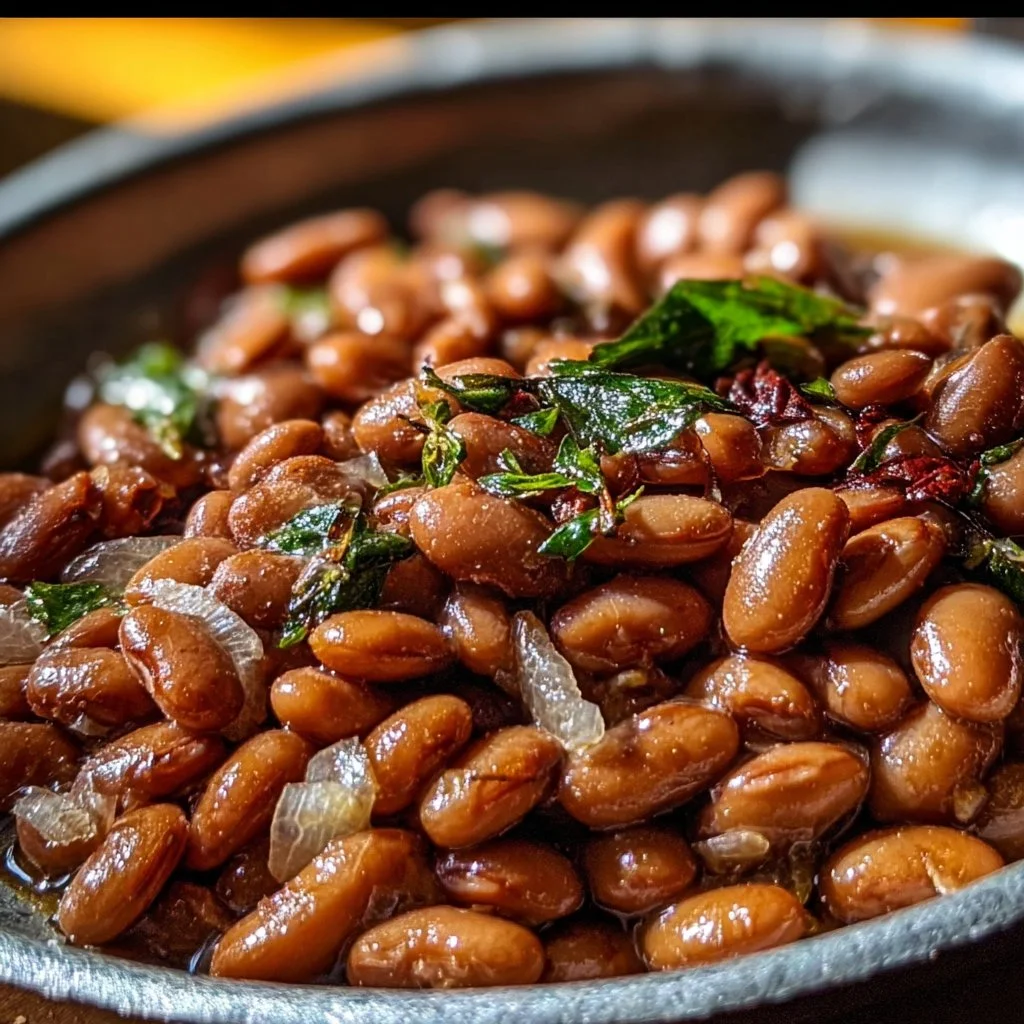
Tender Creamy Pinto Beans simmer slowly with olive oil and simple pantry ingredients until the texture turns smooth but still holds its shape. As they cook, the broth thickens into a steady, spoonable base without much adjustment. It’s one I keep in regular rotation because it settles easily into dinner. If you enjoy this style, you might also like my slow cooker creamy chicken soup.
Print
Tender Creamy Pinto Beans
- Total Time: 600 minutes
- Yield: 4 servings 1x
- Diet: Vegan
Description
Creamy pinto beans simmered to perfection, delivering a silky texture that adapts to multiple meals.
Ingredients
- 1 pound dried pinto beans, rinsed
- ½ medium yellow onion, finely diced
- 2 teaspoons minced garlic
- 2 bay leaves
- ⅓ cup extra-virgin olive oil
- 4 cups cold water, plus additional for soaking
- 1 tablespoon kosher salt, or to taste
- Optional: squeeze of lime, chopped cilantro, drizzle of olive oil, pinch of smoked paprika
Instructions
- Place pinto beans in a large bowl and cover with cold water; soak at room temperature for 8–24 hours.
- Drain and rinse the soaked beans thoroughly.
- Transfer beans to a medium Dutch oven or heavy-bottomed pot.
- Add 4 cups of cold water, diced onion, minced garlic, bay leaves, and olive oil to the pot.
- Bring to a gentle boil over medium-high heat, skimming off any foam that rises.
- Reduce heat to medium-low and simmer gently, uncovered, for 1½ to 2 hours, stirring occasionally and adding more water as needed.
- In the last 10 minutes, stir in salt and taste to adjust seasoning.
- Once beans are tender but still holding shape, remove from heat, discard bay leaves, and serve warm or at room temperature.
Notes
Soaking beans shortens cook time and yields a creamier texture. For an extra silky finish, blend a cup of the cooked beans with broth and stir back into the pot.
- Prep Time: 480 minutes
- Cook Time: 120 minutes
- Category: Main Course
- Method: Simmering
- Cuisine: Mexican
Nutrition
- Serving Size: 1 cup
- Calories: 250
- Sugar: 1g
- Sodium: 400mg
- Fat: 8g
- Saturated Fat: 1g
- Unsaturated Fat: 7g
- Trans Fat: 0g
- Carbohydrates: 35g
- Fiber: 11g
- Protein: 13g
- Cholesterol: 0mg
Why This Is a Go-To in My Kitchen
Tender, creamy pinto beans are one of those recipes that never fails: they stretch pantry staples into multiple meals, they adapt to what you have, and they reward patience with a silky mouthfeel. Expect a straightforward technique, forgiving timing, and flavors that deepen as the beans cool, making leftovers often better than the initial serving.
What You’ll Need
- 1 pound dried pinto beans, rinsed
- ½ medium yellow onion, finely diced
- 2 teaspoons minced garlic
- 2 bay leaves
- ⅓ cup extra-virgin olive oil
- 4 cups cold water, plus additional for soaking
- 1 tablespoon kosher salt, or to taste
Optional finishing items: a squeeze of lime, chopped cilantro, a drizzle of olive oil, or a pinch of smoked paprika.
How It Comes Together
- Place pinto beans in a large bowl and cover with 2–3 inches of cold water and soak at room temperature for 8–24 hours.
- Drain and rinse the soaked beans thoroughly.
- Transfer beans to a medium Dutch oven or heavy-bottomed pot.
- Add 4 cups of cold water, diced onion, minced garlic, bay leaves, and olive oil to the pot.
- Bring the pot to a gentle boil over medium-high heat, skimming off any foam that rises to the surface.
- Reduce heat to medium-low and simmer gently, uncovered, for 1½ to 2 hours, stirring occasionally and adding more water as needed to keep beans submerged.
- In the last 10 minutes of cooking, stir in the salt and taste to adjust seasoning if needed.
- When beans are tender but still holding their shape, remove from heat and discard the bay leaves, serve warm or at room temperature.
Why this sequence works: soaking shortens cook time and yields a creamier center, olive oil helps the cooking liquid carry flavor and keeps skins supple, and salting late prevents tough beans while still seasoning thoroughly.
Why This Recipe Feels Balanced
- Per serving (about 1 cup cooked beans): roughly 250 calories, 13 grams protein, 35 grams carbohydrates, 8 grams fat, 11 grams fiber, 350–450 mg sodium depending on added salt and any finishing salt. These beans deliver plant protein and fiber that support steady energy and satiety.
How I Like to Serve It
- I serve these beans as a main for a light dinner with warmed corn tortillas or rice, and as a hearty side with grilled vegetables or roasted chicken. Simple pairings include a cabbage slaw, pickled onions, or a dollop of plain yogurt. They also make a perfect filling for burritos, tostadas, or a rustic bean toast with sharp cheese.
How to Save What’s Left
- Fridge: cool to room temperature then store in an airtight container for up to 4 days. Freezer: portion into freezer-safe containers or bags and freeze for up to 3 months, thaw overnight in the fridge. Reheat gently on the stove with a splash of water to restore creaminess. A freshness tip: add a spoonful of olive oil or a splash of broth when reheating to revive the texture.
Little Adjustments That Pay Off
- Use the soaking water for cooking only if you simmer it vigorously and skim well, otherwise discard and use fresh water to avoid excess gas-forming sugars.
- If beans are stubbornly taking too long, lift the lid occasionally and mash a cup of beans against the pot sides, then stir to thicken the broth and speed up softening.
- For extra depth, brown the onions lightly before adding water, or add a small piece of kombu while cooking for subtle umami.
- If you want a silkier finish, blend one cup of cooked beans with broth and stir back into the pot at the end.
Ways to Change It Without Breaking It
- Seasonal: stir in roasted winter squash or diced tomatoes in late summer for fresh brightness.
- Comfort-focused: finish with a generous pat of butter or a drizzle of bacon fat for savory richness.
- Slightly elevated: top each bowl with crispy fried shallots, toasted pepitas, and a spritz of citrus for texture and lift.
What Can Go Wrong and How to Fix It
- Mistake: Beans stay hard after long cooking. Fix: Simmer longer with a lid cracked, add a splash of baking soda to soften the water slightly, or replace soaking water with fresh hot water and continue simmering.
- Mistake: Beans are grainy instead of creamy. Fix: Cook a few extra minutes, then mash some beans into the cooking liquid to thicken and create a creamier texture.
- Mistake: Overly salty final dish. Fix: Add more cooked beans or a starchy component like rice, or dilute with unsalted cooked beans blended into the pot.
- Mistake: Beans split and fall apart too early. Fix: Reduce the boil level so the beans simmer gently, and avoid stirring aggressively; add salt only toward the end.
Turning Leftovers Into Something New
- Make a simple refried bean mash by frying leftover beans with a little oil and cumin, then mash slightly and serve with eggs or in tacos.
- Use as a filling for enchiladas or burritos, warmed with cheese and folded into tortillas for a quick family meal.
- Blend leftover beans with stock and a handful of greens to puree into a hearty, high-protein soup.
Questions Readers Often Ask
How long should I soak pinto beans and is it necessary?
Soak for 8 to 24 hours in plenty of water; longer soaking reduces cooking time and improves digestibility. If you are short on time, a quick soak of boiling water for one hour helps, but unsoaked beans will work, they just need a longer simmer.
Can I cook these beans in a slow cooker or Instant Pot?
Yes, use an Instant Pot on high pressure for 25 to 30 minutes with a natural release, or a slow cooker on low for 6 to 8 hours. Reduce added liquid slightly for the Instant Pot, and salt at the end to avoid tough skins.
Are canned pinto beans a good substitute?
Canned beans work in a pinch and save time, but they lack the same glossy, freshly cooked texture. Rinse and warm them gently with aromatics and a splash of olive oil to approximate the flavor, and adjust seasoning because canned beans are often higher in sodium.
How can I reduce gas from eating beans?
Soak beans overnight and discard the soaking water, rinse well, and cook with bay leaves or a small piece of kombu which can help. Gradually increase bean servings to allow your gut flora to adapt, and include plenty of fiber and fluids in your diet.