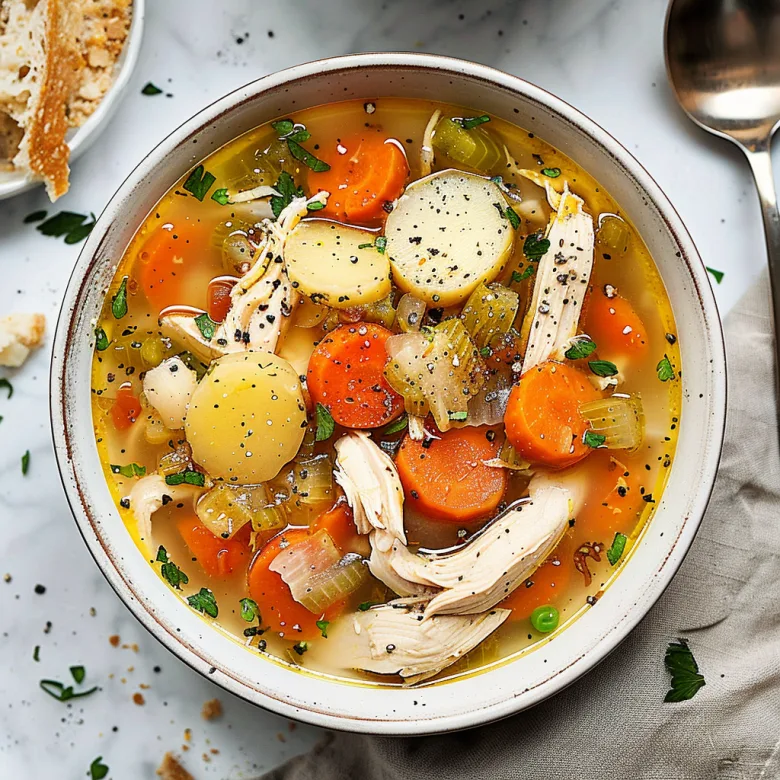
There’s something deeply satisfying about making chicken soup from scratch in your own kitchen. After years of experimenting with different approaches, I’ve discovered that the secret lies in building layers of flavor through proper technique and timing. This recipe creates a rich, golden broth that’s both nourishing and comforting.
Why This Best Homemade Chicken Soup Recipe Works
This method combines the convenience of modern cooking with time-tested techniques. By simmering whole chicken pieces with aromatics, you extract maximum flavor while keeping the meat tender. The two-stage cooking process ensures both a rich broth and perfectly cooked vegetables that don’t turn mushy.
Ingredients
The foundation of exceptional chicken soup starts with quality ingredients. I’ve learned that using a combination of chicken pieces gives you the best flavor and texture balance.
- 1 whole chicken (3-4 pounds), cut into pieces, or 2 pounds mixed chicken thighs and breasts
- 12 cups cold water
- 2 bay leaves
- 1 teaspoon whole black peppercorns
- 1 large onion, roughly chopped (about 1½ cups)
- 3 large carrots, peeled and sliced into rounds (about 1½ cups)
- 3 celery stalks, chopped (about 1 cup)
- 4 garlic cloves, minced
- 2 tablespoons olive oil
- 1 teaspoon dried thyme
- 1 teaspoon dried parsley
- Salt and freshly ground black pepper to taste
- 8 ounces wide egg noodles (optional)
- 2 tablespoons fresh parsley, chopped
- 1 tablespoon fresh dill, chopped (optional)
These ingredients work together to create the complex, satisfying flavor that makes homemade soup so much better than store-bought versions.
How to Make It
The process requires patience, but the steps are straightforward and forgiving for home cooks of any skill level.
- Prepare the chicken and aromatics: Place the chicken pieces in a large stockpot or Dutch oven. Add the cold water, ensuring the chicken is completely covered by at least 2 inches. Add bay leaves, peppercorns, and half of the chopped onion. The cold water start helps extract more flavor from the bones.
- Create the initial broth: Bring the mixture to a gentle boil over medium-high heat, then immediately reduce to low heat. Skim off any foam or impurities that rise to the surface during the first 15-20 minutes. This step ensures a clear, clean-tasting broth.
- Simmer for flavor development: Partially cover the pot and let it simmer very gently for 1 to 1.5 hours. The liquid should barely bubble. You’ll know it’s ready when the chicken easily falls off the bone and the broth has a rich, golden color.
- Remove and shred the chicken: Carefully remove all chicken pieces using tongs or a slotted spoon. Place them on a cutting board and let cool until you can handle them safely. Remove and discard the skin and bones, then shred the meat into bite-sized pieces. Set aside.
- Strain the broth: Pour the broth through a fine-mesh strainer into a large bowl. Discard the solids. Return the strained broth to the clean pot. This creates a beautifully clear base for your soup.
- Sauté the vegetables: In the same pot, heat olive oil over medium heat. Add the remaining onion, carrots, and celery. Cook for 5-7 minutes until the vegetables start to soften and the onions become translucent. This step adds another layer of flavor that raw vegetables simply can’t provide.
- Add garlic and herbs: Stir in the minced garlic, thyme, and dried parsley. Cook for another minute until fragrant. Be careful not to let the garlic burn, as it will create a bitter taste.
- Combine broth and vegetables: Pour the strained broth back into the pot with the sautéed vegetables. Bring to a gentle boil, then reduce heat and simmer for 15-20 minutes until the vegetables are tender but still have some bite.
- Add chicken and seasonings: Return the shredded chicken to the pot. Season generously with salt and pepper, tasting as you go. Remember that the flavors will meld and intensify as the soup sits.
- Cook the noodles (if using): If you’re adding noodles, bring the soup to a boil and add them directly to the pot. Cook according to package directions until tender. Alternatively, cook noodles separately and add them to individual bowls to prevent them from getting mushy in leftover soup.
- Final seasoning and herbs: Remove from heat and stir in fresh parsley and dill if using. Taste and adjust seasoning one final time. The fresh herbs brighten the entire dish and add a pop of color.
This methodical approach ensures every component contributes to the final dish’s depth and satisfaction.
Nutrition at a Glance
This homemade chicken soup provides excellent nutritional value while remaining relatively light and satisfying.
- High-quality protein: Each serving delivers approximately 25-30 grams of complete protein from the chicken
- Essential vitamins: Rich in B vitamins, especially B6 and niacin, which support energy metabolism
- Mineral content: Good source of selenium, phosphorus, and potassium
- Low in saturated fat: Especially when you remove the skin from the chicken pieces
- Hydration support: The high liquid content helps with daily fluid intake
- Fiber from vegetables: Carrots, celery, and onions contribute beneficial dietary fiber
- Anti-inflammatory properties: Garlic and herbs provide compounds that may support immune function
- Sodium control: Making it from scratch allows you to control salt content unlike canned varieties.
How to Serve It
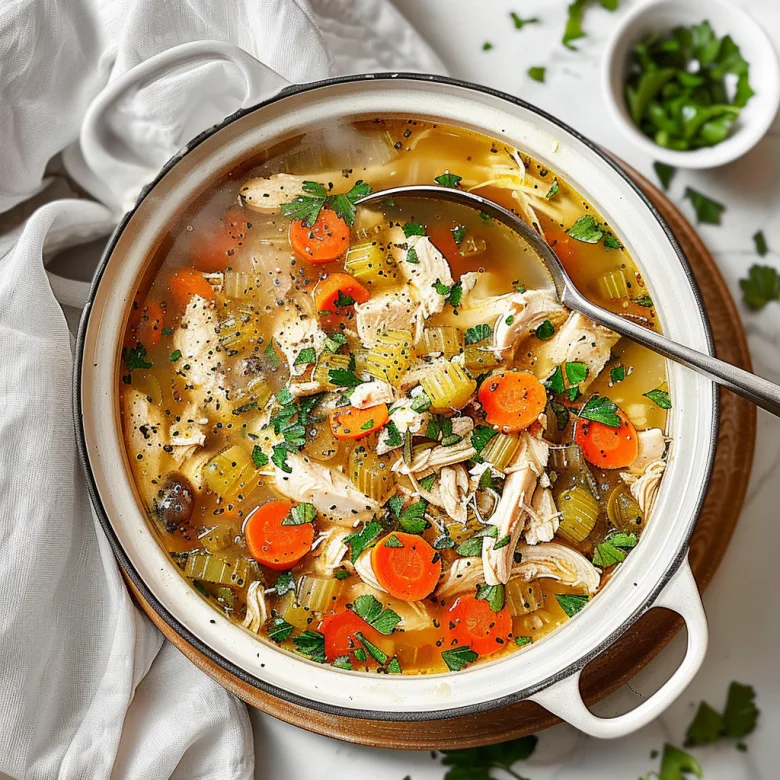
The beauty of homemade chicken soup lies in its versatility and ability to satisfy different appetites and occasions.
- As a starter: Serve smaller portions in warmed bowls before a larger meal
- Light lunch option: Pair with crusty bread or crackers for a satisfying midday meal
- Comfort dinner: Serve generous portions with warm dinner rolls or biscuits
- Sick-day remedy: Serve hot in a mug for easy sipping when someone isn’t feeling well
- With garnishes: Top with fresh herbs, a dollop of sour cream, or grated cheese
- Freezer meal prep: Portion into individual containers for quick weeknight dinners
- Holiday starter: Elegant enough to begin special occasion meals
I find that serving it with different accompaniments can completely change the meal’s character and formality level.
Common Mistakes
Over the years, I’ve made plenty of errors with chicken soup, and I’ve learned from watching others struggle with the same issues.
- Starting with boiling water: This seals the proteins too quickly and prevents maximum flavor extraction from the bones
- Cooking at too high heat: Rapid boiling makes the broth cloudy and can make the chicken tough and stringy
- Not skimming the foam: Those gray, foamy proteins create off-flavors and cloudiness if left in the broth
- Overcooking vegetables: Adding them too early results in mushy, flavorless vegetables that disintegrate
- Under-seasoning: Large volumes of soup need more salt than you might expect, so taste frequently
- Adding noodles too early: They’ll become mushy and absorb too much liquid, especially in leftovers
- Not straining the broth: Leaving in the cooking aromatics can make the final soup taste muddy
- Using only white meat: Dark meat adds much more flavor and stays tender during long cooking
Avoiding these pitfalls will dramatically improve your soup’s quality and your confidence in the kitchen.
Storage and Reheating
Proper storage techniques ensure your homemade soup maintains its quality and safety for future meals.
- Refrigerator storage: Cool completely before storing in airtight containers for up to 4-5 days
- Freezer storage: Freeze in portion-sized containers for up to 3 months, leaving space for expansion
- Freezing without noodles: For best results, freeze soup before adding noodles, then cook fresh noodles when reheating
- Safe cooling method: Use an ice bath or shallow containers to cool large batches quickly
- Reheating on stovetop: Heat gently over medium-low heat, stirring occasionally until steaming hot
- Microwave reheating: Use medium power and stir every minute to ensure even heating
- From frozen: Thaw overnight in refrigerator, then reheat, or heat directly from frozen over low heat
- Quality check: If soup has separated or looks grainy after freezing, whisk while reheating to re-emulsify
Taking care with storage and reheating preserves both flavor and texture, making your soup taste almost as good as when you first made it.
Leftover Ideas
Transform your delicious chicken soup into completely new meals with these creative approaches that I’ve developed over years of batch cooking.
- Chicken pot pie filling: Thicken the soup with a flour and butter roux, then use as filling under pastry or biscuits
- Risotto base: Use the broth as liquid for cooking creamy risotto, adding the chicken pieces near the end
- Casserole foundation: Mix with cooked rice or pasta, top with cheese and breadcrumbs, then bake until bubbly
- Dumpling soup: Add fresh or frozen dumplings for the last 10 minutes of cooking for a hearty variation
- Grain bowl base: Serve over quinoa, brown rice, or farro for a more substantial, modern presentation
- Sandwich filling: Reduce the soup until thick and use the concentrated chicken and vegetables for sandwiches
- Pasta sauce: Thicken with cream or cornstarch and toss with cooked pasta for a quick dinner
- Breakfast hash: Use the chicken and vegetables as base for breakfast hash with added potatoes and topped with eggs
These transformations help prevent food waste while keeping your family interested in eating nutritious, homemade meals throughout the week.
PrintBest Homemade Chicken Soup Recipe
- Total Time: 2 hours 50 minutes
- Yield: 8 servings 1x
Description
Rich, comforting chicken soup made from scratch with tender chicken, fresh vegetables, and a golden broth that’s perfect for any season.
Ingredients
- 1 whole chicken (3–4 pounds), cut into pieces
- 12 cups cold water
- 2 bay leaves
- 1 teaspoon whole black peppercorns
- 1 large onion, roughly chopped
- 3 large carrots, peeled and sliced
- 3 celery stalks, chopped
- 4 garlic cloves, minced
- 2 tablespoons olive oil
- 1 teaspoon dried thyme
- 1 teaspoon dried parsley
- Salt and pepper to taste
- 8 ounces wide egg noodles (optional)
- 2 tablespoons fresh parsley, chopped
- 1 tablespoon fresh dill, chopped (optional)
Instructions
- 1. Place chicken pieces in a large pot with cold water, bay leaves, peppercorns, and half the onion.
- 2. Bring to a gentle boil, then reduce heat and skim foam from surface.
- 3. Simmer partially covered for 1-1.5 hours until chicken falls off the bone.
- 4. Remove chicken pieces and let cool, then shred meat and discard bones and skin.
- 5. Strain broth through fine-mesh strainer and return to clean pot.
- 6. Heat olive oil in the pot and sauté remaining vegetables until softened.
- 7. Add garlic and herbs, cook 1 minute until fragrant.
- 8. Add strained broth back to pot and simmer 15-20 minutes.
- 9. Return shredded chicken to pot and season with salt and pepper.
- 10. Add noodles if using and cook until tender.
- 11. Remove from heat and stir in fresh herbs before serving.
Notes
Store in refrigerator up to 5 days or freeze up to 3 months. For best results, freeze soup without noodles and add fresh noodles when reheating.
- Prep Time: 20 minutes
- Cook Time: 2 hours 30 minutes
- Category: Soup
- Method: Simmering
- Cuisine: American
Nutrition
- Serving Size: 1 bowl (1.5 cups)
- Calories: 285
- Sugar: 6g
- Sodium: 650mg
- Fat: 8g
- Carbohydrates: 22g
- Fiber: 3g
- Protein: 28g
3 thoughts on “Best Homemade Chicken Soup Recipe – Rich, Comforting & Easy to Make”