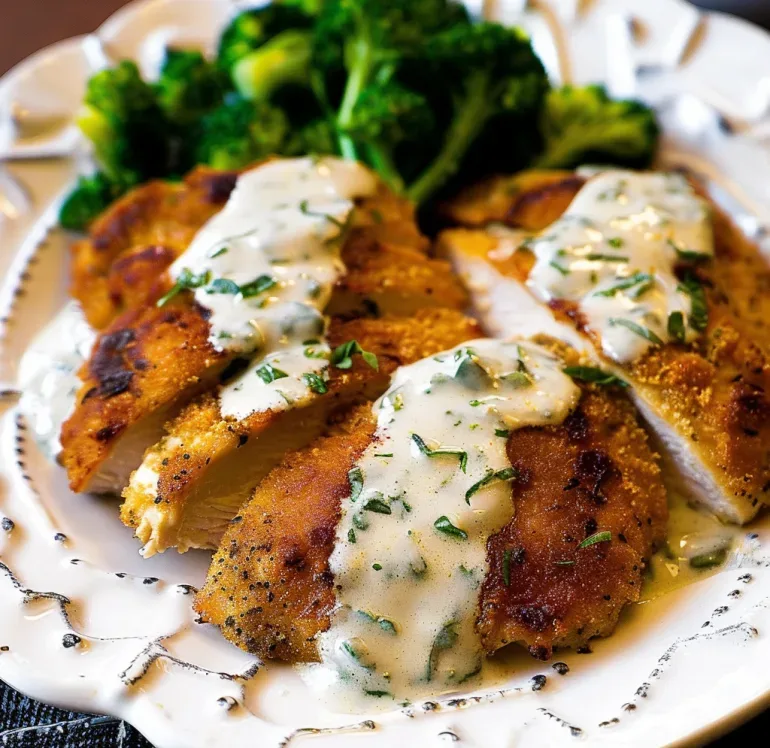
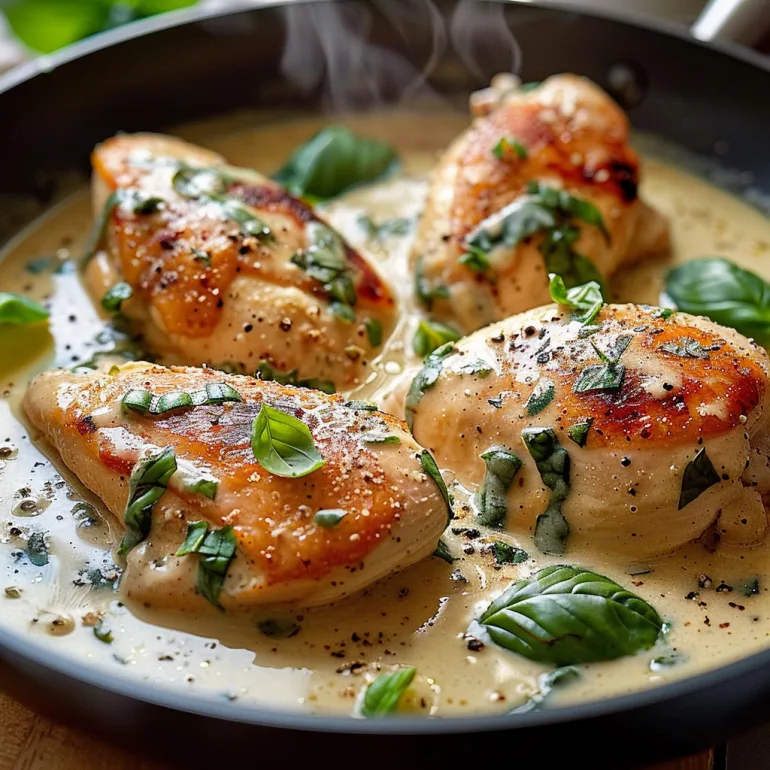
This chicken in basil cream sauce has become one of my most-requested weeknight dinners, and I completely understand why. The tender chicken breasts swimming in a fragrant, creamy sauce dotted with fresh basil creates a restaurant-quality meal that comes together in under 30 minutes. It’s the kind of recipe that makes ordinary Tuesday nights feel special.
Why This Chicken in Basil Cream Sauce Works
The magic happens when you build layers of flavor in the same pan. Searing the chicken first creates fond, those beautiful browned bits that become the foundation for the sauce. The cream reduces down while the basil infuses its aromatic oils, creating a sauce that clings beautifully to each piece of chicken without being heavy.
Ingredients
- 4 boneless, skinless chicken breasts (about 2 pounds)
- 2 tablespoons olive oil
- 3 tablespoons butter, divided
- 4 garlic cloves, minced
- 1/2 cup dry white wine (or chicken broth)
- 1 cup heavy cream
- 1/2 cup freshly grated Parmesan cheese
- 1/3 cup fresh basil leaves, chopped
- 2 tablespoons fresh basil leaves for garnish
- 1 teaspoon salt
- 1/2 teaspoon black pepper
- 1/4 teaspoon red pepper flakes (optional)
- 1 tablespoon fresh lemon juice
Before we dive into the cooking process, let me share what I’ve learned about selecting the best ingredients for this dish.
When choosing chicken breasts, I look for pieces that are roughly the same thickness to ensure even cooking. If yours are particularly thick, don’t hesitate to pound them to an even thickness of about 3/4 inch. This prevents the dreaded scenario where the outside is overcooked while the center remains underdone.
The basil makes all the difference here. While dried basil will work in a pinch, fresh basil brings a brightness and complexity that transforms this from a simple cream sauce to something truly memorable. I buy my basil with the roots still attached when possible, as it stays fresh longer in the refrigerator.
For the wine, I use whatever white wine I’d be happy drinking – usually a Sauvignon Blanc or Pinot Grigio. The alcohol cooks off, but the flavor remains, adding depth to the sauce. If you prefer not to use wine, chicken broth works well as a substitute, though you’ll miss some of that subtle acidity.
Heavy cream is non-negotiable here. Half-and-half or milk simply won’t create the same rich, silky texture that makes this sauce so luxurious. The fat content in heavy cream allows it to reduce without breaking, creating that glossy finish we’re after.
How to Make It
- Season the chicken breasts on both sides with salt and pepper. Heat olive oil in a large skillet over medium-high heat. Once the oil shimmers, add the chicken breasts and cook for 6-7 minutes on the first side without moving them. Flip and cook for another 5-6 minutes until golden brown and cooked through (internal temperature should reach 165°F). Remove chicken to a plate and tent with foil.
- Reduce heat to medium and add 1 tablespoon of butter to the same skillet. Add minced garlic and cook for 30 seconds until fragrant, stirring constantly to prevent burning.
- Pour in the white wine, scraping up any browned bits from the bottom of the pan with a wooden spoon. Let the wine simmer for 2-3 minutes until it reduces by about half.
- Add the heavy cream and bring to a gentle simmer. Cook for 3-4 minutes, stirring occasionally, until the cream begins to thicken slightly.
- Stir in the Parmesan cheese and chopped basil, along with the remaining 2 tablespoons of butter. Season with salt, pepper, and red pepper flakes if using. The sauce should coat the back of a spoon.
- Return the chicken to the skillet along with any accumulated juices. Simmer for 2-3 minutes to heat through and allow the flavors to meld.
- Remove from heat and stir in the fresh lemon juice. Taste and adjust seasoning as needed. Garnish with fresh basil leaves before serving.
The key to success lies in not rushing the process and maintaining proper heat levels throughout cooking.
Let me walk you through some crucial details that make the difference between good and exceptional results. When searing the chicken, resist the urge to move it around. That initial sear creates the fond we need for flavor, and moving the chicken too early prevents proper browning. You’ll know it’s ready to flip when it releases easily from the pan.
Temperature control becomes critical when making the sauce. Too high heat will cause the cream to break or curdle, while too low won’t allow proper reduction. I keep it at a gentle simmer – you should see small bubbles around the edges, but not a rolling boil.
The timing of adding ingredients matters significantly. Garlic burns quickly, so I add it after reducing the heat and only cook it briefly until aromatic. The wine needs time to cook off the harsh alcohol bite, but the cream should be added before all the wine evaporates to prevent the garlic from burning.
Simple steps, great taste: Crock Pot Creamy Chicken Parmesan Soup
When incorporating the Parmesan, I remove the pan from direct heat momentarily and whisk constantly. Pre-grated cheese from a container often contains anti-caking agents that can make the sauce grainy, so I always grate fresh Parmesan when possible.
The fresh lemon juice added at the very end brightens the entire dish and cuts through the richness of the cream sauce. It’s a small addition that makes a significant impact on the final flavor profile.
Nutrition at a Glance
- High in protein from chicken breast – approximately 35-40 grams per serving
- Contains calcium and vitamin A from dairy ingredients
- Provides vitamin K and antioxidants from fresh basil
- Rich in monounsaturated fats from olive oil
- Contains approximately 450-500 calories per serving
- Good source of phosphorus and selenium
- Provides B vitamins, particularly B6 and niacin from chicken
While this dish is certainly indulgent due to the cream sauce, it provides substantial protein and can fit into a balanced diet when paired with vegetables and served in appropriate portions.
How to Serve It
- Over pasta like fettuccine, penne, or gnocchi for a classic presentation
- With garlic mashed potatoes or roasted baby potatoes
- Alongside steamed broccoli, green beans, or asparagus
- Over rice pilaf or wild rice for a heartier meal
- With a simple arugula salad dressed in lemon vinaigrette
- Accompanied by crusty bread to soak up the sauce
- Over cauliflower rice for a lower-carb option
- With roasted vegetables like zucchini, bell peppers, or cherry tomatoes
I typically serve this with a light vegetable side to balance the richness of the cream sauce, and a crisp white wine complements the flavors beautifully.
The sauce is so flavorful that simple sides work best. I often make a quick sauté of green beans with almonds or roast some Brussels sprouts with balsamic glaze. The slight bitterness of these vegetables provides a nice contrast to the creamy sauce.
For wine pairing, I stick with whites that have enough acidity to cut through the cream. A Chardonnay with some oak complements the richness, while a Pinot Grigio keeps things lighter. Even a light red like Pinot Noir can work if that’s your preference.
Common Mistakes
- Overcooking the chicken, resulting in dry, tough meat
- Using too high heat when making the sauce, causing it to break or curdle
- Adding cheese directly to boiling sauce, creating a grainy texture
- Not seasoning adequately at each step of cooking
- Skipping the wine deglazing step, missing out on developed flavors
- Using dried basil instead of fresh, losing the bright flavor profile
- Not letting the chicken rest, causing juices to run out when sliced
- Overcrowding the pan when searing chicken, leading to steaming instead of browning
The most common issue I see is rushing the process, which typically leads to either overcooked chicken or a broken sauce.
Temperature management cannot be overstated in its importance. I’ve learned through experience that patience pays off significantly in this recipe. When the cream is added, resist any temptation to increase the heat to speed things along. The gentle simmer allows the cream to reduce naturally while developing the proper consistency.
Another frequent mistake involves the basil. Adding it too early causes it to wilt and lose its vibrant color and fresh flavor. I learned this the hard way after making several batches with dull, gray-green basil that had lost its punch. Now I add it near the end of cooking and reserve some fresh leaves for garnish.
Seasoning throughout the process, rather than just at the end, builds layers of flavor. I season the chicken before searing, taste the sauce after adding the cream, and adjust again before serving. This approach ensures every component is properly seasoned rather than relying on salt added at the table.
Storage and Reheating
- Store leftovers in the refrigerator for up to 3 days in an airtight container
- Reheat gently in a skillet over low heat, adding a splash of cream if needed
- Microwave reheating is possible but may cause the sauce to separate slightly
- Freeze for up to 2 months, though the texture may change slightly upon thawing
- Thaw frozen portions overnight in the refrigerator before reheating
- Add fresh basil after reheating to brighten the flavors
- Avoid reheating multiple times as this can break down the sauce
Cream sauces can be tricky to reheat, but gentle heat and a little patience restore them beautifully to their original consistency.
When reheating, I prefer using the stovetop method as it gives me better control over the temperature. I place the chicken and sauce in a skillet over low heat, cover it partially, and stir occasionally. If the sauce seems too thick, a tablespoon or two of cream or chicken broth brings it back to the proper consistency.
For meal prep purposes, I sometimes prepare the components separately – cooking the chicken and storing it separately from the sauce. This makes reheating more predictable and allows me to make fresh sauce if needed. The cooked chicken reheats well on its own and can be sliced and added to freshly made sauce.
Leftover Ideas
- Slice chicken and toss with pasta and remaining sauce for a quick lunch
- Use in a creamy chicken and basil soup with added broth and vegetables
- Make chicken salad sandwiches using the chicken (rinse off excess sauce first)
- Create a risotto by stirring leftover chicken and sauce into cooked rice
- Use as a pizza topping with mozzarella and fresh tomatoes
- Make stuffed portobello mushrooms by chopping the chicken and using as filling
- Transform into a creamy chicken and basil quesadilla
- Add to a frittata or omelet for a protein-rich breakfast
Leftovers from this dish are incredibly versatile and often taste even better the next day as the flavors have had time to meld together.
PrintChicken in Basil Cream Sauce
- Total Time: 30 minutes
- Yield: 4 servings 1x
Description
Tender chicken breasts in a rich, aromatic cream sauce with fresh basil and Parmesan cheese. Ready in 30 minutes for an elegant weeknight dinner.
Ingredients
- 4 boneless, skinless chicken breasts (about 2 pounds)
- 2 tablespoons olive oil
- 3 tablespoons butter, divided
- 4 garlic cloves, minced
- 1/2 cup dry white wine (or chicken broth)
- 1 cup heavy cream
- 1/2 cup freshly grated Parmesan cheese
- 1/3 cup fresh basil leaves, chopped
- 2 tablespoons fresh basil leaves for garnish
- 1 teaspoon salt
- 1/2 teaspoon black pepper
- 1/4 teaspoon red pepper flakes (optional)
- 1 tablespoon fresh lemon juice
Instructions
- 1. Season chicken breasts with salt and pepper. Heat olive oil in a large skillet over medium-high heat. Sear chicken 6-7 minutes per side until golden and cooked through (165°F internal temperature). Remove and tent with foil.
- 2. Reduce heat to medium, add 1 tablespoon butter. Add garlic and cook 30 seconds until fragrant.
- 3. Add wine, scraping up browned bits. Simmer 2-3 minutes until reduced by half.
- 4. Add heavy cream, bring to gentle simmer. Cook 3-4 minutes until slightly thickened.
- 5. Stir in Parmesan cheese, chopped basil, and remaining 2 tablespoons butter. Season with salt, pepper, and red pepper flakes.
- 6. Return chicken to skillet with juices. Simmer 2-3 minutes to heat through.
- 7. Remove from heat, stir in lemon juice. Garnish with fresh basil before serving.
Notes
Store leftovers up to 3 days refrigerated. Reheat gently over low heat, adding cream if needed. Fresh basil is essential for best flavor.
- Prep Time: 10 minutes
- Cook Time: 20 minutes
- Category: Main Dish
- Method: Skillet
- Cuisine: American
Nutrition
- Serving Size: 1 serving
- Calories: 485
- Sugar: 3g
- Sodium: 650mg
- Fat: 32g
- Carbohydrates: 6g
- Fiber: 1g
- Protein: 38g
1 thought on “Easy Chicken in Basil Cream Sauce Recipe – Ready in 30 Minutes”