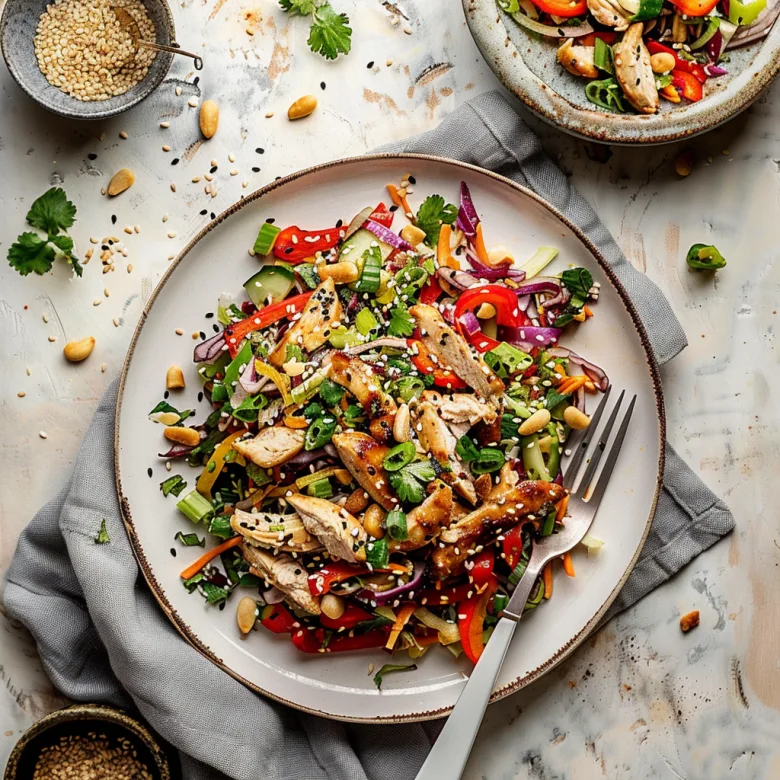
This vibrant sesame chicken salad brings together tender, juicy chicken with crisp vegetables and a rich, nutty dressing that transforms ordinary ingredients into something extraordinary. I’ve been making variations of this recipe for years, and it never fails to satisfy my family’s craving for fresh, flavorful meals that feel both healthy and indulgent.
Why This Incredible Sesame Chicken Salad Works
The magic lies in the balance of textures and the complex sesame dressing that coats every ingredient beautifully. The combination of crunchy vegetables, tender chicken, and toasted sesame seeds creates layers of flavor and satisfaction that make this salad feel like a complete meal rather than a side dish.
Ingredients
For the Chicken:
• 1½ pounds boneless, skinless chicken breasts or thighs
• 2 tablespoons olive oil
• 1 teaspoon garlic powder
• 1 teaspoon onion powder
• ½ teaspoon salt
• ¼ teaspoon black pepper
• ¼ teaspoon paprika
For the Sesame Dressing:
• ¼ cup rice vinegar
• 3 tablespoons soy sauce (low sodium preferred)
• 2 tablespoons sesame oil
• 2 tablespoons honey
• 1 tablespoon fresh lime juice
• 1 tablespoon fresh ginger, minced
• 2 cloves garlic, minced
• 1 teaspoon sriracha (optional, for heat)
• 2 tablespoons sesame seeds, toasted
For the Salad:
• 8 cups mixed greens (romaine, butter lettuce, or spring mix)
• 2 cups red cabbage, thinly sliced
• 1 large carrot, julienned or shredded
• 1 red bell pepper, thinly sliced
• 1 cucumber, sliced into half-moons
• 4 green onions, chopped
• ½ cup fresh cilantro, chopped
• ¼ cup fresh mint leaves, chopped
• ¼ cup roasted peanuts or cashews, chopped
• 2 tablespoons additional sesame seeds for garnish
These ingredients work together to create a symphony of flavors and textures that make each bite interesting and satisfying.
A recipe worth trying: Ginger Chicken Udon Soup
How to Make It
1. Prepare the chicken: Season the chicken with olive oil, garlic powder, onion powder, salt, pepper, and paprika. Let it marinate for at least 15 minutes at room temperature, or up to 4 hours in the refrigerator for deeper flavor penetration.
2. Cook the chicken: Heat a large skillet or grill pan over medium-high heat. Cook the chicken for 6-7 minutes per side, or until the internal temperature reaches 165°F. The exact cooking time will depend on the thickness of your chicken pieces. Let the chicken rest for 5 minutes before slicing.
3. Slice the chicken: Cut the cooked chicken into thin strips or bite-sized pieces. I prefer strips because they distribute more evenly throughout the salad and are easier to eat.
4. Make the sesame dressing: In a medium bowl, whisk together rice vinegar, soy sauce, sesame oil, honey, lime juice, minced ginger, minced garlic, and sriracha if using. The dressing should be well emulsified and smooth. Stir in the toasted sesame seeds.
5. Toast additional sesame seeds: If you haven’t already toasted your sesame seeds, heat a small dry skillet over medium heat and toast the seeds for 2-3 minutes, stirring frequently until they’re golden brown and fragrant. Set aside to cool.
6. Prepare the vegetables: Wash and dry all the greens thoroughly. Slice the red cabbage into thin strips, julienne or shred the carrot, slice the bell pepper into thin strips, cut the cucumber into half-moons, chop the green onions, and roughly chop the cilantro and mint.
7. Assemble the salad: In a large serving bowl, combine the mixed greens, red cabbage, carrot, bell pepper, cucumber, green onions, cilantro, and mint. Toss gently to distribute the vegetables evenly.
8. Add the chicken: Place the sliced chicken on top of the vegetable mixture, distributing it evenly across the salad.
9. Dress the salad: Drizzle the sesame dressing over the entire salad. Start with about three-quarters of the dressing and add more as needed. Toss everything together until all ingredients are well coated.
10. Final touches: Sprinkle the chopped nuts and additional toasted sesame seeds over the top of the salad for extra crunch and visual appeal.
This method ensures that every component retains its distinct texture while being unified by the flavorful sesame dressing that brings everything together beautifully.
Nutrition at a Glance
• High-quality protein: Each serving provides approximately 35-40 grams of lean protein from the chicken, supporting muscle maintenance and satiety
• Healthy fats: Sesame oil and nuts contribute beneficial monounsaturated and polyunsaturated fats that support heart health
• Fiber-rich vegetables: The variety of vegetables provides essential fiber for digestive health and helps you feel full longer
• Antioxidants: Colorful vegetables and herbs deliver a wide range of antioxidants that support overall health and reduce inflammation
• Low in refined carbohydrates: This salad is naturally low in processed carbs, making it suitable for various dietary approaches
• Vitamin C: Bell peppers, cilantro, and lime juice provide immune-supporting vitamin C
• Folate: Leafy greens contribute folate, which is essential for cell division and DNA synthesis
• Potassium: Many of the vegetables provide potassium, which supports healthy blood pressure
• Calcium: Sesame seeds and leafy greens contribute calcium for bone health
• Iron: Chicken and leafy greens provide both heme and non-heme iron for healthy blood
• Magnesium: Nuts and seeds provide magnesium, which supports muscle and nerve function
• B vitamins: Chicken provides B vitamins essential for energy metabolism
How to Serve It
• As a main course lunch: This salad is substantial enough to serve as a complete lunch, especially when paired with some whole grain crackers or a slice of crusty bread
• Light dinner option: Serve alongside a cup of miso soup or a small portion of brown rice for a satisfying but not heavy dinner
• Meal prep portions: Divide into individual containers for grab-and-go lunches throughout the week
• Party or potluck dish: Double or triple the recipe to feed a crowd at gatherings
• With Asian-inspired sides: Pair with edamame, seaweed salad, or vegetable spring rolls for a themed meal
• Protein-packed post-workout meal: The combination of protein and fresh vegetables makes it an excellent recovery meal
• Family-style serving: Present in a large bowl with serving utensils for a casual family dinner
The versatility of this salad makes it suitable for almost any occasion, from quick weekday meals to special gatherings.
Common Mistakes
• Overdressing the salad: Too much dressing can make the greens soggy and overpower the other flavors; start with less and add more as needed
• Not drying the greens properly: Wet lettuce dilutes the dressing and creates a watery salad
• Overcooking the chicken: Dry chicken ruins the entire dish; use a meat thermometer to ensure you don’t exceed 165°F
• Cutting vegetables too large: Large pieces make the salad difficult to eat and create uneven distribution of flavors
• Forgetting to toast the sesame seeds: Raw sesame seeds lack the nutty depth that toasted ones provide
• Adding the dressing too early: Dressing the salad too far in advance causes the greens to wilt
• Not balancing flavors in the dressing: Taste and adjust the sweet, salty, and acidic elements to achieve harmony
• Using low-quality sesame oil: The sesame oil is a key flavor component, so invest in a good quality toasted sesame oil
Avoiding these pitfalls will ensure your salad turns out restaurant-quality every time.
Storage and Reheating
• Refrigerate components separately: Store the dressed salad, undressed vegetables, and chicken in separate containers to maintain freshness
• Dressing keeps well: The sesame dressing can be stored in the refrigerator for up to one week in a sealed container
• Cooked chicken storage: Properly stored cooked chicken will keep for 3-4 days in the refrigerator
• Don’t freeze the salad: The vegetables don’t freeze well and will become mushy when thawed
• Pre-washed greens: If using pre-washed greens, they typically stay fresh for 3-5 days when properly stored
• Chicken can be frozen: Cooked, seasoned chicken can be frozen for up to 3 months and thawed for future salads
• Assembly timing: For best results, assemble the salad just before serving
• Leftover dressed salad: Consume dressed salad within 24 hours for best texture and flavor
Proper storage techniques ensure you can enjoy this salad multiple times throughout the week without compromising quality.
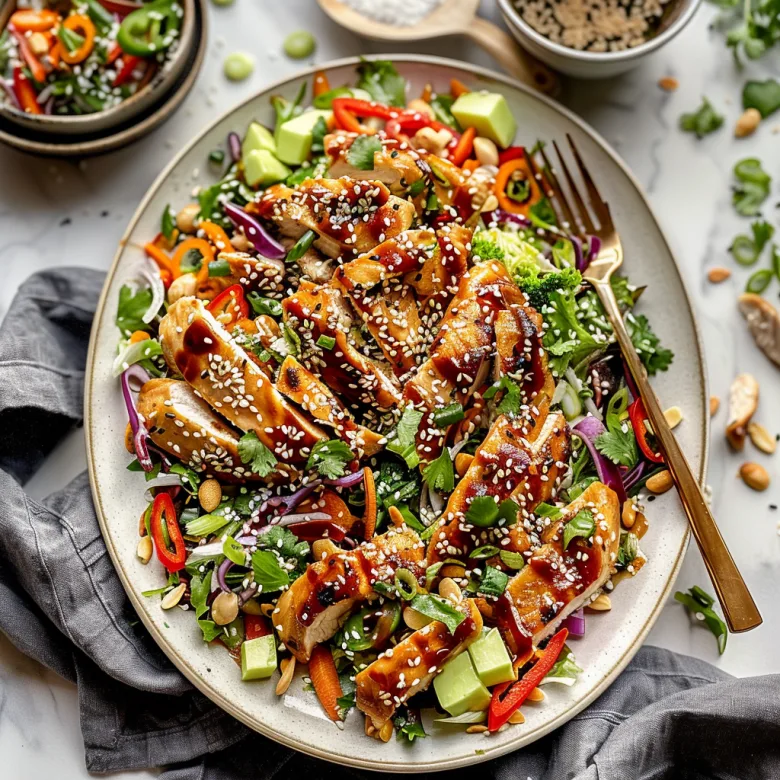
Leftover Ideas
• Sesame chicken wraps: Use leftover chicken and vegetables in large flour tortillas or lettuce wraps with additional dressing
• Grain bowl base: Serve the leftover chicken and vegetables over quinoa, brown rice, or cauliflower rice
• Asian-inspired pasta salad: Toss with cooked and cooled rice noodles or whole wheat pasta for a different texture
• Stuffed avocado: Fill halved avocados with the chicken salad mixture for a low-carb option
• Sandwich filling: Use the chicken and some of the vegetables as a sandwich filling with the dressing as a spread
• Pizza topping: Use the chicken and vegetables as toppings for a homemade or store-bought pizza crust
• Soup addition: Add the leftover chicken to a bowl of miso soup or vegetable broth for extra protein
• Omelet filling: Use small amounts of the leftover chicken and vegetables in morning omelets
These creative repurposing ideas help ensure nothing goes to waste while giving you variety in your meal planning throughout the week.
Variations and Substitutions
The beauty of this incredible sesame chicken salad lies in its adaptability to different dietary needs and preferences. Over the years, I’ve experimented with numerous variations that maintain the essence of the original while accommodating various requirements.
For those following a vegetarian diet, I’ve successfully substituted the chicken with crispy baked tofu, tempeh, or even marinated and grilled portobello mushrooms. The key is to ensure whatever protein replacement you choose can absorb the flavors well and provides a satisfying texture contrast to the crisp vegetables.
If you’re dealing with nut allergies, the roasted peanuts or cashews can be replaced with toasted sunflower seeds or pumpkin seeds, which provide similar crunch and nutritional benefits. I’ve also used toasted coconut flakes for a tropical twist that pairs surprisingly well with the sesame flavors.
The vegetables in this salad are highly customizable based on seasonal availability and personal preferences. I’ve substituted sugar snap peas for the bell peppers when they’re in season, added thinly sliced radishes for extra bite, or incorporated shredded Brussels sprouts in place of some of the cabbage during fall months. Blanched broccoli florets work well too, especially when you want to add more substantial vegetables.
For the dressing, maple syrup can replace honey for a vegan version, while apple cider vinegar can substitute for rice vinegar if that’s what you have on hand. I’ve also made versions using tahini in place of some sesame oil for a creamier consistency, though this changes the flavor profile slightly.
Seasonal Adaptations
Throughout the year, I adapt this recipe based on what’s fresh and available. During summer months, I love adding fresh corn kernels (either raw or quickly blanched), cherry tomatoes, and fresh basil alongside the mint and cilantro. The sweetness of summer corn pairs beautifully with the nutty sesame dressing.
Fall versions might include thinly sliced apples or pears for sweetness, roasted butternut squash cubes for heartiness, and toasted pumpkin seeds instead of the usual nuts. These additions complement the sesame flavors while adding seasonal warmth to the dish.
Winter adaptations often feature heartier greens like massaged kale or spinach, along with roasted root vegetables such as sweet potatoes or carrots. These modifications make the salad more substantial and warming during colder months.
Spring versions celebrate the season with fresh pea shoots, asparagus pieces, and baby vegetables that add delicate flavors and beautiful colors to the mix.
Make-Ahead Strategy
This salad is excellent for meal preparation, but success lies in understanding which components can be prepared in advance and which should be added just before serving. I typically cook a large batch of seasoned chicken at the beginning of the week, which serves as the protein base for multiple meals.
The sesame dressing actually improves with time as the flavors meld together. I often make a double batch and store it in the refrigerator, where it keeps well for up to ten days. Just remember to bring it to room temperature and whisk it well before using, as the oil may solidify slightly when cold.
Vegetables can be prepped 2-3 days in advance if stored properly. I wash and thoroughly dry all greens, then store them in airtight containers with paper towels to absorb excess moisture. Harder vegetables like carrots, bell peppers, and cabbage can be cut and stored separately for several days.
For individual meal prep portions, I layer the ingredients in glass containers with the heartier vegetables at the bottom, followed by the greens, then the chicken on top. The dressing goes in a separate small container to be added just before eating.
Cooking Techniques for Better Results
The quality of this salad often comes down to proper technique in the seemingly simple steps. When cooking the chicken, I’ve found that pounding it to an even thickness ensures uniform cooking and prevents dry, overcooked edges while the center reaches safe temperature.
PrintIncredible Sesame Chicken Salad
- Total Time: 35 minutes
- Yield: 4 servings 1x
Description
A vibrant, protein-packed salad featuring tender seasoned chicken, crisp vegetables, and a rich sesame dressing with toasted sesame seeds and fresh herbs.
Ingredients
- 1½ pounds boneless, skinless chicken breasts or thighs
- 2 tablespoons olive oil
- 1 teaspoon garlic powder
- 1 teaspoon onion powder
- ½ teaspoon salt
- ¼ teaspoon black pepper
- ¼ teaspoon paprika
- ¼ cup rice vinegar
- 3 tablespoons soy sauce
- 2 tablespoons sesame oil
- 2 tablespoons honey
- 1 tablespoon fresh lime juice
- 1 tablespoon fresh ginger, minced
- 2 cloves garlic, minced
- 1 teaspoon sriracha (optional)
- 2 tablespoons sesame seeds, toasted
- 8 cups mixed greens
- 2 cups red cabbage, thinly sliced
- 1 large carrot, julienned
- 1 red bell pepper, thinly sliced
- 1 cucumber, sliced
- 4 green onions, chopped
- ½ cup fresh cilantro, chopped
- ¼ cup fresh mint leaves, chopped
- ¼ cup roasted peanuts, chopped
Instructions
- 1. Season chicken with olive oil, garlic powder, onion powder, salt, pepper, and paprika. Marinate 15 minutes.
- 2. Cook chicken in heated skillet 6-7 minutes per side until internal temperature reaches 165°F. Rest 5 minutes, then slice.
- 3. Whisk together rice vinegar, soy sauce, sesame oil, honey, lime juice, ginger, garlic, and sriracha. Stir in toasted sesame seeds.
- 4. Toast additional sesame seeds in dry skillet 2-3 minutes until golden.
- 5. Combine mixed greens, cabbage, carrot, bell pepper, cucumber, green onions, cilantro, and mint in large bowl.
- 6. Add sliced chicken to vegetables.
- 7. Drizzle with sesame dressing and toss to coat.
- 8. Garnish with chopped peanuts and additional toasted sesame seeds.
Notes
Store dressing separately for meal prep. Chicken and dressing keep 3-4 days refrigerated. Best assembled just before serving.
- Prep Time: 20 minutes
- Cook Time: 15 minutes
- Category: Salad
- Method: No-Bake
- Cuisine: Asian-American
Nutrition
- Serving Size: 1 serving
- Calories: 385
- Sugar: 14g
- Sodium: 580mg
- Fat: 18g
- Carbohydrates: 22g
- Fiber: 6g
- Protein: 38g
3 thoughts on “Incredible Sesame Chicken Salad | Ambitious Kitchen Recipe”