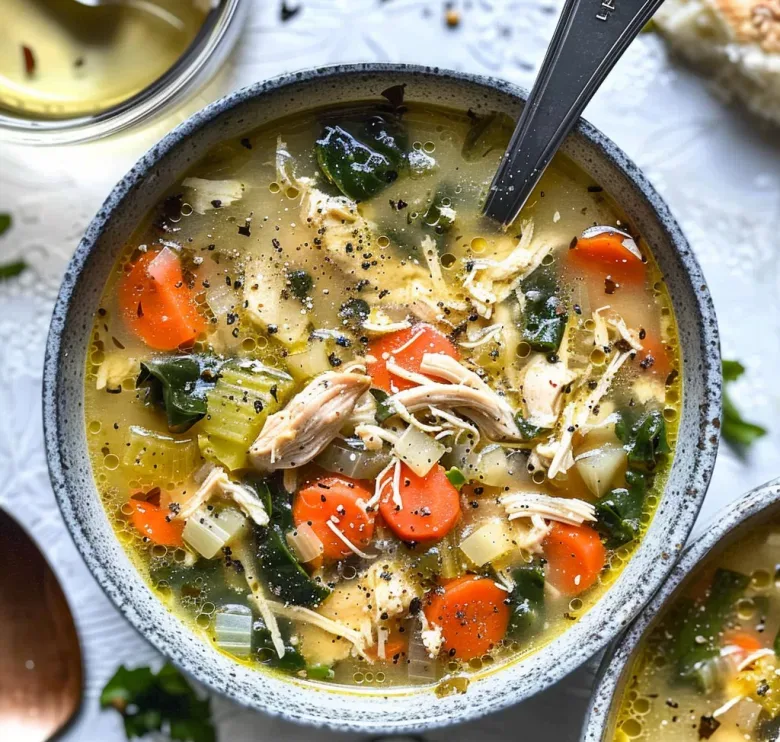
When you need a hearty, nourishing meal that comes together quickly, this rotisserie chicken soup delivers comfort in every bowl. Using store-bought rotisserie chicken as the base creates rich flavor without hours of simmering, while keeping it naturally low-carb and paleo-friendly means you can enjoy this warming soup any day of the week.
Why This Rotisserie Chicken Soup Works
The genius of this recipe lies in its simplicity and the depth of flavor that rotisserie chicken provides. The pre-cooked chicken gives you tender meat and creates a flavorful broth base, while the combination of vegetables adds texture and nutrients without relying on grains or starches for substance.
Ingredients
This recipe uses simple, whole-food ingredients that you can find at any grocery store. The beauty of using rotisserie chicken is that most of the work is already done for you.
- 1 whole rotisserie chicken (about 2.5-3 pounds)
- 2 tablespoons olive oil or avocado oil
- 1 large yellow onion, diced (about 1 cup)
- 3 large carrots, sliced into rounds (about 1 cup)
- 3 celery stalks, chopped (about 3/4 cup)
- 4 cloves garlic, minced
- 8 cups water
- 2 bay leaves
- 1 tablespoon fresh thyme leaves (or 1 teaspoon dried)
- 1 tablespoon fresh rosemary, chopped (or 1 teaspoon dried)
- 1 teaspoon sea salt (adjust to taste)
- 1/2 teaspoon black pepper
- 1/4 teaspoon turmeric (optional, for color and anti-inflammatory benefits)
- 2 tablespoons fresh parsley, chopped
- 1 tablespoon fresh lemon juice
These ingredients create layers of flavor that develop beautifully as the soup simmers, transforming simple vegetables and chicken into a deeply satisfying meal.
Check this out: This rotisserie chicken and mushroom chicken soup
How to Make It
The process involves building flavor through proper technique, starting with removing all the meat from your rotisserie chicken and using every part for maximum taste.
- Prepare the chicken: Remove all meat from the rotisserie chicken, shredding it into bite-sized pieces. Set the meat aside in a bowl. Keep the bones, skin, and any cartilage – these will create your flavorful broth base. This step takes about 10 minutes and is worth doing carefully to get every bit of meat.
- Start the broth: Place all the chicken bones, skin, and cartilage in a large pot or Dutch oven. Add 8 cups of water, bay leaves, and half the salt. Bring to a boil over high heat, then reduce to a gentle simmer. Let this simmer for 30-45 minutes, skimming off any foam that rises to the surface. This creates a rich, gelatinous broth that forms the soup’s foundation.
- Strain the broth: Pour the broth through a fine-mesh strainer into a large bowl, discarding all the solids. You should have about 6-7 cups of flavorful broth. If you have less, add water to reach 6 cups. If you have more, that’s even better – the concentrated flavor will be incredible.
- Sauté the vegetables: In the same pot, heat olive oil over medium heat. Add the diced onion and cook for 4-5 minutes until it begins to soften and become translucent. Add the carrots and celery, cooking for another 5-6 minutes until they start to soften. The vegetables should retain some texture at this point.
- Add aromatics: Stir in the minced garlic, thyme, rosemary, and turmeric if using. Cook for 30-60 seconds until fragrant. This step builds the aromatic base that makes the soup so appealing.
- Combine and simmer: Pour the strained broth back into the pot with the vegetables. Add the remaining salt and black pepper. Bring to a boil, then reduce heat and let simmer for 15-20 minutes until the vegetables are tender but not mushy. Taste and adjust seasoning as needed.
- Add the chicken: Stir in the shredded chicken meat and let it heat through for 3-4 minutes. The chicken is already cooked, so you’re just warming it and allowing it to absorb some of the broth flavors.
- Finish the soup: Remove from heat and stir in the fresh parsley and lemon juice. The lemon juice brightens the entire soup and balances the rich, savory flavors. Taste one more time and adjust salt, pepper, or lemon juice as needed.
This method creates a soup with complex, developed flavors that taste like they’ve been simmering all day, even though the active cooking time is under an hour.
Nutrition at a Glance
This soup packs impressive nutrition while staying true to low-carb and paleo principles:
- High protein content: Each serving provides approximately 25-30 grams of complete protein from the chicken
- Low in carbohydrates: Only about 6-8 grams of net carbs per serving, primarily from vegetables
- Rich in vitamins: Carrots provide beta-carotene, while celery adds potassium and folate
- Anti-inflammatory compounds: Turmeric and garlic offer natural anti-inflammatory properties
- Collagen and minerals: The homemade broth provides collagen, calcium, and magnesium from the chicken bones
- Healthy fats: Olive oil and natural fats from the chicken support nutrient absorption
- Sodium balance: Controlled sodium content that can be adjusted to dietary needs
- Fiber content: About 3-4 grams per serving from the vegetables
The nutritional profile makes this soup an excellent choice for anyone following ketogenic, paleo, or whole food eating patterns.
How to Serve It
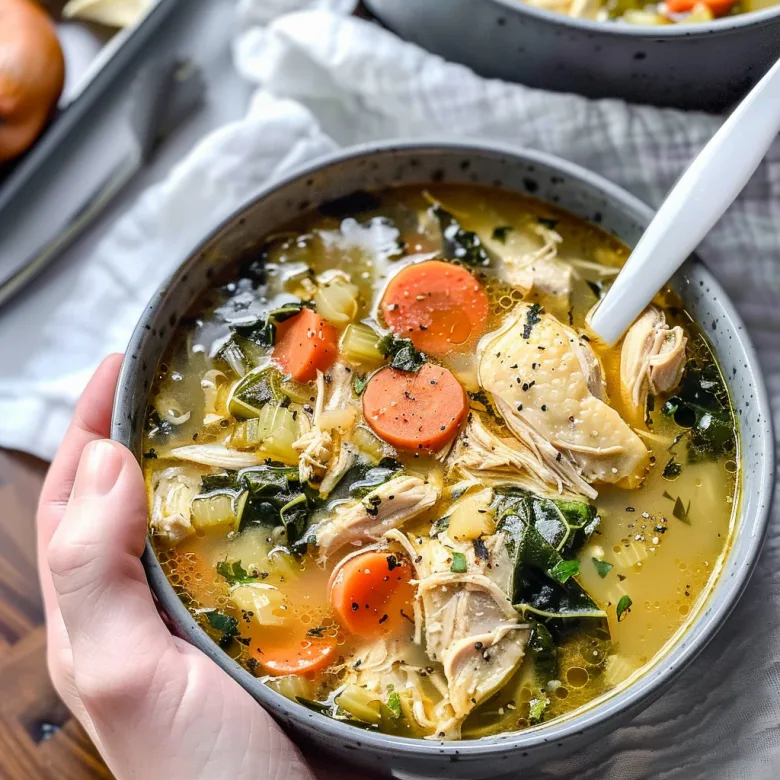
This versatile soup works well in many different serving scenarios and pairs beautifully with various accompaniments:
- As a light lunch: Serve with a side salad dressed with olive oil and vinegar for a complete, satisfying meal
- For dinner: Pair with roasted vegetables like Brussels sprouts, cauliflower, or green beans
- With low-carb bread alternatives: Serve alongside almond flour biscuits or seed crackers for those who want something to dip
- Garnish options: Fresh herbs like chives, dill, or additional parsley add color and fresh flavor
- Avocado addition: Diced avocado makes an excellent creamy garnish that adds healthy fats
- Meal prep portions: Divide into individual containers for easy grab-and-go lunches throughout the week
- Family style: Serve from a large pot with ladle, allowing everyone to control their portion size
- Temperature serving: This soup tastes excellent hot, warm, or even at room temperature for outdoor meals
The soup’s clean, comforting flavors complement rather than compete with other dishes, making it an excellent foundation for larger meals.
Common Mistakes
Avoiding these typical pitfalls will ensure your soup turns out flavorful and satisfying every time:
- Discarding the chicken bones: The bones are where the real flavor lives – always use them to make the broth base rather than starting with plain water
- Overcooking the vegetables: Add vegetables in stages and don’t let them become mushy – they should retain some texture for the best eating experience
- Skipping the sautéing step: Raw vegetables added directly to broth lack depth – always sauté your aromatics first
- Adding chicken too early: Since rotisserie chicken is already cooked, adding it too early makes it tough and stringy
- Under-seasoning the broth: Taste frequently and adjust salt levels – under-seasoned broth makes the entire soup bland
- Not straining the initial broth: Leaving bone fragments and skin pieces creates an unpleasant texture
- Boiling instead of simmering: Aggressive boiling creates cloudy, less flavorful broth – maintain a gentle simmer
- Forgetting the acid: The lemon juice at the end is crucial for balancing and brightening all the flavors
Pay attention to these details, and you’ll consistently create soup that rivals any restaurant version.
Storage and Reheating
This soup stores exceptionally well and often tastes even better the next day as flavors continue to develop:
- Refrigerator storage: Keep in covered containers for up to 4-5 days – the soup will develop a gel-like consistency when cold due to the natural collagen
- Freezer storage: Freeze in portion-sized containers for up to 3 months – leave some headspace for expansion
- Reheating from refrigerated: Warm gently on the stovetop over medium-low heat, stirring occasionally until heated through
- Reheating from frozen: Thaw overnight in refrigerator, then reheat on stovetop, or reheat directly from frozen over low heat
- Microwave reheating: Use 50% power and stir every minute to ensure even heating and prevent hot spots
- Texture considerations: The soup may thicken during storage – add a little water or broth when reheating to achieve desired consistency
- Seasoning adjustment: Taste after reheating and adjust salt, pepper, or lemon juice as flavors may mellow during storage
- Container tips: Use glass containers when possible to avoid any plastic flavors, and always cool completely before refrigerating
Proper storage techniques ensure you can enjoy this nourishing soup throughout the week with minimal effort.
Leftover Ideas
Transform your leftover soup into entirely new meals with these creative approaches:
- Soup base for other recipes: Use as a cooking liquid for cauliflower rice or shirataki noodles to create different soup variations
- Sauce reduction: Simmer down to concentrate flavors and use as a sauce over roasted vegetables or grilled meats
- Casserole foundation: Combine with vegetables and top with almond flour crumble for a low-carb casserole
- Egg drop variation: Reheat and slowly drizzle in beaten eggs while stirring to create an Asian-inspired egg drop soup
- Coconut curry twist: Add coconut milk and curry spices to transform it into a completely different flavor profile
- Cold soup option: Serve chilled with fresh herbs as a refreshing summer soup
- Protein addition: Stir in cooked ground turkey, beef, or pork for an even heartier meal
- Vegetable expansion: Add seasonal vegetables like zucchini, bell peppers, or mushrooms to create new variations
- Broth separation: Strain out solids and use the flavorful broth as a base for entirely different soups
These variations ensure you’ll never get bored with your soup and can maximize every bit of your cooking efforts.
PrintRotisserie Chicken Soup (Low Carb + Paleo!)
- Total Time: 80 minutes
- Yield: 6 servings 1x
Description
A nourishing, flavorful soup made with rotisserie chicken and vegetables. Low-carb, paleo-friendly, and ready in under an hour.
Ingredients
- 1 whole rotisserie chicken (about 2.5–3 pounds)
- 2 tablespoons olive oil or avocado oil
- 1 large yellow onion, diced
- 3 large carrots, sliced into rounds
- 3 celery stalks, chopped
- 4 cloves garlic, minced
- 8 cups water
- 2 bay leaves
- 1 tablespoon fresh thyme leaves
- 1 tablespoon fresh rosemary, chopped
- 1 teaspoon sea salt
- 1/2 teaspoon black pepper
- 1/4 teaspoon turmeric (optional)
- 2 tablespoons fresh parsley, chopped
- 1 tablespoon fresh lemon juice
Instructions
- 1. Remove all meat from rotisserie chicken and shred into bite-sized pieces. Reserve bones and skin.
- 2. Place bones and skin in large pot with 8 cups water, bay leaves, and half the salt. Simmer 30-45 minutes.
- 3. Strain broth through fine-mesh strainer, discarding solids. You should have about 6-7 cups broth.
- 4. Heat oil in same pot over medium heat. Sauté onion 4-5 minutes until translucent.
- 5. Add carrots and celery, cook 5-6 minutes until starting to soften.
- 6. Add garlic, thyme, rosemary, and turmeric. Cook 30-60 seconds until fragrant.
- 7. Add strained broth, remaining salt, and pepper. Bring to boil, then simmer 15-20 minutes.
- 8. Stir in shredded chicken and heat through 3-4 minutes.
- 9. Remove from heat and stir in parsley and lemon juice. Adjust seasoning to taste.
Notes
Store in refrigerator up to 5 days or freeze up to 3 months. Soup will gel when cold due to natural collagen – this is normal.
- Prep Time: 20 minutes
- Cook Time: 60 minutes
- Category: Soup
- Method: Simmering
- Cuisine: American
Nutrition
- Serving Size: 1 cup
- Calories: 180
- Sugar: 4g
- Sodium: 580mg
- Fat: 6g
- Carbohydrates: 8g
- Fiber: 3g
- Protein: 28g