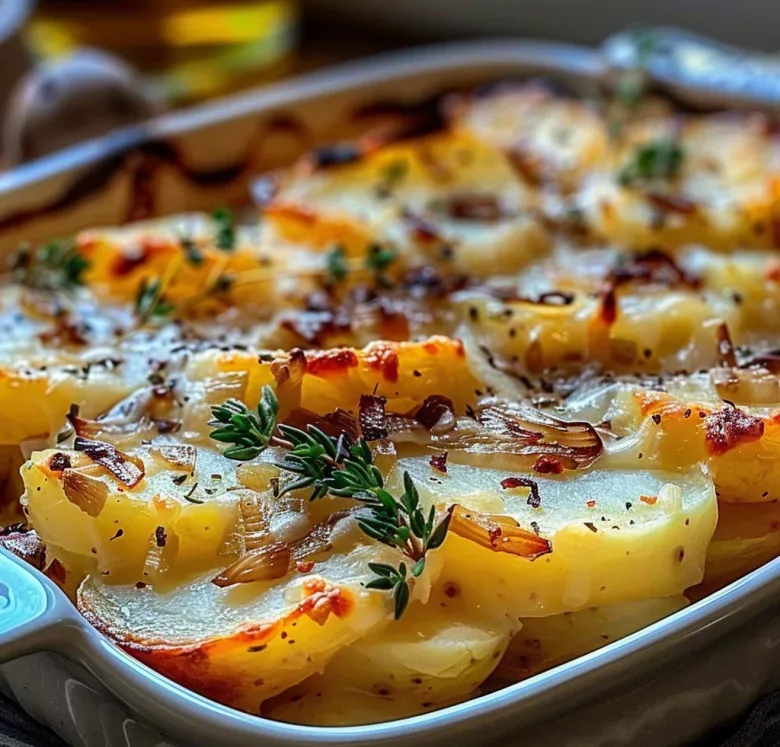
This French Onion Potato Bake is a comforting and hearty dish that brings together the deep, savory flavors of caramelized onions with tender potatoes, all baked to golden perfection. It’s a recipe that has become a regular in my kitchen, particularly when I’m craving something truly satisfying. It’s more than just a side dish; it’s a meal in itself.
Why This French Onion Potato Bake Works
The magic of this French Onion Potato Bake lies in the marriage of classic French onion soup flavors with the humble potato. Slow-cooked onions create an unparalleled depth of sweetness and umami, which infuses the creamy potato base. The cheesy topping adds a delightful salty crust, making every bite a complex and layered experience. It’s simple, yet sophisticated in its flavor profile.
Ingredients
Gathering your ingredients is the first step to a successful French Onion Potato Bake. Having everything prepped and ready to go makes the cooking process much smoother and more enjoyable.
- 2 pounds Yukon Gold potatoes (about 4-5 medium), peeled and thinly sliced (about 1/8-inch thick)
- 4 large yellow onions (about 2.5 pounds), thinly sliced
- 4 tablespoons unsalted butter
- 1 tablespoon olive oil
- 1 teaspoon granulated sugar (optional, but aids in caramelization)
- 2 cloves garlic, minced
- 1.5 cups low-sodium beef broth
- 1/2 cup dry white wine (like Sauvignon Blanc or Pinot Grigio)
- 2 tablespoons all-purpose flour
- 1/2 teaspoon salt, plus more to taste
- 1/4 teaspoon black pepper, plus more to taste
- 1 cup shredded Gruyère cheese
- 1/2 cup shredded Swiss cheese
- Fresh thyme sprigs for garnish (optional)
These are the foundational elements that will transform into a delicious French Onion Potato Bake. Each ingredient plays a vital role in building the rich flavors and textures. Let’s move on to how we bring them all together.
You might love this: Easy Baked Potato Slices Recipe
How to Make It
Creating this French Onion Potato Bake is a methodical process, but each step contributes to the final, deeply flavored result. Patience with the onions is key to unlocking their full potential.
- Caramelize the Onions: In a large skillet or Dutch oven, melt the butter with the olive oil over medium-low heat. Add the sliced onions and sugar (if using). Cook, stirring occasionally, for 30-45 minutes, or until the onions are deeply golden brown and softened. This slow caramelization is crucial for developing the signature French onion flavor. If they start to stick, add a tablespoon of water and continue scraping. Don’t rush this step; it’s where the real flavor is born. The aroma in your kitchen will be incredible.
- Add Garlic and Deglaze: Stir in the minced garlic and cook for another minute until fragrant. Pour in the white wine and scrape up any browned bits from the bottom of the pan. Let it simmer and reduce by about half, which usually takes 2-3 minutes. This process deglazes the pan, capturing all the delicious onion fond.
- Make the Broth Mixture: In a medium bowl, whisk together the beef broth and flour until smooth. This will create a slightly thickened sauce that helps bind the potatoes.
- Combine and Simmer: Add the beef broth and flour mixture to the skillet with the onions. Bring to a simmer, stirring constantly. Cook for about 5 minutes, or until the sauce has thickened slightly. Season with 1/2 teaspoon salt and 1/4 teaspoon pepper. Taste and adjust seasonings if needed. The sauce should be flavorful and rich.
- Prepare the Potatoes: While the onions are caramelizing or the broth mixture is simmering, ensure your potatoes are thinly and evenly sliced. This uniformity is important for consistent cooking. You can do this with a sharp knife or, for ease and consistency, a mandoline slicer. If you’re using a mandoline, be very careful and use the safety guard.
- Assemble the Bake: Preheat your oven to 375°F (190°C). Lightly grease a 9×13 inch baking dish. Arrange a layer of the sliced potatoes in the bottom of the dish, overlapping them slightly.
- Layer Flavors: Spoon about half of the caramelized onion and broth mixture evenly over the potato layer.
- Add More Potatoes and Onions: Top with another layer of potato slices, followed by the remaining caramelized onion and broth mixture. Ensure the top potato layer is spread as evenly as possible.
- Add Cheese: Sprinkle the shredded Gruyère and Swiss cheeses evenly over the top of the potato bake.
- Bake: Tent the baking dish loosely with aluminum foil. Bake for 40 minutes.
- Brown the Top: Remove the foil and bake for another 20-25 minutes, or until the potatoes are tender when pierced with a fork and the cheese topping is melted and golden brown. If you like a crispier topping, you can place it under the broiler for the last 1-2 minutes, watching it very closely to prevent burning.
- Rest and Serve: Let the French Onion Potato Bake rest for about 10-15 minutes before serving. This allows the flavors to meld and the bake to set slightly, making it easier to slice and serve. Garnish with fresh thyme sprigs if desired.
And there you have it – a delicious French Onion Potato Bake, ready to be enjoyed. This detailed process ensures that every mouthful is packed with flavor and comfort.
Nutrition at a Glance
While this dish is certainly indulgent, understanding its nutritional components can help you incorporate it into your meal planning. It’s a substantial dish, particularly rich in carbohydrates from the potatoes and fats from the butter and cheese. The protein content is moderate, and the sodium can vary based on the broth used and added salt.
- Calories: Varies depending on exact portion size and amounts of cheese/butter used, but generally in the range of 350-500 per serving.
- Carbohydrates: Primarily from the potatoes, providing sustained energy.
- Protein: Contributes some protein, mainly from the cheese and beef broth.
- Fat: Comes from butter, olive oil, and cheese. Type of fat is mostly dairy and vegetable sources.
- Fiber: Present in potatoes, though some is lost during peeling and cooking.
- Vitamins and Minerals: Potatoes offer potassium and Vitamin C. Cheese contributes calcium.
How to Serve It
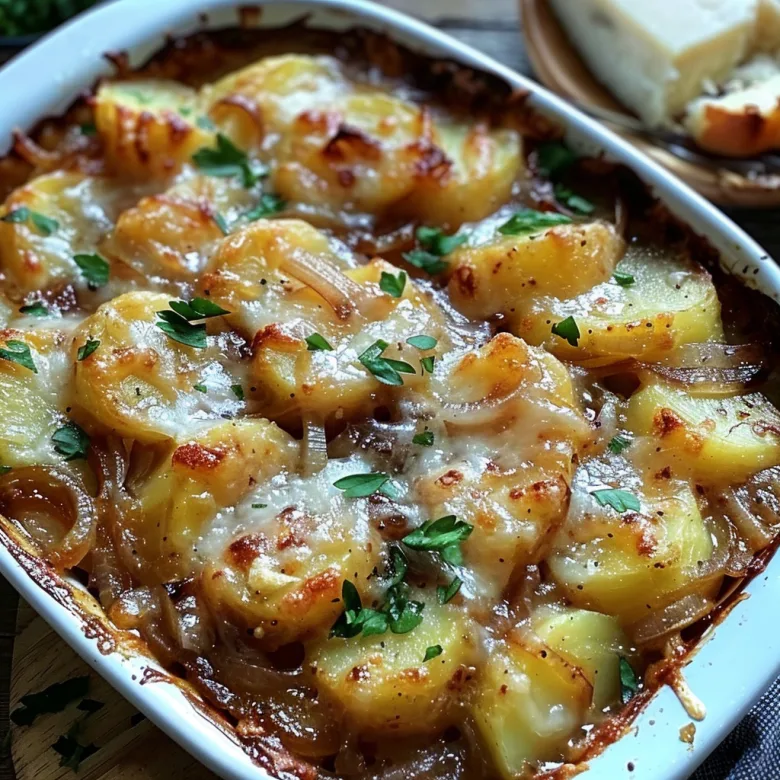
This French Onion Potato Bake is incredibly versatile and can complement a wide range of main dishes. Its rich flavor also means it can stand on its own as part of a comforting meal.
- As a hearty side dish to roasted meats like beef, pork, or chicken.
- Alongside grilled steak or lamb chops for a satisfying meal.
- Paired with a crisp green salad and a light vinaigrette to balance the richness.
- As a vegetarian main course, perhaps served with a dollop of sour cream or Greek yogurt and extra herbs.
- Alongside other comforting dishes like pot roast or short ribs.
The best way to serve it is warm, fresh from the oven, allowing the cheesy topping to be at its most appealing.
Common Mistakes
Even with a straightforward recipe like this French Onion Potato Bake, a few common pitfalls can detract from the final result. Being aware of these can help ensure your bake turns out beautifully every time.
- Rushing the Onion Caramelization: This is the most frequent mistake. Trying to rush the onions by using high heat will result in burnt or bitter-tasting onions, rather than the deep, sweet flavor of slow caramelization. Be patient; the time invested here pays off significantly.
- Uneven Potato Slices: If your potato slices are of vastly different thicknesses, some will be undercooked while others are overcooked. Aim for consistent 1/8-inch slices for even cooking throughout the bake. A mandoline slicer is a great tool for this, used with extreme caution.
- Over-salting or Under-salting: Seasoning is critical. The caramelized onions and the broth mixture need adequate salt to bring out their flavors. However, be mindful of the salt content in your beef broth and cheese. Taste as you go, especially after adding the broth mixture to the onions.
- Not Letting It Rest: While tempting to dig in immediately, allowing the bake to rest for at least 10-15 minutes after it comes out of the oven helps it set. This makes it much easier to serve neat portions and prevents it from being too watery.
- Burning the Cheese Topping: If you prefer a very brown and bubbly top, keep a close eye on it when you remove the foil, especially if using the broiler. It can go from golden to burnt very quickly.
Avoiding these common missteps will lead to a more enjoyable and successful French Onion Potato Bake.
Storage and Reheating
Leftovers of this delightful French Onion Potato Bake can be stored and reheated for another delicious meal. Proper storage ensures the quality and safety of the food.
- Storage: Once completely cooled, transfer any leftovers to an airtight container. Store in the refrigerator for up to 3-4 days. Ensure the container is well-sealed to prevent the potatoes from drying out.
- Reheating in Oven: For the best texture, reheat the French Onion Potato Bake in a preheated oven at 325°F (160°C). Place individual servings or the entire dish (if it fits) in an oven-safe dish. Cover with foil to prevent the top from drying out and bake for 15-20 minutes, or until heated through. Remove the foil for the last few minutes if you’d like to crisp up the top a bit.
- Reheating in Microwave: For a quicker reheating option, place a portion in a microwave-safe dish. Microwave on medium power in 30-second increments until heated through. Be aware that the texture of the potatoes may be slightly softer after microwaving compared to oven reheating, and the cheese topping won’t be as crispy.
- Reheating on Stovetop: Small portions can sometimes be reheated gently in a non-stick skillet over medium-low heat, covered. This is best if the bake has some sauce, to prevent sticking. Stir occasionally until heated through.
Enjoy your reheated French Onion Potato Bake, which is almost as good as the first time around.
Leftover Ideas
Don’t let those delicious leftovers go to waste! This French Onion Potato Bake lends itself to creative repurposing for new and exciting meals. It’s a testament to the adaptability of good home cooking.
- Potato Cakes or Fritters: Mash up the leftover bake, perhaps adding an extra egg and a tablespoon of flour if needed to bind. Form into patties and pan-fry until golden brown and crispy. Serve with a dollop of sour cream or your favorite sauce.
- Savory Shepherd’s Pie Topping: Use the leftover bake as a robust topping for a classic Shepherd’s Pie. If you have leftover ground meat or lentils, use that as the base, then spread the French Onion Potato Bake over the top and bake until heated through and bubbly.
- Potato and Onion Hash: Chop the leftover bake into smaller pieces and sauté with some extra onions, bell peppers, or even some leftover cooked sausage or bacon for a hearty breakfast hash. Top with a fried egg for a complete meal.
- Baked Potato Casserole Booster: If you’re making a regular baked potato casserole, add a spoonful or two of the French Onion Potato Bake to the mix for an extra layer of deep, savory flavor.
- Simple Side Dish Enhancement: Even on its own, the reheated bake is a wonderful side. It’s a quick and easy way to elevate a simple grilled chicken breast or a pan-seared fish fillet without much extra effort.
French Onion Potato Bake
- Total Time: 2 hours 30 minutes
- Yield: 6–8 servings 1x
- Diet: Vegetarian
Description
A comforting and hearty bake featuring thinly sliced potatoes layered with deeply caramelized onions in a savory broth, topped with melted Gruyère and Swiss cheese. This dish is a flavorful side or a satisfying main course.
Ingredients
- 2 pounds Yukon Gold potatoes (about 4–5 medium), peeled and thinly sliced (about 1/8-inch thick)
- 4 large yellow onions (about 2.5 pounds), thinly sliced
- 4 tablespoons unsalted butter
- 1 tablespoon olive oil
- 1 teaspoon granulated sugar (optional, but aids in caramelization)
- 2 cloves garlic, minced
- 1.5 cups low-sodium beef broth
- 1/2 cup dry white wine (like Sauvignon Blanc or Pinot Grigio)
- 2 tablespoons all-purpose flour
- 1/2 teaspoon salt, plus more to taste
- 1/4 teaspoon black pepper, plus more to taste
- 1 cup shredded Gruyère cheese
- 1/2 cup shredded Swiss cheese
- Fresh thyme sprigs for garnish (optional)
Instructions
- 1. In a large skillet or Dutch oven, melt the butter with the olive oil over medium-low heat. Add the sliced onions and sugar (if using). Cook, stirring occasionally, for 30-45 minutes, or until the onions are deeply golden brown and softened.
- 2. Stir in the minced garlic and cook for another minute until fragrant. Pour in the white wine and scrape up any browned bits from the bottom of the pan. Let it simmer and reduce by about half, which usually takes 2-3 minutes.
- 3. In a medium bowl, whisk together the beef broth and flour until smooth.
- 4. Add the beef broth and flour mixture to the skillet with the onions. Bring to a simmer, stirring constantly. Cook for about 5 minutes, or until the sauce has thickened slightly. Season with 1/2 teaspoon salt and 1/4 teaspoon pepper.
- 5. Preheat your oven to 375°F (190°C). Lightly grease a 9×13 inch baking dish.
- 6. Arrange a layer of the thinly sliced potatoes in the bottom of the dish, overlapping them slightly.
- 7. Spoon about half of the caramelized onion and broth mixture evenly over the potato layer.
- 8. Top with another layer of potato slices, followed by the remaining caramelized onion and broth mixture.
- 9. Sprinkle the shredded Gruyère and Swiss cheeses evenly over the top.
- 10. Tent the baking dish loosely with aluminum foil. Bake for 40 minutes.
- 11. Remove the foil and bake for another 20-25 minutes, or until the potatoes are tender and the cheese is melted and golden brown.
- 12. Let the bake rest for 10-15 minutes before serving. Garnish with fresh thyme sprigs if desired.
Notes
Store any completely cooled leftovers in an airtight container in the refrigerator for up to 3-4 days. Reheat in a preheated oven at 325°F (160°C) covered with foil for 15-20 minutes, then uncover for the last few minutes, or microwave for a quicker option.
- Prep Time: 30 minutes
- Cook Time: 1 hour 30 minutes
- Category: Side Dish
- Method: Baking
- Cuisine: American
Nutrition
- Serving Size: 1 serving
- Calories: 420
- Sugar: 8g
- Sodium: 650mg
- Fat: 25g
- Carbohydrates: 35g
- Fiber: 5g
- Protein: 15g
1 thought on “Easy French Onion Potato Bake Recipe for a Comforting Side Dish”