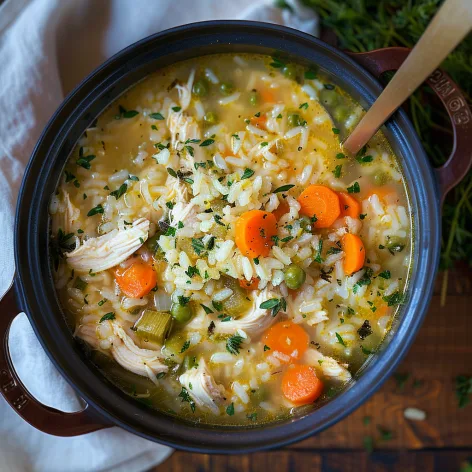
This chicken rice soup is the kind of recipe that feels like a warm hug in a bowl. It’s comforting, nourishing, and deeply satisfying, making it a go-to when you need something reliably delicious. It’s simple enough for a weeknight but special enough to share.
Why This Chicken Rice Soup Works
This recipe is a testament to how simple, wholesome ingredients can come together to create something truly comforting. It balances the richness of chicken with the gentle heartiness of rice and the fresh brightness of vegetables, all simmered in a flavorful broth.
Ingredients
- 2 tablespoons olive oil
- 1 pound boneless, skinless chicken thighs, cut into bite-sized pieces
- 1 medium yellow onion, finely chopped
- 2 medium carrots, peeled and diced
- 2 celery stalks, diced
- 2 cloves garlic, minced
- 8 cups low-sodium chicken broth
- 1 cup uncooked white rice (long-grain or basmati recommended)
- 1 teaspoon dried thyme
- ½ teaspoon dried rosemary
- Salt and freshly ground black pepper to taste
- 2 tablespoons fresh parsley, chopped (for garnish)
Gathering these ingredients is the first step towards a delicious bowl of homemade chicken rice soup. Each component plays a vital role in building the comforting flavors and textures. The olive oil acts as the medium for sautéing, the chicken thighs provide tender protein, the vegetables form the aromatic base, the garlic adds essential pungency, the chicken broth is the soul of the soup, the rice offers heartiness, and the herbs contribute to the fragrant profile. Seasonings like salt and pepper are crucial for bringing all these elements into harmony.
How to Make It
- Sear the Chicken: Heat the olive oil in a large pot or Dutch oven over medium-high heat. Add the chicken pieces and cook until browned on all sides, about 5-7 minutes. You don’t need to cook it through at this stage; we’re just building flavor. Remove the chicken from the pot and set it aside. This browning step is crucial for developing a deeper chicken flavor in the soup. The Maillard reaction that occurs during browning creates complex, savory notes that a simple simmer would miss entirely. It’s this foundational flavor that elevates the soup from merely “good” to something truly memorable, setting the stage for the subsequent ingredients to build upon.
- Sauté the Aromatics: Reduce the heat to medium. Add the chopped onion, carrots, and celery to the same pot. Cook, stirring occasionally, until the vegetables have softened, about 8-10 minutes. This process, called sweating the vegetables, releases their natural sweetness and sugars, forming the aromatic base of the soup. Add the minced garlic and cook for another minute until fragrant, being careful not to burn it. The gentle cooking of the vegetables helps them to soften and become translucent, releasing their moisture and developing their inherent sweetness. This slow sauté is where much of the soup’s foundational flavor is built. If the pot seems dry, a tablespoon of water or a splash more oil can be added to prevent sticking. As the garlic cooks, its pungent aroma will fill the kitchen, signaling the next stage of flavor development.
- Deglaze and Add Broth: Pour in about ½ cup of the chicken broth and scrape the bottom of the pot with a wooden spoon to loosen any browned bits from the chicken and vegetables. These bits are packed with flavor and will greatly enhance the final soup. Add the remaining chicken broth, dried thyme, and dried rosemary. Bring the mixture to a boil, then reduce the heat to low, cover, and simmer for 15-20 minutes. This allows the flavors to meld and the vegetables to truly soften. The deglazing step is vital; it’s where the fond – those flavorful browned bits stuck to the bottom of the pot – gets incorporated into the liquid, infusing the entire broth with a richer, more complex taste. Imagine those little flavorful remnants as concentrated essence of chicken and vegetables, ready to be dissolved and dispersed.
- Simmer and Cook Rice: After the initial simmering period for the vegetables, add the uncooked rice and the cooked chicken back into the pot. Stir well to ensure the rice is submerged and the chicken is distributed evenly. Bring the soup back to a gentle simmer. Cook, uncovered, stirring occasionally to prevent the rice from sticking to the bottom, until the rice is tender and the chicken is cooked through, about 15-20 minutes more. The exact cooking time for the rice can vary depending on the type of rice you use, so keep an eye on it. As the rice cooks, it will absorb some of the broth and release starches, which will naturally thicken the soup and create a more satisfying texture. This is the stage where the soup truly transforms into a hearty meal. Stirring is important to prevent the rice from clumping or sticking.
- Finish Cooking and Season: Continue to cook until the rice is tender to your liking and the chicken is fully heated through. The soup will have thickened nicely. While the rice is cooking, take the opportunity to taste the broth. This is the critical point for seasoning. Generously season with salt and freshly ground black pepper. Adjust seasonings as needed to achieve your desired flavor balance. The salt will awaken all the latent flavors in the broth and vegetables, bringing them to the forefront. Freshly ground black pepper adds a subtle warmth that complements the savory notes. Don’t hesitate to add more if needed; this step truly makes or breaks the soup.
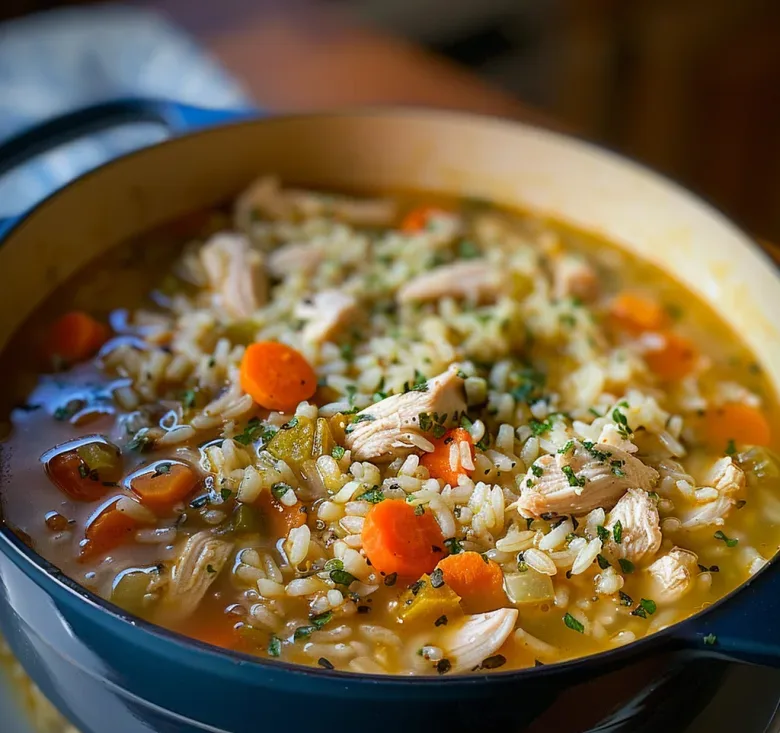
- Serve: Once the rice and chicken are cooked and the soup is perfectly seasoned, ladle the hot soup into bowls. Garnish with fresh chopped parsley for a pop of color and freshness. The bright green of the parsley contrasts beautifully with the golden broth and tender ingredients, adding a final flourish that’s both visually appealing and adds a subtle herbaceous note. Serve immediately and enjoy the comforting warmth.
This straightforward process ensures a delicious and nourishing chicken rice soup that’s ready to be enjoyed. The combination of browning, sautéing, simmering, and careful seasoning builds layers of flavor that are both complex and comforting.
You might love this: Homemade Chicken Noodle Soup
Nutrition at a Glance
- Protein: Chicken provides a good source of lean protein, essential for muscle repair, growth, and satiety. Protein helps you feel fuller for longer, making this soup a satisfying meal.
- Carbohydrates: The rice offers complex carbohydrates for sustained energy release. This makes the soup a great option for boosting energy levels, especially during colder months when you might need that extra comfort.
- Vitamins and Minerals: Carrots are a significant source of beta-carotene, which the body converts to Vitamin A (crucial for vision and immune function). Onions contribute to dietary intake of vitamin C and B vitamins, while celery provides Vitamin K and potassium. The chicken broth itself, especially if homemade or a good quality commercial variety, can be a source of electrolytes like sodium and potassium, important for hydration and bodily functions.
- Fiber: While white rice is not a high-fiber food, the vegetables in the soup add a healthy dose of dietary fiber. Fiber is important for digestive health, helping to regulate bowel movements and promoting a feeling of fullness.
- Low in Fat: When using boneless, skinless chicken thighs and a controlled amount of olive oil for sautéing, this soup is generally a low-fat meal. Chicken thighs do contain slightly more fat than breasts, but this contributes to their moistness and flavor without making the soup overly greasy.
- Hydration: The substantial amount of broth in this recipe contributes significantly to your daily fluid intake, helping to keep you hydrated. Staying adequately hydrated is essential for nearly all bodily processes.
- Sodium Control: By using low-sodium chicken broth and adding salt to taste, you can better manage the sodium content of the soup, which is important for individuals monitoring their blood pressure or overall sodium intake.
Enjoying this soup is a way to nourish your body with wholesome ingredients that offer a range of essential nutrients.
How to Serve It
This chicken rice soup is wonderfully versatile and can be served in several delightful ways, adapting to your mood, the occasion, or what’s available in your pantry.
- As a hearty main course: Its satisfying nature, with tender chicken and soft rice, makes it a complete and nourishing meal on its own. It’s a perfect option for a light lunch that keeps you fueled or a comforting dinner that warms you from the inside out.
- With crusty bread: The robust flavor of the broth practically begs for a good dipping companion. A warm slice of crusty baguette, a rustic sourdough, or even a chewy focaccia is ideal for soaking up every last drop of the savory broth. This adds an extra layer of texture and satisfaction.
- Alongside a fresh salad: For a balanced and healthy meal, pair this hearty soup with a vibrant green salad. A simple salad dressed with a light vinaigrette, perhaps with some cucumber, tomatoes, and a sprinkle of seeds, offers a refreshing contrast to the warm soup.
- With a side of crackers: If you’re looking for a lighter accompaniment or a bit of crunch, a serving of your favorite crackers can be a nice addition. Whole wheat crackers or simple water crackers work particularly well.
- Garnished generously: The simple act of garnishing can elevate the soup both visually and in terms of flavor. A sprinkle of fresh parsley or chives adds brightness. A dollop of plain Greek yogurt or sour cream can add a creamy tang, while a squeeze of fresh lemon juice can brighten the overall taste profile. A few toasted slivered almonds could even add a surprising nutty crunch.
This soup is designed to be a complete and comforting experience, easily adaptable to your mealtime desires and preferences. It’s a flexible recipe that welcomes personal touches and pairings.
Common Mistakes
Making chicken rice soup is generally straightforward, but a few common missteps can prevent it from reaching its full potential. Being aware of these can help ensure a delightful outcome every time.
- Overcooking the Rice: This is perhaps the most common mistake. When rice is cooked for too long, it becomes mushy and can turn the entire soup into a starchy, unpleasant paste. It’s important to follow the rice cooking times and check for tenderness. The goal is tender grains that still hold their shape, not disintegrated mush. This can happen if the soup is simmered for too long after adding the rice, or if the heat is too high.
- Not Browning the Chicken: The initial searing of the chicken is a non-negotiable step for developing deep flavor. Simply boiling the chicken in the broth will result in a pale, less flavorful soup. The browning process creates complex flavors through the Maillard reaction, adding richness and depth that makes the soup truly satisfying. Skipping this step means missing out on a significant layer of taste.
- Burning the Garlic: Garlic is a potent ingredient, and when burned, it imparts a bitter, acrid taste to the entire dish. Garlic should be added towards the end of the vegetable sautéing process and cooked only until fragrant, usually about 30-60 seconds. Overcooking it just slightly can lead to a very noticeable negative impact on the soup’s flavor profile.
- Under-Seasoning: Chicken broth, particularly low-sodium varieties, can be quite bland on its own. The seasoning stage at the end is crucial for bringing all the disparate flavors together and making them sing. Many home cooks tend to be too conservative with salt and pepper. Always taste and adjust seasoning generously until you achieve a balanced and vibrant flavor. The salt is what amplifies all the other ingredients.
- Using Too Much Oil: While a little oil is necessary for sautéing the vegetables and browning the chicken, using an excessive amount can make the soup greasy rather than rich. A tablespoon or two is usually sufficient for sautéing the aromatics, and the browning of the chicken will render some fat. If the soup seems too oily after cooking, you can skim some of the fat from the surface before serving.
- Not Stirring the Rice: White rice, especially when simmering in liquid, has a tendency to stick to the bottom of the pot. Failing to stir occasionally can lead to burnt rice at the bottom and a soup that has lost some of its intended texture. Regular, gentle stirring, particularly in the initial stages of rice cooking, will prevent this issue.
Avoiding these common pitfalls will help ensure your chicken rice soup turns out wonderfully, with excellent flavor and texture every time.
Storage and Reheating
Proper storage and reheating are key to enjoying your delicious chicken rice soup long after it’s first made.
- Refrigeration: Once the soup has cooled sufficiently to room temperature (this usually takes about 1-2 hours at room temperature, or you can speed it up by placing the pot in an ice bath), transfer it to an airtight container. Store it in the refrigerator. It will typically keep well for 3 to 4 days. Ensure the container is well-sealed to prevent the soup from absorbing odors from other foods in the fridge.
- Reheating on the Stovetop: This is generally the preferred method for reheating soup as it allows for even heating and better control over the consistency. Gently reheat the soup in a pot or Dutch oven over medium-low heat. Stir occasionally to ensure even temperature distribution and to prevent the rice or vegetables from sticking to the bottom. You may find that the soup has thickened considerably as the rice has absorbed more liquid. If this is the case, stir in a splash of low-sodium chicken broth, water, or even milk to thin it to your desired consistency. This method also allows you to adjust seasoning if needed.
- Reheating in the Microwave: For a quicker individual portion, ladle the desired amount of soup into a microwave-safe bowl. Cover the bowl loosely with a microwave-safe lid or plastic wrap to prevent splattering, but allow for steam to escape. Heat on medium power (50-70%) for 1-2 minute intervals, stirring halfway through, until the soup is heated through. Be cautious when removing the hot lid or wrap. Microwaving can sometimes lead to uneven heating, so stirring is essential.
- Avoid Refreezing: While chicken rice soup can be frozen, it’s generally not recommended to refreeze and then reheat it multiple times. The texture of the rice and vegetables can degrade with repeated freezing and thawing cycles, leading to a less desirable consistency. If you plan to freeze portions, it’s best to thaw and reheat them only once.
Proper storage and reheating will ensure your leftovers remain delicious and safe to eat, just as enjoyable as when they were first prepared.
Leftover Ideas
The deliciousness of chicken rice soup doesn’t have to end after the first meal. Leftovers can be transformed into entirely new and exciting dishes, minimizing waste and maximizing flavor.
- Chicken and Rice Salad: For a refreshing cold dish, drain away some of the excess broth from the leftovers (or use a thicker portion of the soup). Shred the chicken further if desired. Toss the remaining rice and chicken with finely chopped celery, a bit of finely diced red onion or green onion for a little bite, and a dollop of mayonnaise or plain Greek yogurt for creaminess. A squeeze of fresh lemon juice and a pinch of black pepper will add brightness. This makes for a satisfying and light lunch.
- Savory Rice Bowls with a Twist: Reheat the leftover soup, perhaps allowing it to thicken further by simmering uncovered for a bit longer. Serve this heartier version in bowls and top it with a fried or poached egg for added richness, a drizzle of soy sauce or tamari for an umami boost, and some chopped green onions or a sprinkle of sesame seeds for freshness and texture. This transforms a simple soup into a more substantial and flavorful meal.
- Flavorful Stock Base for Other Dishes: If the texture of the rice has become too soft for your liking, or if you prefer a less soupy consistency, you can strain out the rice and chicken. The remaining flavorful broth can be a fantastic base for other dishes. Use it as the liquid for cooking risotto, a base for a quick pasta sauce, or to add depth when simmering grains like quinoa or farro. The cooked chicken can be used in sandwiches, wraps, or added to other recipes as a protein boost. Discard the cooked rice if it’s excessively mushy, but the chicken and broth are highly salvageable.
- Added to Other Dishes for Texture and Protein: The already cooked chicken and rice can be an excellent, convenient addition to a variety of other dishes. Stir them into a vegetable stir-fry to add bulk and protein. Fold them into a casserole mixture before baking for added texture and substance. They can even be used as a base for a quick pilaf by sautéing some additional aromatics and then adding the leftovers with a bit more liquid.
Transforming your leftovers into new dishes is a rewarding way to reduce waste, save time, and enjoy even more delicious meals throughout the week.
PrintChicken Rice Soup – An Organized Chaos
- Total Time: 60 minutes
- Yield: 6 servings 1x
Description
A comforting and nourishing chicken and rice soup recipe, perfect for weeknights. Simple ingredients, easy steps, and deeply satisfying flavor.
Ingredients
- 2 tablespoons olive oil
- 1 pound boneless, skinless chicken thighs, cut into bite-sized pieces
- 1 medium yellow onion, finely chopped
- 2 medium carrots, peeled and diced
- 2 celery stalks, diced
- 2 cloves garlic, minced
- 8 cups low-sodium chicken broth
- 1 cup uncooked white rice (long-grain or basmati recommended)
- 1 teaspoon dried thyme
- ½ teaspoon dried rosemary
- Salt and freshly ground black pepper to taste
- 2 tablespoons fresh parsley, chopped (for garnish)
Instructions
- 1. Heat olive oil in a large pot or Dutch oven over medium-high heat. Add chicken pieces and cook until browned on all sides, about 5-7 minutes. Remove chicken and set aside.
- 2. Reduce heat to medium. Add onion, carrots, and celery to the pot. Cook until softened, about 8-10 minutes. Add garlic and cook for 1 minute.
- 3. Pour in ½ cup chicken broth and scrape the bottom of the pot to loosen browned bits. Add remaining broth, thyme, and rosemary.
- 4. Bring to a boil, then reduce heat to low, cover, and simmer for 15-20 minutes.
- 5. Add uncooked rice and cooked chicken back to the pot. Stir.
- 6. Bring back to a gentle simmer. Cook, uncovered, stirring occasionally, until rice is tender and chicken is cooked through, about 15-20 minutes.
- 7. Taste and season generously with salt and black pepper.
- 8. Ladle into bowls and garnish with fresh parsley.
Notes
Store leftovers in an airtight container in the refrigerator for 3-4 days. Reheat on the stovetop or in the microwave, adding a splash of broth or water if needed to thin.
- Prep Time: 15 minutes
- Cook Time: 45 minutes
- Category: Soup
- Method: Stovetop
- Cuisine: American
Nutrition
- Serving Size: 1.5 cups
- Calories: 350
- Sugar: 5g
- Sodium: 650mg
- Fat: 12g
- Carbohydrates: 35g
- Fiber: 3g
- Protein: 25g