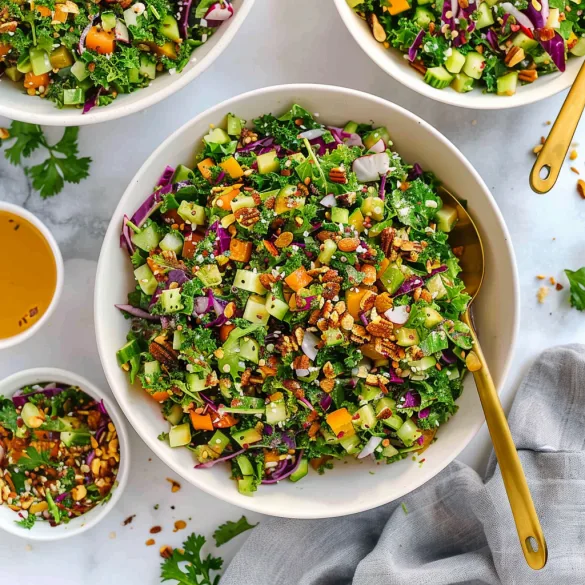
Summer calls for lighter, brighter meals, and this salad has become a staple in my kitchen. It’s packed with vibrant flavors and hearty textures, making it a satisfying option for lunch or a light dinner.
Why This Detox Salad Works
This isn’t just any salad; it’s a carefully balanced combination of nutrient-dense ingredients designed to make you feel good from the inside out. The diverse textures and flavors create a delightful eating experience, proving that healthy food can be truly enjoyable and satisfying.
Ingredients
For the Salad Base:
- 4 cups chopped kale (about 1 small bunch), tough stems removed
- 2 cups mixed greens (like spinach, arugula, or spring mix)
- 1 cup finely shredded red cabbage
- 1 cup cooked quinoa (I often make a big batch at the start of the week)
- 1 cup chopped cucumber (about half of a medium cucumber)
- 1/2 cup cherry tomatoes, halved
- 1/4 cup finely chopped red onion (soak in cold water for 10 minutes to mellow the flavor if desired)
- 1/4 cup chopped fresh parsley
- 1/4 cup toasted sunflower seeds (or pumpkin seeds for a different crunch)
- 1/2 cup cooked and shelled edamame (fresh or frozen/thawed)
- 1/4 cup crumbled feta cheese (optional, for a dairy kick
For the Lemon-Tahini Dressing:
- 1/4 cup tahini
- 3 tablespoons fresh lemon juice (about 1.5 lemons)
- 1 tablespoon extra virgin olive oil
- 1-2 cloves garlic, minced (or 1/2 teaspoon garlic powder)
- 2-3 tablespoons water (to reach desired consistency)
- 1/2 teaspoon honey or maple syrup (optional, for a touch of sweetness)
- Salt and freshly ground black pepper to taste
Gathering your ingredients is the first step to a successful and enjoyable cooking experience. Having everything measured out and prepped before you start mixing makes the entire process fly by. It’s a small detail, but one that makes a big difference, especially when you’re looking for a quick and healthy meal.
Don’t miss this delicious recipe: Detox Southwest Chicken Soup
How to Make It
- Prepare the Kale: In a large bowl, place the chopped kale. Drizzle with a tiny bit of olive oil (just a teaspoon or so) and a pinch of salt. Massage the kale with your hands for 2-3 minutes, or until it has softened and turned a brighter green. This step is key to tenderizing the kale. You can feel the difference as the fibers break down and the leaves become more pliable and receptive to flavor. Don’t rush this part; it’s foundational.
- Combine Salad Ingredients: Add the mixed greens, shredded red cabbage, cooked quinoa, chopped cucumber, halved cherry tomatoes, finely chopped red onion, fresh parsley, toasted sunflower seeds, shelled edamame, and optional feta cheese to the bowl with the massaged kale. Ensure all ingredients are evenly distributed so that each serving gets a good mix of everything.
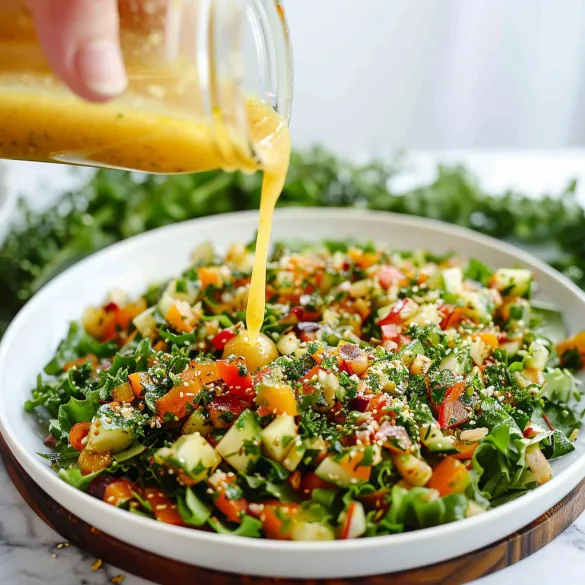
- Make the Dressing: In a small bowl or jar, whisk together the tahini, fresh lemon juice, extra virgin olive oil, minced garlic, honey or maple syrup (if using), salt, and pepper until well combined. Gradually whisk in 2-3 tablespoons of water until the dressing reaches your desired consistency. It should be pourable but still thick enough to coat the ingredients. If it’s too thick, add a teaspoon more water at a time; if too thin, add a bit more tahini. Taste and adjust seasoning – more lemon, salt, or a touch more sweetener if needed.
- Dress and Toss: Pour about half of the dressing over the salad ingredients. Toss gently to coat everything evenly. Start with less dressing and add more as needed, tasting as you go, until all the ingredients are nicely coated. The goal is to have every component lightly dressed, not swimming in sauce.
- Serve: Serve the salad immediately for the best texture and freshness. If you’ve prepped components separately, this is the step where you’ll combine and dress.
This salad comes together relatively quickly, especially if you have some components prepped ahead of time, making it a convenient and healthy choice for any day. The vibrant colors and fresh aroma are sure to entice, and the satisfying textures promise a truly enjoyable meal. It’s the kind of dish that makes you feel good about what you’re eating, inside and out.
Nutrition at a Glance
- High in Fiber: The combination of kale, mixed greens, red cabbage, quinoa, and edamame provides an excellent source of dietary fiber, which is crucial for digestive health, satiety, and blood sugar management. Fiber helps you feel full for longer, which can be beneficial for weight management goals. Aiming for a diet rich in fiber has long-term benefits for cardiovascular health and can help prevent chronic diseases.
- Rich in Vitamins: You’ll find a generous supply of vitamins A, C, and K from the leafy greens and vegetables. Vitamin A is important for vision and immune function, vitamin C is a potent antioxidant that supports skin health and the immune system, and vitamin K is vital for blood clotting and bone health. The variety of greens ensures you’re getting a broad spectrum of these essential micronutrients.
- Good Source of Protein: With quinoa, edamame, and optional feta cheese, this salad offers a respectable amount of plant-based protein, essential for muscle repair, immune function, and overall bodily processes. Protein is a key component of satiety, helping to keep you feeling full and satisfied after your meal.
- Healthy Fats: The tahini and olive oil in the dressing contribute healthy monounsaturated and polyunsaturated fats, which are important for brain health, hormone production, and absorbing fat-soluble vitamins. These fats are crucial for nutrient absorption and support a healthy inflammatory response in the body.
- Antioxidant-Rich: The vibrant colors from the red cabbage, tomatoes, and kale signify a high antioxidant content, which helps combat oxidative stress in the body. Antioxidants can play a role in reducing the risk of chronic diseases by neutralizing harmful free radicals. This salad is a delicious way to load up on these protective compounds.
- Hydrating: The cucumber and tomatoes contribute to your daily fluid intake, which is especially important during warmer months. Staying adequately hydrated is fundamental for all bodily functions, from regulating body temperature to transporting nutrients.
Please note that the exact nutritional values can vary based on ingredient brands, specific quantities used, and whether optional ingredients like feta are included. For precise tracking, it is recommended to use a nutritional calculator plugged in with your specific measurements.
How to Serve It
- As a Standalone Meal: This salad is hearty enough to be a complete meal on its own for lunch or a light dinner. The combination of fiber, protein, and healthy fats ensures it’s satisfying. It’s perfect for those days when you want something healthy but don’t want to feel weighed down.
- As a Side Dish: Serve a smaller portion alongside grilled chicken, fish, or tofu for a balanced and nutritious meal. Its fresh, bright flavors complement a wide range of main courses without overpowering them. It adds a vibrant burst of freshness to any plate.
- In Larger Batches for Meal Prep: This salad is an excellent candidate for meal prepping. Prepare a large batch at the beginning of the week and portion it out for lunches. While the kale and cabbage hold up well, it’s best to dress it just before serving for optimal texture. Store dressing separately to maintain crispness.
- With Added Protein: For those wanting even more protein, consider adding grilled chicken breast, baked salmon, shrimp, or chickpeas to the salad. This further boosts its satiating power and makes it a more substantial meal for active individuals or after a workout.
- In a Wrap or Pita: For a portable option, you can stuff this salad into a whole wheat wrap or pita pocket. The dressing acts as a binder, making it neat and delicious. This is a fantastic way to take your healthy lunch on the go.
The adaptability of this salad makes it a go-to in my recipe repertoire, ensuring that healthy eating remains both easy and enjoyable. It’s a recipe that truly works for a variety of lifestyles and dining needs.
Common Mistakes
- Not Massaging the Kale: This is probably the most critical step for kale. Raw kale can be tough and unpleasantly chewy if not properly prepared. Skipping the massage will result in a salad where the kale is hard to eat. Take the extra two minutes to really work it with your hands; it makes a world of difference. You’ll feel the leaves soften and become more pliable.
- Dressing Too Early: While this salad is good for meal prep, if you plan to store it for more than a day, it’s best to keep the dressing separate. The acidic dressing will begin to wilt the greens and soften the vegetables over time, diminishing the fresh, crisp texture. Dress individual portions just before serving to maintain optimal crunch and freshness.
- Chopping Ingredients Too Large: For a salad that’s meant to be eaten with a fork and enjoyed in one bite, consistency in chop size is important. If the cucumber or tomatoes are too large, they can be cumbersome. Similarly, ensure the red onion is finely minced so its flavor is distributed evenly throughout the salad rather than concentrated in one bite.
- Oversaucing the Salad: It’s tempting to drown the salad in dressing, but often, less is more. Start with about half the dressing and toss well. You can always add more if needed, but you can’t take it away. An overly dressed salad can become soggy, and the individual flavors of the ingredients can get lost in a sea of sauce.
- Using Stale or Poor-Quality Ingredients: Since this salad relies on fresh components, the quality of your ingredients truly matters. Wilted greens, mushy tomatoes, or rancid tahini will significantly impact the final taste. Opt for the freshest produce you can find; it makes a noticeable difference in the vibrancy and overall flavor of the salad.
- Not Toasting the Seeds: While you can add raw seeds, toasting them brings out a depth of flavor and a much more satisfying crunch. It’s a simple step that elevates the salad considerably. Ensure you keep an eye on them as they can burn quickly. A light golden-brown color is your sign they are ready.
Avoiding these common errors will ensure your “My Favorite Detox Salad! A healthy summer salad recipe” turns out delicious every time. Paying attention to these details will elevate your salad from good to truly excellent.
Storage and Reheating
- Dressed Salad: If the salad is already dressed, it’s best consumed within a few hours for optimal texture. The greens will start to wilt, and the vegetables may become softer, which can affect the crispness.
- Undressed Salad Components: For meal prepping, store the salad components (kale, mixed greens, cabbage, quinoa, cucumber, tomatoes, onion, edamame, seeds) in separate airtight containers or one large container in the refrigerator. Keep the dressing in a separate small container. This will allow the salad to stay fresh and crisp for up to 3-4 days. This separation is crucial for maintaining the integrity of the salad’s texture.
- Dressing: The Lemon-Tahini Dressing can be stored in an airtight container in the refrigerator for up to a week. It may thicken as it chills; simply whisk in a little more water before serving to reach your desired consistency. Always ensure the container is tightly sealed to prevent it from absorbing other odors.
- Reheating: This salad is meant to be served cold or at room temperature. There is no reheating involved or recommended as it would compromise the freshness and texture of the ingredients. The beauty of this salad lies in its vibrant, fresh components.
By following these storage guidelines, you can maintain the freshness and enjoyable texture of your salad, even when preparing it ahead of time. This makes healthy eating incredibly convenient throughout the week.
Leftover Ideas
- Stuffing for Wraps or Pitas: Leftover salad, especially the sturdier kale and cabbage components, can be a fantastic filling for whole wheat wraps or pita pockets. You might want to add a dollop of hummus or a little extra dressing to make it more cohesive and provide a binding element. This is an easy way to transform your salad into a portable lunch.
- Topping for Baked Potatoes or Sweet Potatoes: Slightly wilted but still flavorful salad can be spooned over a warm baked potato or sweet potato. The warm starchiness of the potato, combined with the fresh flavors of the salad, creates a surprisingly satisfying and healthy meal. The heat of the potato will slightly soften the salad, melding the flavors.
- Adding to Soups or Stews: If the salad has become a bit too soft from being dressed, you can still incorporate it into warm dishes. Stirring it into a hearty vegetable soup or even a chili towards the end of cooking can add a boost of greens and a subtle flavor enhancement. It’s a great way to sneak in extra nutrients.
- Blending into a Smoothie (with caution): While not the primary intention, if you have a small amount of leftover greens and dressing that are bordering on being past their prime, you could potentially blend a small portion into a fruit-forward smoothie. The lemon and tahini might add an interesting depth, but be mindful of the flavor profile. This is more of a last resort for very small quantities where you want to minimize waste.
- As a Base for Grain Bowls: If you have a more substantial amount of the undressed components left, they can easily form the base of new grain bowls. Add fresh grains like couscous or more quinoa, perhaps some roasted vegetables, and a different sauce or protein for a completely new dish. This extends the life and versatility of the ingredients.
These ideas help ensure that even the last bits of your delicious “My Favorite Detox Salad! A healthy summer salad recipe” are enjoyed and not wasted. Embracing leftovers is an economical and sustainable way to cook.
PrintMy Favorite Detox Salad! A healthy summer salad recipe
- Total Time: 20 minutes
- Yield: 4 servings 1x
- Diet: Vegetarian
Description
A vibrant and nutritious salad packed with fresh vegetables, protein-rich quinoa and edamame, and a creamy lemon-tahini dressing. Perfect for a healthy lunch or light dinner.
Ingredients
- For the Salad Base:
- 4 cups chopped kale (about 1 small bunch), tough stems removed
- 2 cups mixed greens (like spinach, arugula, or spring mix)
- 1 cup finely shredded red cabbage
- 1 cup cooked quinoa
- 1 cup chopped cucumber (about half of a medium cucumber)
- 1/2 cup cherry tomatoes, halved
- 1/4 cup finely chopped red onion (soak in cold water for 10 minutes to mellow the flavor if desired)
- 1/4 cup chopped fresh parsley
- 1/4 cup toasted sunflower seeds
- 1/2 cup cooked and shelled edamame (fresh or frozen/thawed)
- 1/4 cup crumbled feta cheese (optional)
- For the Lemon-Tahini Dressing:
- 1/4 cup tahini
- 3 tablespoons fresh lemon juice
- 1 tablespoon extra virgin olive oil
- 1–2 cloves garlic, minced
- 2–3 tablespoons water
- 1/2 teaspoon honey or maple syrup (optional)
- Salt and freshly ground black pepper to taste
Instructions
- 1. Prepare the Kale: In a large bowl, place the chopped kale. Drizzle with a tiny bit of olive oil and a pinch of salt. Massage the kale with your hands for 2-3 minutes, or until it has softened and turned a brighter green.
- 2. Combine Salad Ingredients: Add the mixed greens, shredded red cabbage, cooked quinoa, chopped cucumber, halved cherry tomatoes, finely chopped red onion, fresh parsley, toasted sunflower seeds, shelled edamame, and optional feta cheese to the bowl with the massaged kale.
- 3. Make the Dressing: In a small bowl or jar, whisk together the tahini, fresh lemon juice, extra virgin olive oil, minced garlic, honey or maple syrup (if using), salt, and pepper until well combined. Gradually whisk in 2-3 tablespoons of water until the dressing reaches your desired consistency.
- 4. Dress and Toss: Pour about half of the dressing over the salad ingredients. Toss gently to coat everything evenly. Add more dressing as needed, tasting as you go, until all the ingredients are nicely coated.
- 5. Serve: Serve the salad immediately.
Notes
Store undressed salad components and dressing separately in airtight containers in the refrigerator for up to 3-4 days. Dress individual portions just before serving.
- Prep Time: 20 minutes
- Cook Time: 0 minutes
- Category: Salad
- Method: Salad
- Cuisine: American
Nutrition
- Serving Size: 1 serving
- Calories: Approx. 450-550 (depending on feta)
- Sugar: 8-12g
- Sodium: 300-500mg
- Fat: 25-35g
- Carbohydrates: 40-50g
- Fiber: 10-15g
- Protein: 15-20g
1 thought on “My Favorite Detox Salad! A healthy summer salad recipe”