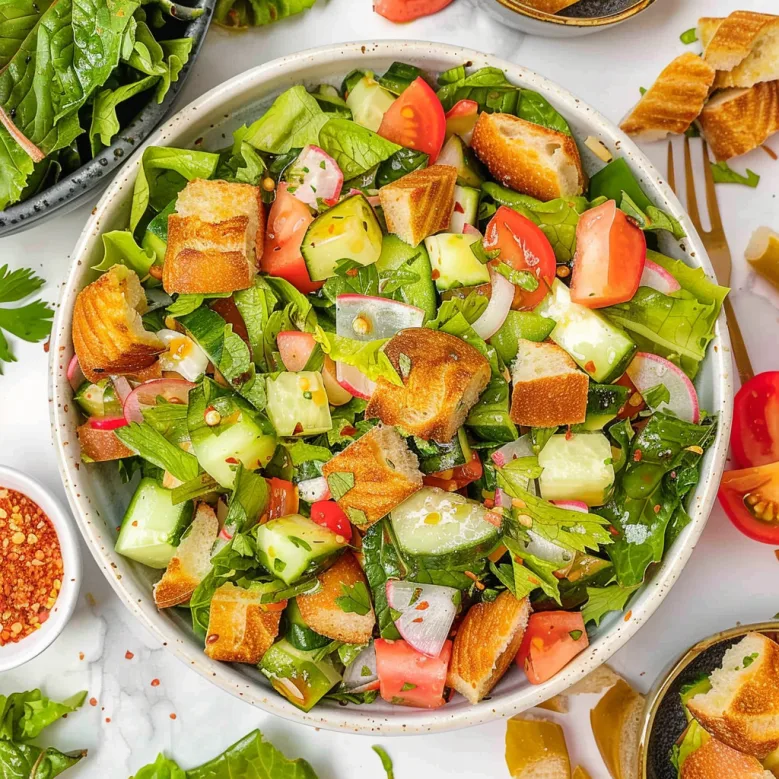
Fattoush salad is a vibrant and refreshing Middle Eastern dish that brings together a medley of fresh vegetables, a tangy sumac dressing, and pieces of toasted Arab bread. It’s a staple in my kitchen, especially when I want something light yet satisfying, bursting with flavor and texture.
Why This Fattoush Salad (with Arab bread) Works
This Fattoush Salad (with Arab bread) is a testament to the beauty of simple, fresh ingredients. The combination of crisp vegetables, the zesty sumac dressing, and the satisfying crunch of toasted Arab bread creates a truly enjoyable dining experience.
Ingredients
- 2 large or 3 medium pieces of Arab bread (pita bread works if Arab bread is unavailable)
- 1/4 cup olive oil, plus extra for brushing
- 1 teaspoon ground cumin
- 1 teaspoon sumac (for the bread, plus more for the dressing)
- Salt and freshly ground black pepper to taste
- 1 large head of romaine lettuce, roughly chopped
- 2 ripe tomatoes, diced
- 1 large cucumber, diced
- 1/2 cup radishes, thinly sliced
- 1/2 cup green bell pepper, diced
- 1/4 cup red onion, thinly sliced
- 1/4 cup fresh parsley, chopped
- 1/4 cup fresh mint, chopped
- 2 tablespoons fresh lemon juice
- 1 tablespoon pomegranate molasses (optional, but recommended for depth)
- 1 clove garlic, minced
- 1 teaspoon dried mint (optional, for extra minty flavor)
Let’s gather all these components before we begin constructing this delightful salad.
How to Make It
- Preheat your oven to 375°F (190°C). Tear the Arab bread into bite-sized pieces. In a medium bowl, toss the bread pieces with a drizzle of olive oil, cumin, 1 teaspoon of sumac, salt, and pepper.
- Bake for 10-15 minutes, or until golden brown and crispy. Keep a close eye on them as they can burn quickly.
- While the bread is toasting, prepare the vegetables. Wash and chop the romaine lettuce, tomatoes, cucumber, radishes, and green bell pepper.
- In a large salad bowl, combine the chopped romaine lettuce, tomatoes, cucumber, radishes, green bell pepper, red onion, parsley, and mint.
- Now, let’s make the dressing. In a small bowl or a jar, whisk together 1/4 cup of olive oil, lemon juice, pomegranate molasses (if using), minced garlic, 1 teaspoon of sumac, dried mint (if using), salt, and pepper.
- Just before serving, add the toasted Arab bread pieces to the salad bowl. Drizzle the dressing over the top.
This step-by-step process will lead you to a beautifully assembled Fattoush Salad (with Arab bread).
Nutrition at a Glance
- Rich in Vitamins A and C from the fresh vegetables.
- Provides dietary fiber essential for digestion.
- Contains healthy fats from the olive oil.
- Sumac offers antioxidants and a distinctive tangy flavor.
- The Arab bread contributes carbohydrates for energy.
- Lower in calories when compared to cream-based salads.
- Naturally gluten-free if you use gluten-free bread for toasting, though traditional Arab bread contains gluten.
- Can be adapted for vegan diets by ensuring no animal products are used in the bread (most Arab bread is vegan).
- Moderate in sodium, especially if you control the amount of salt added.
- The pomegranate molasses (if used) adds trace minerals and a touch of sweetness.
How to Serve It
- Serve immediately after tossing to maintain the crispness of the Arab bread. The contrast in textures is a key component of this salad.
- It makes a fantastic light lunch or a refreshing appetizer.
- Pair it with grilled meats, fish, or falafel for a more substantial meal.
- Offer it alongside other Middle Eastern dishes like hummus, baba ghanoush, or shawarma for a complete mezze experience.
- Consider garnishing with a few pomegranate seeds for an extra pop of color and sweetness, especially if not using pomegranate molasses in the dressing.
- A sprinkle of extra sumac on top can enhance the visual appeal and the tangy notes.
- For a heartier salad option, you could add some cooked lentils or chickpeas, though this deviates slightly from the traditional preparation.
- This salad is often enjoyed with a squeeze of fresh lemon over the top, right before eating.
- The vibrant colors make it an appealing dish for family gatherings and potlucks.
- Presentation can be enhanced by reserving some of the chopped herbs to sprinkle over the finished dish.
This Fattoush Salad (with Arab bread) is wonderfully versatile and can be enjoyed in many different ways.
Common Mistakes
- Over-toasting or burning the Arab bread: This can happen quickly. Keep a watchful eye and remove the bread as soon as it’s golden and crisp. Burnt bread will make the entire salad bitter.
- Soggy bread: Adding the toasted bread too early to the salad and letting it sit in the dressing for a prolonged period will result in a loss of crunch. Toss right before serving.
- Under-seasoning the dressing: The dressing is key. Taste and adjust the salt, pepper, lemon juice, and sumac until you reach a satisfying tanginess.
- Using less-than-fresh vegetables: Fattoush relies on the freshness of its produce. Old, wilted vegetables will detract from the overall flavor and texture.
- Skipping the sumac: While it can be a hard ingredient to find for some, sumac is what gives Fattoush its characteristic tangy, lemony flavor profile. It’s integral to the dish.
- Cutting the vegetables too large: While personal preference plays a role, consistently sized, bite-sized pieces of vegetables make the salad easier to eat and ensure a better distribution of flavors.
- Not draining excess moisture: Especially from tomatoes and cucumbers, excess moisture can dilute the dressing and make the salad watery. Gently patting them dry after chopping can help.
- Forgetting the herbs: Parsley and mint are not just garnishes; they are integral to the refreshing aroma and taste of Fattoush. Don’t skimp on them.
- Overpowering with garlic: While garlic adds depth, a little goes a long way, especially when raw. Adjust the amount to your preference.
- Using pre-made dressing: The beauty of this salad is in the fresh, simple dressing. Store-bought options often lack the brightness of a homemade sumac dressing.
Being aware of these common pitfalls can help you create a truly delicious Fattoush Salad (with Arab bread).
Don’t miss this delicious recipe: Lebanese Green Bean Stew – Cozy Comfort Food
Storage and Reheating
- Store any leftover salad components separately in airtight containers in the refrigerator. Keep the toasted bread, chopped vegetables, and dressing apart.
- The dressing can be stored for up to 5 days in an airtight container in the refrigerator. Whisk or shake well before using, as separation is natural.
- Chopped vegetables will stay fresh for 2-3 days, though they may lose some crispness over time.
- The toasted Arab bread is best stored at room temperature in a well-sealed container or bag to maintain its crispness for up to 2 days.
- To reheat (for the bread), spread the bread pieces on a baking sheet and briefly warm them in a low oven (around 250°F/120°C) for a few minutes until crisp again.
- The salad itself, once tossed, is best enjoyed fresh. Leftovers that have been tossed together will become quite soggy and are not ideal for storing.
- If you have a larger quantity of chopped vegetables, you can keep them for a couple of days, but they are at their peak freshness within 24 hours of chopping.
- The flavor of the dressing often melds and deepens over a short period, so it can be made a day in advance.
- Always allow any stored components to come to room temperature or gently warm the bread before serving again, if desired.
Proper storage will help you enjoy the elements of your Fattoush Salad (with Arab bread) for a bit longer.
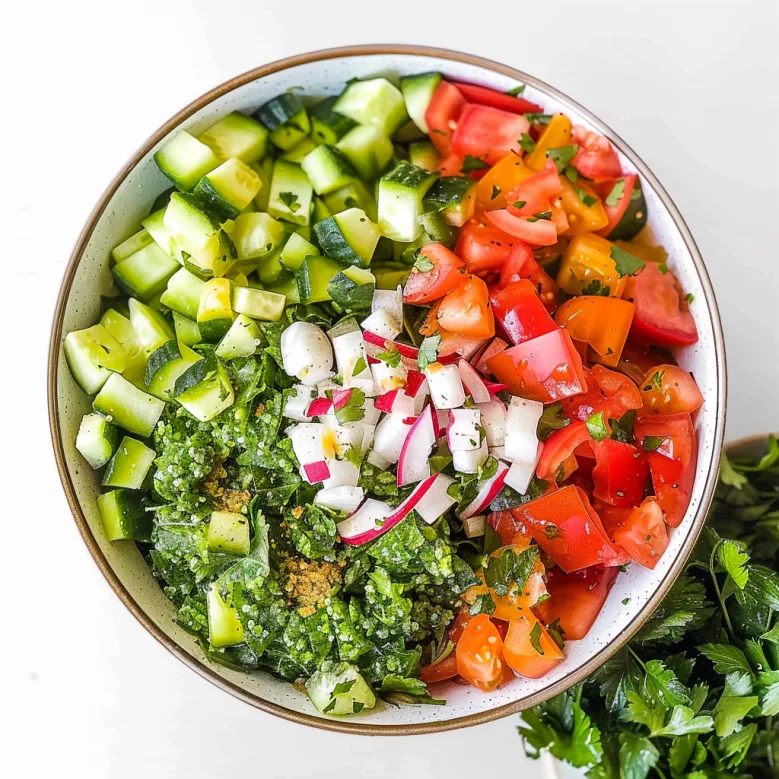
Leftover Ideas
- Add leftover chopped vegetables and dressing to a base of cooked quinoa or couscous for a robust grain bowl.
- If you have leftover toasted Arab bread, use it as a crunchy topping for soups or stews.
- Incorporate leftover vegetables and dressing into a wrap with hummus and your favorite protein.
- Turn it into a base for a more substantial wrap by adding grilled chicken or halloumi to the leftover chopped salad and wrapping it in a fresh tortilla or flatbread.
- The dressing can be used as a marinade for chicken or fish before grilling or baking.
- Combine leftover chopped vegetables with cooked pasta and a bit of feta cheese for a quick pasta salad.
- Use the toasted bread as croutons for any other salad you might be making.
- If you have a significant amount of leftover vegetables, you could blend them with some of the dressing and a touch of yogurt or tahini to create a unique dip or spread.
- The sumac dressing itself is versatile and can be drizzled over roasted vegetables or grilled halloumi cheese.
- Don’t discard the toasted bread! They can be crushed and used as a flavourful binder for meatballs or veggie patties.
With a little creativity, leftovers from your Fattoush Salad (with Arab bread) can form the basis of several new delicious dishes.
PrintFattoush Salad (with Arab bread)
- Total Time: 35 minutes
- Yield: 4–6 servings 1x
- Diet: Vegetarian
Description
A vibrant and refreshing Fattoush Salad (with Arab bread) recipe featuring crisp vegetables, a tangy sumac dressing, and crunchy toasted Arab bread pieces. Perfect as a side or light meal.
Ingredients
- 2 large or 3 medium pieces of Arab bread
- 1/4 cup olive oil, plus extra for brushing
- 1 teaspoon ground cumin
- 1 teaspoon sumac (for the bread, plus more for the dressing)
- Salt and freshly ground black pepper to taste
- 1 large head of romaine lettuce, roughly chopped
- 2 ripe tomatoes, diced
- 1 large cucumber, diced
- 1/2 cup radishes, thinly sliced
- 1/2 cup green bell pepper, diced
- 1/4 cup red onion, thinly sliced
- 1/4 cup fresh parsley, chopped
- 1/4 cup fresh mint, chopped
- 2 tablespoons fresh lemon juice
- 1 tablespoon pomegranate molasses (optional)
- 1 clove garlic, minced
- 1 teaspoon dried mint (optional)
Instructions
- 1. Preheat oven to 375°F (190°C). Tear Arab bread into bite-sized pieces. Toss with olive oil, cumin, 1 tsp sumac, salt, and pepper. Spread on a baking sheet.
- 2. Bake for 10-15 minutes, or until golden brown and crispy. Let cool completely.
- 3. Chop romaine lettuce, tomatoes, cucumber, radishes, and green bell pepper. Thinly slice red onion. Chop parsley and mint.
- 4. Combine all chopped vegetables and herbs in a large salad bowl.
- 5. Prepare the dressing: Whisk together 1/4 cup olive oil, lemon juice, pomegranate molasses (if using), minced garlic, 1 tsp sumac, dried mint (if using), salt, and pepper.
- 6. Just before serving, add cooled toasted bread to the salad bowl. Drizzle dressing over the top.
- 7. Gently toss to coat ingredients evenly. Serve immediately.
Notes
Store leftover dressing and toasted bread separately. Toss salad components just before serving to maintain crunch. Toasted bread can be gently reheated in a low oven.
- Prep Time: 20 minutes
- Cook Time: 15 minutes
- Category: Salad
- Method: Mixed
- Cuisine: Middle Eastern
Nutrition
- Serving Size: 1 serving
- Calories: Approx. 250-300 kcal per serving (varies based on bread and oil quantity)
- Sugar: Approx. 6-8g
- Sodium: Approx. 200-300mg (depends on salt added)
- Fat: Approx. 18-22g
- Carbohydrates: Approx. 20-25g
- Fiber: Approx. 5-7g
- Protein: Approx. 3-5g
1 thought on “Easy Fattoush Salad (with Arab bread) Recipe – Homemade & Delicious”