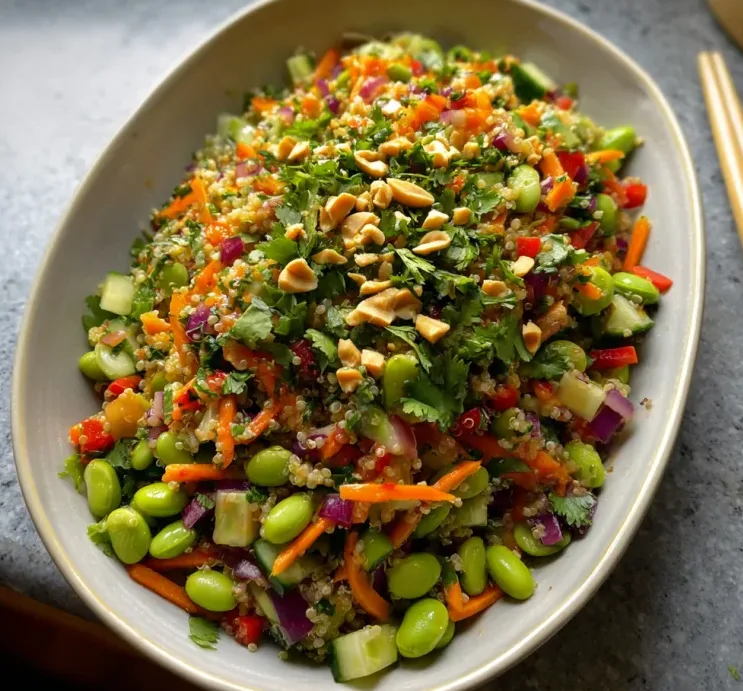
I’ve been making variations of this edamame salad with peanut sauce for years, and it’s become a staple in my kitchen. It’s one of those dishes that’s truly adaptable to whatever I have on hand, and it always satisfies.
Why This Edamame Salad Works
This edamame salad is a champion because it hits all the right notes: it’s packed with plant-based protein, customizable with fresh veggies, and the peanut sauce is wonderfully versatile.
Ingredients
- For the Salad Base:
- 1 ½ cups shelled edamame (frozen is perfectly fine, just thaw and drain)
- 1 cup cooked quinoa or couscous (optional, but adds nice substance)
- 1 red bell pepper, finely diced
- 1 yellow bell pepper, finely diced
- ½ red onion, very thinly sliced or finely diced (adjust to your preference for onion)
- 1 cup chopped cucumber (Persian or English cucumbers work well for their thin skins and fewer seeds)
- ½ cup chopped fresh cilantro or parsley (or a mix of both)
- ¼ cup chopped peanuts, for garnish (optional, but adds great crunch)
For the Peanut Sauce:
- ⅓ cup creamy peanut butter (natural, unsweetened is ideal)
- 3 tablespoons soy sauce or tamari (for gluten-free)
- 2 tablespoons rice vinegar
- 1 tablespoon sesame oil
- 1 tablespoon honey or maple syrup (for vegan)
- 1 clove garlic, minced or grated
- ½ teaspoon grated fresh ginger (optional, but recommended)
- 2-4 tablespoons warm water, to thin to desired consistency
- Pinch of red pepper flakes (optional, for a little heat)
Gathering your ingredients is the first step to a successful culinary endeavor. Having everything prepped and ready before you start assembling makes the process smooth and enjoyable.
How to Make It
- Prepare the Edamame and Quinoa (if using): If you’re using frozen edamame, steam or boil them according to package directions until tender.
- Chop the Vegetables: Dice the red and yellow bell peppers into small, uniform pieces. Thinly slice or finely dice the red onion.
- Make the Peanut Sauce: In a medium bowl, whisk together the peanut butter, soy sauce (or tamari), rice vinegar, sesame oil, honey (or maple syrup), minced garlic, and grated ginger (if using).
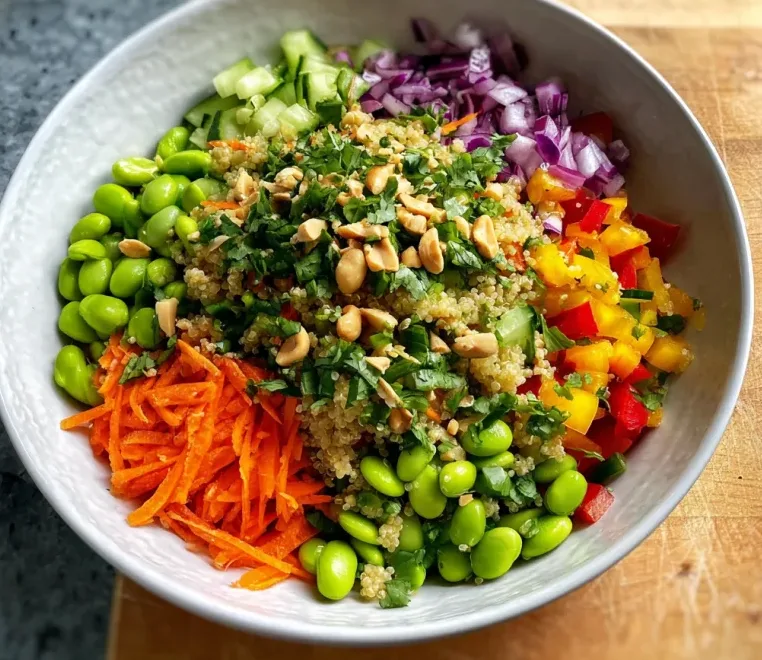
- Combine the Salad: In a large mixing bowl, combine the cooled edamame, cooked quinoa (if using), diced bell peppers, red onion, and cucumber.
- Dress and Toss: Pour about half of the peanut sauce over the salad ingredients. Toss everything gently to coat evenly.
- Garnish and Serve: Transfer the salad to a serving dish. Garnish with the reserved fresh herbs and chopped peanuts (if using).
This simple process brings together fresh ingredients into a satisfying and flavorful salad. The beauty of this method lies in its modularity.
Nutrition at a Glance
- High in Plant-Based Protein: Edamame is a complete protein source, providing essential amino acids.
- Good Source of Fiber: The combination of edamame, vegetables, and quinoa contributes dietary fiber, important for digestive health and satiety.
- Rich in Vitamins and Minerals: Bell peppers, cucumber, and cilantro offer a spectrum of vitamins (like Vitamin C and A) and minerals.
- Healthy Fats: Peanut butter and sesame oil provide monounsaturated and polyunsaturated fats, which are beneficial for heart health when consumed in moderation.
- Lower in Calories (with adjustments): By using natural peanut butter and being mindful of the amount of dressing, you can keep the calorie count reasonable, especially when serving without the optional quinoa.
This salad is a nutrient-dense choice that supports a balanced diet. The protein from the edamame and quinoa, combined with the fiber from the vegetables, makes it a very filling option.
How to Serve It
- As a Light Lunch: Serve a generous portion on its own for a satisfying and healthy midday meal.
- As a Side Dish: It pairs wonderfully with grilled chicken, fish, tofu, or tempeh, adding a burst of freshness and flavor to your plate.
- At Potlucks and Picnics: Its robust flavors and ability to hold up well make it an excellent contribution to any gathering.
- Scooped into Lettuce Cups: For a lighter, more playful presentation, serve the salad in crisp lettuce cups (like butter lettuce or romaine).
- Over a Bed of Greens: Serve the salad over a bed of mixed greens, spinach, or arugula for an even heartier salad.
- With Whole Grains: It can be served alongside or mixed with brown rice, farro, or even a simple baked potato for a more substantial meal.
This salad’s inherent flexibility allows it to adapt to your culinary needs. Its adaptability means it can transition from a simple weeknight dinner to a more elegant potluck offering with minor adjustments in presentation.
Don’t miss this delicious recipe: Crispy Rice Salad with Peanut-Chili Dressing (Vegan + High-Protein)
Common Mistakes
- Over-salting: Soy sauce can be very salty. Taste your peanut sauce before adding any extra salt to the salad.
- Sauce Too Thick: If your peanut sauce is too thick, it won’t coat the ingredients well.
- Using Uncooked Onion: Raw red onion can be sharp. Soaking it in cold water for about 10 minutes before adding can mellow its flavor considerably.
- Not Draining Edamame Well: Excess water from thawed frozen edamame can dilute your dressing and make the salad watery.
- Cutting Vegetables Too Large: Large pieces can make the salad difficult to eat and less cohesive. Aim for bite-sized, uniform cuts for the best texture and distribution of flavors.
Being aware of these common errors can help you achieve a more balanced and enjoyable salad.
Storage and Reheating
- Refrigeration: Store the salad in an airtight container in the refrigerator. It will keep well for 3-4 days.
- Dressing Separately (Optional): If you plan to store it for longer than a day or want to maintain crispness in the vegetables, you can store the salad and the peanut sauce separately and toss them together just before serving.
- Peanut Sauce Consistency: The peanut sauce may thicken in the refrigerator. You can whisk in a tablespoon or two of warm water to loosen it up before serving.
- Reheating: This salad is best served cold or at room temperature and is not intended to be reheated.
Following these guidelines ensures that your edamame salad remains a delightful treat. Storing the dressing separately is a highly recommended practice if you anticipate having leftovers for more than a day.
Leftover Ideas
- Add to Wraps or Sandwiches: Tuck the leftover salad into whole wheat wraps or between slices of your favorite bread for a flavorful lunch.
- Top a Grain Bowl: Pile the edamame salad onto a bed of brown rice or farro and add some extra protein like grilled chicken or a fried egg.
- Stuff into Pita Bread: Warm up some pita bread and generously stuff it with the leftover salad for a quick and easy meal.
- Fold into Omelets or Scrambled Eggs: A small amount of the salad can add an interesting texture and flavor burst to your morning eggs.
- Serve with Grilled Proteins: If you have any leftover grilled chicken, fish, or tofu, serving the edamame salad alongside it makes for a quick and complete dinner.
These ideas help you enjoy the flavors of your edamame salad in new and exciting ways. The transition from a side salad to a main component in another dish is often seamless.
PrintEdamame Salad with Peanut Sauce
- Total Time: 35 minutes
- Yield: 4–6 servings 1x
- Diet: Vegetarian
Description
A refreshing and flavorful edamame salad with a creamy peanut dressing, packed with fresh vegetables and customizable grains. Perfect for lunch, a side dish, or potlucks.
Ingredients
- For the Salad Base:
- 1 ½ cups shelled edamame (frozen is perfectly fine, just thaw and drain)
- 1 cup cooked quinoa or couscous (optional, but adds nice substance)
- 1 red bell pepper, finely diced
- 1 yellow bell pepper, finely diced
- ½ red onion, very thinly sliced or finely diced (adjust to your preference for onion)
- 1 cup chopped cucumber
- ½ cup chopped fresh cilantro or parsley (or a mix of both)
- ¼ cup chopped peanuts, for garnish (optional)
- For the Peanut Sauce:
- ⅓ cup creamy peanut butter (natural, unsweetened is ideal)
- 3 tablespoons soy sauce or tamari (for gluten-free)
- 2 tablespoons rice vinegar
- 1 tablespoon sesame oil
- 1 tablespoon honey or maple syrup (for vegan)
- 1 clove garlic, minced or grated
- ½ teaspoon grated fresh ginger (optional)
- 2–4 tablespoons warm water, to thin to desired consistency
- Pinch of red pepper flakes (optional)
Instructions
- 1. Prepare the Edamame and Quinoa (if using): If using frozen edamame, steam or boil according to package directions, then drain and cool. Cook quinoa or couscous according to package directions, fluff, and cool slightly.
- 2. Chop the Vegetables: Dice bell peppers into small pieces. Thinly slice or finely dice red onion. Chop cucumber into bite-sized pieces. Chop fresh herbs.
- 3. Make the Peanut Sauce: In a medium bowl, whisk together peanut butter, soy sauce (or tamari), rice vinegar, sesame oil, honey (or maple syrup), minced garlic, and grated ginger (if using). Gradually whisk in warm water until smooth and drizzling consistency. Stir in red pepper flakes, if desired.
- 4. Combine the Salad: In a large bowl, combine cooled edamame, cooked quinoa (if using), diced bell peppers, red onion, and cucumber. Add most of the chopped herbs.
- 5. Dress and Toss: Pour about half of the peanut sauce over the salad ingredients. Toss gently to coat. Add more dressing as needed to reach desired coating.
- 6. Garnish and Serve: Transfer to a serving dish. Garnish with reserved herbs and chopped peanuts (if using). Serve chilled or at room temperature.
Notes
Store leftovers in an airtight container in the refrigerator for 3-4 days. The peanut sauce may thicken; whisk in a tablespoon or two of warm water to loosen before serving. It is best served cold or at room temperature and is not intended to be reheated.
- Prep Time: 20 minutes
- Cook Time: 15 minutes
- Category: Salad
- Method: Salad
- Cuisine: American
Nutrition
- Serving Size: 1 serving
- Calories: 350
- Sugar: 10g
- Sodium: 600mg
- Fat: 20g
- Carbohydrates: 30g
- Fiber: 8g
- Protein: 15g