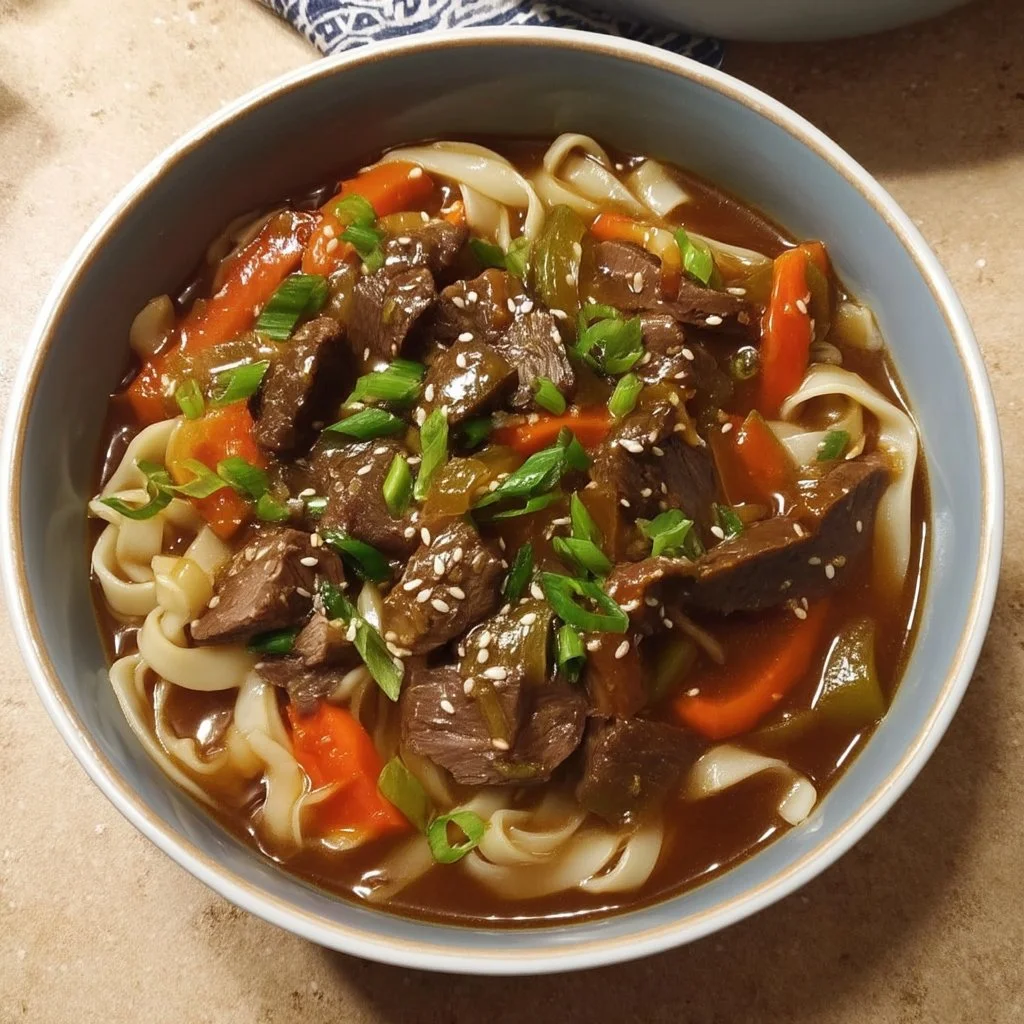
This dish shows up in my kitchen when I need a quick and satisfying meal that doesn’t skimp on flavor—Korean Beef Noodles. The perfect balance of tender beef strips simmered until they soak up all the savory broth paired with fresh vegetables creates a dish that’s both hearty and comforting. It’s a great choice for busy nights when you want something nutritious and delicious without a lot of fuss.
Why This Korean Beef Noodles Works
The technique of browning the beef first not only enhances the flavor, but skipping it can lead to a less complex taste. Using high-quality beef broth is also crucial, as it gives depth to the dish; using a lesser stock may result in a flat taste. The final dish results in a glossy bowl of noodles coated in a flavorful sauce, with tender vegetables adding both color and texture.
Ingredients
- 1 lb beef (chuck or brisket), cut into strips
- 4 cups beef broth
- 2 cups noodles (rice noodles or udon)
- 1 cup carrots, sliced
- 1 cup bell peppers, sliced
- 3 cloves garlic, minced
- 1 inch ginger, grated
- 2 tablespoons soy sauce
- 1 tablespoon sesame oil
- Salt and pepper to taste
- Green onions, chopped for garnish
All ingredients work together to create layers of flavors and textures in the final dish.
How To Make It
- In a large pot, heat sesame oil over medium heat. Add the beef strips and brown them on all sides until they develop a nice crust.
- Add minced garlic and grated ginger, cooking for an additional minute until fragrant and aromatic.
- Pour in the beef broth and soy sauce, bringing the mixture to a boil to meld the flavors together.
- Lower the heat, cover the pot, and let it simmer for 1-2 hours until the beef is tender enough to fall apart.
- Add the sliced carrots and bell peppers to the pot, cooking for another 10-15 minutes until the vegetables are tender but still vibrant.
- Meanwhile, cook the noodles according to package instructions. Drain and set aside once done.
- Stir the cooked noodles into the beef mixture, allowing them to soak up the sauce.
- Season with salt and pepper to taste, adjusting according to your preference.
- Serve hot, garnished with chopped green onions for a burst of freshness.
This method ensures that every component of the dish is infused with flavor, making for a wholesome meal.
Quick Substitutions
- Beef (chuck or brisket) → Pork: This will yield a slightly sweeter taste while maintaining tenderness with quicker cooking times.
- Beef broth → Vegetable broth: For a lighter option, though it may lack some depth in flavor.
- Rice noodles → Soba noodles: This adds a nutty flavor and a different texture that complements the dish.
- Carrots → Zucchini: A quick-cooking alternative that retains a nice crunch if added towards the end.
- Soy sauce → Tamari: A gluten-free substitute that works similarly without affecting the flavor.
These substitutions allow for variations without sacrificing taste, depending on what you have on hand.
Tips Before You Start
It’s essential to cut the beef into uniform strips to ensure even cooking; otherwise, some pieces may remain tough while others become tender. To enhance the freshness of the dish, slice vegetables just before adding them; this keeps their color vibrant and crunch intact. If you’re switching the noodles, remember that cooking times can vary, so watch closely to avoid overcooking. One of my go-to tips is to reserve a bit of the broth for reheating the next day to prevent the noodles from absorbing all the liquid. Lastly, if you want more heat, feel free to add some red pepper flakes when simmering the beef.
Common Mistakes to Avoid
- Overcooking the Beef: If you cook the beef for too long, it may become shredded instead of tender. Stick to the recommended cooking time and check tenderness.
- Not Browning the Beef: This technique is essential for building flavor. If you skip this step, the dish will taste flat.
- Cooking Noodles Too Early: Cooking them too far in advance can make them mushy when combined with the broth; instead, cook them just before stirring them in.
Being mindful of these points can significantly improve your dish.
Nutrition At A Glance
- Serving Size: 1 bowl
- Calories: Approximately 500
- Protein: 30g
- Carbohydrates: 60g
- Fat: 15g
- Fiber: 5g
This overview provides a solid idea of what to expect nutritionally.
Serving Ideas
- Pickled vegetables: Their acidity contrasts beautifully with the savory noodles, adding a bright note.
- Sesame seeds: Sprinkling a few on top enhances both visual appeal and texture.
- Korean kimchi: It adds a spicy kick and a nice crunch, making the dish even more interesting.
- A simple side salad: Fresh greens balance the dish and add a refreshing component.
These accompaniments enhance the dining experience while keeping it aligned with the overall flavor balance.
Storage and Reheating
- Refrigerate leftovers in an airtight container for up to 3 days.
- For freezing, store in portions; it can maintain quality for about 2 months.
- To reheat, warm on the stove over medium heat, adding a splash of broth as needed to bring back moisture; this will help retain the noodles’ texture.
Note that flavors often intensify when left overnight, offering a more delicious second-day meal.
Leftover Ideas
Reinvent your Korean Beef Noodles by using the leftovers to make a stir-fry; just add a bit of extra vegetables and quickly toss them in a hot pan. Another option is to serve the noodles in a broth for a comforting soup dish, simply heating the mixture with additional broth. You could also turn the leftovers into a filling for lettuce wraps, making for a refreshing and lighter variation.
Korean Beef Noodles present the perfect ratio of ease and taste, making a delightful centerpiece for a quick meal. One tasty variation to try next time is swapping the beef for chicken for a different flavor and texture. Making this dish soon can provide a warm, fulfilling experience that’s hard to resist.
Furthermore, if you’re looking for similar comfort food recipes, consider exploring Mongolian ground beef noodles.
Print
Korean Beef Noodles
- Total Time: 135 minutes
- Yield: 4 servings 1x
- Diet: Gluten-free if using rice noodles and tamari
Description
A quick and satisfying meal featuring tender beef strips simmered in a savory broth with fresh vegetables, served over noodles.
Ingredients
- 1 lb beef (chuck or brisket), cut into strips
- 4 cups beef broth
- 2 cups noodles (rice noodles or udon)
- 1 cup carrots, sliced
- 1 cup bell peppers, sliced
- 3 cloves garlic, minced
- 1 inch ginger, grated
- 2 tablespoons soy sauce
- 1 tablespoon sesame oil
- Salt and pepper to taste
- Green onions, chopped for garnish
Instructions
- In a large pot, heat sesame oil over medium heat. Add the beef strips and brown them on all sides until they develop a nice crust.
- Add minced garlic and grated ginger, cooking for an additional minute until fragrant and aromatic.
- Pour in the beef broth and soy sauce, bringing the mixture to a boil to meld the flavors together.
- Lower the heat, cover the pot, and let it simmer for 60-120 minutes until the beef is tender enough to fall apart.
- Add the sliced carrots and bell peppers to the pot, cooking for another 10-15 minutes until the vegetables are tender but still vibrant.
- Meanwhile, cook the noodles according to package instructions. Drain and set aside once done.
- Stir the cooked noodles into the beef mixture, allowing them to soak up the sauce.
- Season with salt and pepper to taste, adjusting according to your preference.
- Serve hot, garnished with chopped green onions for a burst of freshness.
Notes
Cut the beef into uniform strips for even cooking. Slice vegetables just before adding them for better color and crunch. Reserve some broth for reheating leftovers to prevent the noodles from drying out.
- Prep Time: 15 minutes
- Cook Time: 120 minutes
- Category: Main Course
- Method: Simmering
- Cuisine: Korean
Nutrition
- Serving Size: 1 bowl
- Calories: 500
- Sugar: 5g
- Sodium: 800mg
- Fat: 15g
- Saturated Fat: 6g
- Unsaturated Fat: 8g
- Trans Fat: 0g
- Carbohydrates: 60g
- Fiber: 5g
- Protein: 30g
- Cholesterol: 70mg