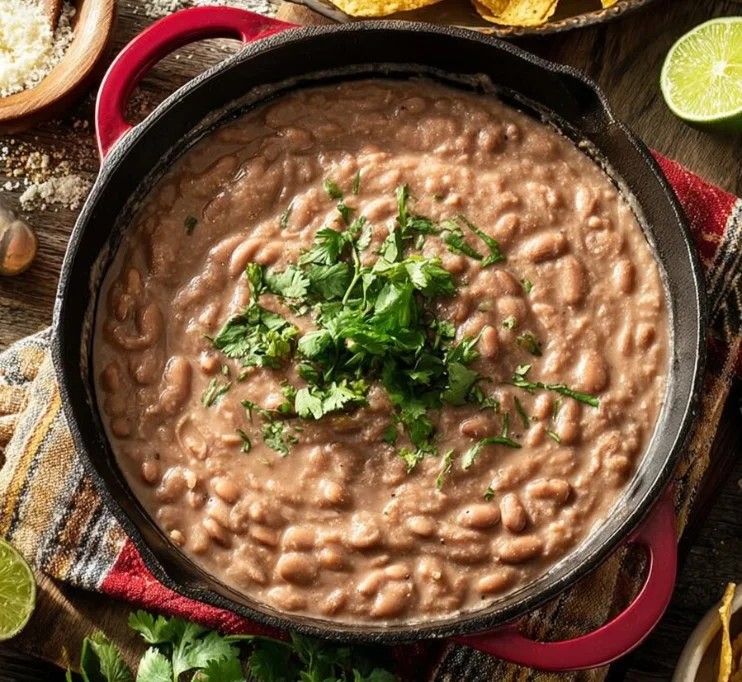
Authentic Refried Beans start with slow-cooked beans mashed into a creamy, savory base with a gentle smoky edge. The texture stays smooth but not pasty, making them easy to spoon alongside tacos, rice, or whatever else is on the table. It’s one I keep in regular rotation because it works without much adjustment.
Print
Authentic Refried Beans
- Total Time: 600 minutes
- Yield: 4 servings 1x
- Diet: Vegetarian
Description
Creamy, savory refried beans with a gentle smoky edge, perfect as a side for tacos or a base for vegetarian bowls.
Ingredients
- ½ lb dried pinto beans
- ½ medium onion, quartered
- 2 garlic cloves, peeled and lightly smashed
- 2 sprigs fresh epazote, or ½ teaspoon dried oregano
- 1 small bay leaf
- Water (enough to cover beans by 2 inches while cooking)
- Sea salt or kosher salt
- 3 tbsp minced onions (for frying at the end)
- 4 tbsp lard or bacon drippings, or 2 tbsp olive oil, vegetable oil, or unsalted butter
- Ground black pepper, to taste
- Queso fresco or cotija cheese, optional, or Monterrey Jack
- Cilantro, chopped, for garnish
Instructions
- Rinse the beans and remove any debris, then soak them in water overnight or for 6 to 8 hours.
- Drain and rinse the soaked beans, then place them in a large pot with the quartered onion, smashed garlic, epazote or oregano, bay leaf, and enough fresh water to cover by about 2 inches.
- Bring to a gentle boil, reduce to a simmer, and cook uncovered for 90 to 120 minutes until the beans are tender, skimming any foam from the surface.
- Remove bay leaf, epazote sprigs, and the onion chunk, then season the beans with salt.
- Scoop out about 1 to 2 cups of the cooking liquid and set aside, then mash the beans, adding reserved cooking liquid as needed.
- In a skillet, heat the lard or oil and the 3 tablespoons minced onion over medium heat until the onion is soft and starting to brown, then add the mashed beans and cook, stirring for 5 to 8 minutes.
Notes
Adjust salt to taste during cooking. For creamier beans, use an immersion blender briefly.
- Prep Time: 480 minutes
- Cook Time: 120 minutes
- Category: Side Dish
- Method: Stovetop/Slow Cooker/Pressure Cooker
- Cuisine: Mexican
Nutrition
- Serving Size: 1 cup
- Calories: 240
- Sugar: 1g
- Sodium: 300mg
- Fat: 10g
- Saturated Fat: 3g
- Unsaturated Fat: 7g
- Trans Fat: 0g
- Carbohydrates: 36g
- Fiber: 12g
- Protein: 14g
- Cholesterol: 0mg
Why Authentic Refried Beans Always Works
This recipe sets expectations clearly, it is about building flavor at each step so the final beans are creamy, seasoned, and reliable. Expect tender cooked pinto beans, a little aromatic onion and garlic, and a finishing fat that gives richness and mouthfeel, all without complicated steps. It is a method I use when I want the beans to taste like they have been simmering all day, even on a weeknight.
Ingredient Lineup
- ½ lb dried pinto beans
- ½ medium onion, quartered
- 2 garlic cloves, peeled and lightly smashed
- 2 sprigs fresh epazote, or ½ teaspoon dried oregano
- 1 small bay leaf
- Water (enough to cover beans by 2 inches while cooking)
- Sea salt or kosher salt
- 3 tbsp minced onions (for frying at the end)
- 4 tbsp lard or bacon drippings, or 2 tbsp olive oil, vegetable oil, or unsalted butter
- Ground black pepper, to taste
- Queso fresco or cotija cheese, optional, or Monterrey Jack
- Cilantro, chopped, for garnish
This list covers what I always have on hand for authentic refried beans, and the swap options let you keep the spirit of the recipe whether you prefer vegetarian or traditional flavors.
How It Comes Together
Stove Top Method:
1. Rinse the beans and remove any debris, then soak them in water overnight or for 6 to 8 hours if you have the time.
2. Drain and rinse the soaked beans, then place them in a large pot with the quartered onion, smashed garlic, epazote or oregano, bay leaf, and enough fresh water to cover by about 2 inches.
3. Bring to a gentle boil, reduce to a simmer, and cook uncovered for 1.5 to 2 hours until the beans are tender, skimming any foam from the surface.
4. Remove bay leaf, epazote sprigs, and the onion chunk, then season the beans with salt, starting with about 1 teaspoon and adjusting later.
5. Scoop out about 1 to 2 cups of the cooking liquid and set aside, then mash the beans with a potato masher or use an immersion blender for a silkier texture, adding reserved cooking liquid a little at a time.
6. In a skillet, heat the lard or oil and the 3 tablespoons minced onion over medium heat until the onion is soft and starting to brown, then add the mashed beans and cook, stirring, for 5 to 8 minutes until the beans thicken and develop a slightly toasted aroma, add pepper and more salt to taste.
Slow Cooker Method:
1. Rinse and drain beans and place them in the slow cooker with the quartered onion, smashed garlic, epazote or oregano, bay leaf, and enough water to cover by 2 inches.
2. Cook on low for 7 to 8 hours or on high for 3 to 4 hours until beans are soft but not falling apart.
3. Remove aromatics and mash beans in the slow cooker or transfer to a bowl, reserving some cooking liquid.
4. Finish in a skillet by heating your chosen fat and minced onions, then stir in the mashed beans and cook until desired consistency and a slightly caramelized flavor develops.
Instant Pot/Pressure Cooker Method:
1. Rinse beans and add to the pressure cooker with quartered onion, garlic, epazote or oregano, bay leaf, and 6 cups water (or enough to cover beans by 2 inches).
2. Seal and cook on high pressure for 25 to 30 minutes, then allow a natural pressure release for 15 minutes before quick releasing any remaining pressure.
3. Remove aromatics, mash beans and reserve some cooking liquid.
4. Heat fat and minced onion in a skillet and pan-fry the mashed beans until the moisture reduces and the beans take on a slight toasted flavor.
For Pan-Frying:
1. After mashing the cooked beans, heat the lard or alternative fat in a wide skillet until shimmering, add the minced onions and cook until deeply golden.
2. Add the beans and spread them into the pan, let sit undisturbed for a minute to concentrate heat then stir and press with a spoon, repeating until the beans reach a creamy but slightly rustic texture; add reserved liquid if they get too thick.
3. Season with salt and pepper and serve warm with crumbled cheese and cilantro.
How This Dish Fuels the Day
- Serving size is about 1 cup cooked refried beans, roughly 220 to 260 calories depending on fat used; they provide around 12 to 14 grams of protein, 30 to 36 grams of carbohydrates, 8 to 12 grams of fat, 10 to 15 grams of fiber, and sodium varies by how much salt and toppings you add, so start conservative and adjust to taste.
How This Recipe Shows Up at Mealtime
- These beans work as a side for weeknight tacos, a base for vegetarian bowls, or a hearty layer in breakfast dishes with eggs; pair them with warm corn tortillas, pico de gallo, a wedge of lime, and a simple green salad for balance.
The Right Way to Store and Reheat
- Refrigerate cooled beans in an airtight container for up to 4 days, or freeze in meal-sized portions for up to 3 months; to reheat, gently warm over low heat in a skillet with a splash of reserved cooking liquid or water, stirring until creamy, and avoid overheating which can dry them out.
Small Details That Make a Big Difference
- Use the cooking liquid to control texture, it carries flavor and helps you adjust creaminess without diluting the beans.
- Brown the minced onion slowly until it is golden, not just translucent, for a deeper, sweeter base flavor.
- If you want silkier beans, use an immersion blender briefly rather than a food processor which can overwork them and make them gluey.
- Salt in stages, taste after the beans soften and again after frying, because concentrated flavors change as the liquid reduces.
- If using lard or bacon drippings, reserve a little of the fat for finishing, not just cooking, to layer richness last minute.
How to Adapt This Recipe
- Seasonal: Add roasted poblano or a small diced roasted butternut squash in the pan-fry stage for a fall twist.
- Comfort-focused: Stir in a tablespoon of cream cheese or a handful of grated Monterrey Jack during the final pan fry for ultra-creamy comfort beans.
- Slightly elevated: Finish with a drizzle of high-quality olive oil, a squeeze of fresh lime, and finely chopped charred scallions for a bright contrast.
Common Slip-Ups to Avoid
- Cooking beans at a hard boil, fix: keep them at a gentle simmer to avoid splitting skins and losing body.
- Over-blending, fix: blend just enough for your preferred texture, too much makes beans gluey.
- Not tasting for salt until the end, fix: season lightly during cooking and adjust after frying because reduction concentrates salt.
- Skipping a good pan fry, fix: that step builds the toasty flavors that make refried beans distinct, so take the extra 5 to 10 minutes.
- Using no fat or too little fat, fix: add a proper finishing fat like lard or oil to create the mouthfeel that makes refried beans satisfying.
Turning Leftovers Into Something New
- Make a super-fast bean tostada by spreading cold refried beans on crisped corn tortillas, topping with shredded lettuce, pickled onions, and crumbled cotija.
- Use leftover beans as a filling for quesadillas with cheese and roasted peppers, then pan-fry until the outside is crunchy and the inside is molten.
- Stir beans into scrambled eggs or over a breakfast burrito for immediate protein and flavor lift.
FAQs From the Kitchen
How long should I soak pinto beans before cooking?
Soaking for 6 to 8 hours or overnight softens the beans and reduces overall cooking time, it also helps with digestibility for some people. If you forget to soak, you can use the pressure cooker method and increase cook time, but soaking yields the best texture.
Can I make these refried beans completely vegetarian?
Yes, use olive oil or unsalted butter instead of lard or bacon drippings and keep the epazote or oregano for herbal depth, the cooking technique provides richness even without animal fat.
Why are my beans grainy instead of creamy?
Grainy beans usually mean they were undercooked before mashing or you did not mash enough while reserving some cooking liquid. Return them to low heat with a little liquid and mash thoroughly until the starches loosen and the texture smooths.
What is the best way to freeze refried beans?
Portion the cooled beans into airtight containers or freezer bags, flatten bags to remove air and save space, and label with the date; thaw in the fridge overnight and reheat gently on the stove with a splash of water.