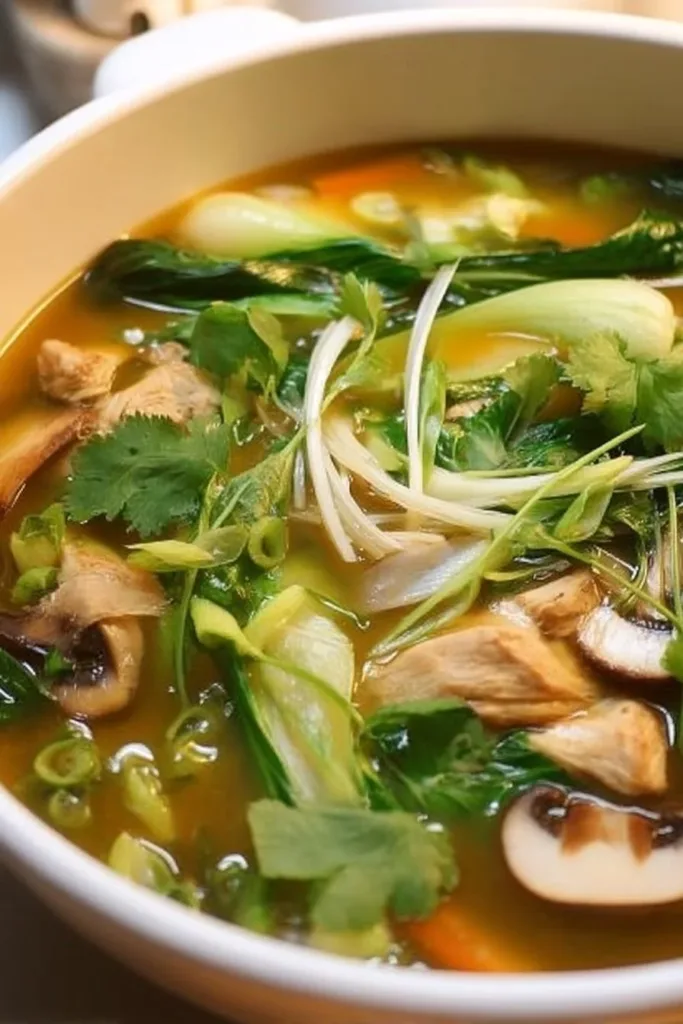
Bok Choy Chicken Soup is a stovetop chicken and vegetable broth, where cubed chicken simmers in stock and bok choy finishes bright and slightly crisp for a layered texture. I keep it in rotation because the broth turns silky while the carrots soften without losing bite, giving both comfort and quick weekday usefulness. For a noodle twist try ginger garlic noodle soup with bok choy.
Print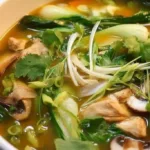
Bok Choy Chicken Soup
- Total Time: 40 minutes
- Yield: 4 servings 1x
- Diet: Low-Carb
Description
A comforting stovetop chicken soup with cubed chicken and vibrant bok choy, simmered in savory broth for a quick weeknight meal.
Ingredients
- 1 lb chicken (cubed)
- 4 cups chicken broth
- 2 cups bok choy (chopped)
- 1 cup carrots (sliced)
- 1 onion (diced)
- 2 cloves garlic (minced)
- 1 tsp ginger (grated)
- Salt and pepper to taste
- 2 tbsp soy sauce (optional)
- 1 tbsp sesame oil (optional)
Instructions
- Heat sesame oil over medium heat until it shimmers.
- Add the onion and garlic, sautéing until fragrant.
- Add the chicken and cook until browned.
- Pour in the chicken broth and bring to a boil.
- Add the carrots and cook for about 5 minutes.
- Then add the bok choy, ginger, soy sauce, and season with salt and pepper.
- Simmer for an additional 10 minutes until the chicken is cooked through.
Notes
Control the texture of the carrots by slicing them thinner for faster softening or thicker for more bite.
- Prep Time: 10 minutes
- Cook Time: 30 minutes
- Category: Soup
- Method: Stovetop
- Cuisine: Asian
Nutrition
- Serving Size: 1 bowl (about 1.5 cups)
- Calories: 260
- Sugar: 3g
- Sodium: 600mg
- Fat: 8.5g
- Saturated Fat: 1g
- Unsaturated Fat: 7g
- Trans Fat: 0g
- Carbohydrates: 8g
- Fiber: 1.5g
- Protein: 35g
- Cholesterol: 75mg
Why This Bok Choy Chicken Soup Works Every Time
This Bok Choy Chicken Soup is straightforward and forgiving, which is why I reach for it on busy nights. The method builds flavor through a quick sauté and a gentle simmer so the chicken and vegetables change texture predictably, the broth clarifies and concentrates, and the dish stays ready in about 30 minutes without precise timing.
Ingredient Section
- 1 lb chicken (cubed)
- 4 cups chicken broth
- 2 cups bok choy (chopped)
- 1 cup carrots (sliced)
- 1 onion (diced)
- 2 cloves garlic (minced)
- 1 tsp ginger (grated)
- Salt and pepper to taste
- 2 tbsp soy sauce (optional)
- 1 tbsp sesame oil (optional)
Cooking Method Section
- Heat sesame oil over medium heat. You will smell the oil warm and it should shimmer slightly without smoking, this sets a foundation of aroma. Tip, keep heat moderate to prevent sesame oil from burning and losing its nutty scent.
- Add the onion and garlic, sauté until fragrant. You should see the onion soften and turn translucent and the garlic release a toasted scent, this builds sweetness. Tip, stir frequently so the garlic does not brown too dark and turn bitter.
- Add the chicken and cook until browned. Look for lightly browned edges and a firmer texture on the exterior, this adds depth to the broth. Tip, pat chicken dry before adding to the pot so it browns instead of steaming.
- Pour in the chicken broth and bring to a boil. The liquid will lift browned bits from the bottom and smell savory, this is where the broth gains body. Tip, scrape the bottom of the pot with your spoon to dissolve those browned bits into the stock.
- Add the carrots and cook for about 5 minutes. Carrots should begin to soften but still hold a little bite, adding a subtle sweet texture layer. Tip, slice carrots evenly so they cook through at the same rate.
- Then add the bok choy, ginger, soy sauce, and season with salt and pepper. The bok choy will wilt slightly while the stalks remain tender-crisp and the ginger will brighten the broth. Tip, add soy sauce sparingly and taste before adding salt because soy sauce contributes saltiness.
- Simmer for an additional 10 minutes, or until the chicken is cooked through and the vegetables are tender. The chicken should feel tender and the vegetables should be easy to pierce with a fork, and the broth will be melded and fragrant. Tip, check a piece of chicken for doneness or use a thermometer aiming for 165 F internal temperature, then serve hot.
Nutrition Section
- Serving size, about 1 bowl, roughly 1.5 cups
- Calories, approximately 260 per serving (estimate)
- Protein, about 35 g per serving (estimate)
- Carbs, around 8 g per serving (estimate)
- Fat, approximately 8.5 g per serving (estimate)
- Fiber, about 1.5 g per serving (estimate)
Serving and Pairing Section
- Serve Bok Choy Chicken Soup hot in a deep bowl, spooning broth over the chicken and vegetables so textures contrast bowl to bowl.
- Pair with steamed rice or a crusty slice of bread to soak up the broth for a simple, practical meal.
- For a heartier companion on chillier nights try 30-minute high protein chicken pot pie soup as a complementary main or follow-up, it shares comforting chicken-forward notes.
Storage and Reheat Section
- Refrigerator storage, cool to room temperature, transfer to an airtight container, and refrigerate for up to 3 days.
- Freezer storage, cool fully and freeze in a sealed container for up to 3 months, leave some headspace because liquids expand.
- Reheating method, thaw overnight if frozen, reheat gently on low to medium heat until steaming, stirring occasionally to even out temperature and texture.
- Freshness tip, add a quick stir and a brief warm simmer before serving to revive the silkiness of the broth and redistribute flavors.
Pro Tips Section
- Control texture by slicing carrots thinly for faster softening or thicker for more bite, this lets you tune the carrot mouthfeel.
- Manage browning, pat chicken dry and give pieces space in the pot so you get light sear without steaming, that adds savory depth.
- Preserve bok choy crunch, add greens near the end of cooking so stalks remain tender-crisp while leaves wilt gently.
Flavor Variations Section
- Seasonal, use tender baby bok choy when available, the smaller stalks cook very quickly and keep a delicate snap that brightens spring bowls.
- Elevated, brown the chicken a touch longer during step three to deepen flavor, that caramelization adds a meaty richness without changing ingredients.
- Simple, omit soy sauce to keep the broth cleaner and rely on salt and pepper, this emphasizes the natural stock and fresh ginger.
Mistakes Section
- Problem, garlic burned during the sauté. Fix, lower heat and add garlic after the onion softens, stirring constantly to avoid bitterness.
- Problem, chicken steamed instead of browning. Fix, pat chicken dry and do not overcrowd the pot so pieces contact the hot surface for browning.
- Problem, bok choy too limp. Fix, add bok choy later in the cook and simmer just until tender-crisp to retain texture.
- Problem, broth tastes flat. Fix, taste and adjust with a small splash of soy sauce or a pinch of salt to lift flavors incrementally.
Leftover Section
- Reheated soup, gently simmer leftovers to meld flavors, the bok choy will soften further but the broth will be fuller tasting the next day.
- Quick grain bowl, serve warmed soup over a scoop of rice or quinoa, letting the broth act as a dressing for a simple lunch.
- Light stir-fry base, strain solids and use shredded leftover chicken and vegetables to quickly toss with rice or noodles for a different texture.
FAQ Section
Q, Can I use dark meat or different cuts of chicken?
A, Yes, you can use thigh or other cuts, but adjust cooking. In Bok Choy Chicken Soup bone-in or dark meat adds richer fat, so simmer until meat is tender and internal temperature reaches 165 F. Brown pieces longer for more caramelization, and skim excess fat from the surface before serving for a cleaner broth.
Q, Is bok choy the only green I can use?
A, You can substitute similar leafy greens, but expect texture changes. Bok Choy Chicken Soup relies on bok choy’s crisp stalks and tender leaves. Swap with baby spinach or napa cabbage, but add them later to avoid overcooking. Each green will change mouthfeel and cooking time, so watch for the tender-crisp stage.
Q, Can I make Bok Choy Chicken Soup ahead of time?
A, Yes, Bok Choy Chicken Soup holds well overnight. Refrigerate in an airtight container, the broth mingles and flavors deepen, though bok choy will soften further. Reheat gently on low heat until steaming, stirring to restore texture. Add a splash of sesame oil at the end to revive aroma if used originally.