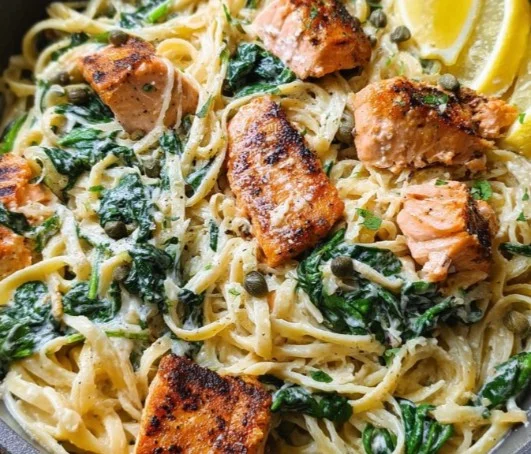
I used a time cue to start this one: it’s 6:05 p.m., and dinner needs to happen in under 30 minutes. Salmon, sun-dried tomatoes, cream, and spinach, a combo that hits protein and omega-3s while dressing up pantry staples. You’ll smell garlic and warm tomatoes as the sauce comes together, and before you know it, a weeknight meal looks like a restaurant plate. If you want a higher-protein spin that leans into the same flavors, see this 30g protein salmon pasta with spinach for ideas.
Print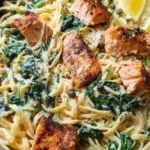
Salmon Pasta with Sun-Dried Tomato Cream Sauce and Spinach
- Total Time: 30 minutes
- Yield: 4 servings 1x
- Diet: Pescatarian
Description
A quick and impressive salmon pasta dish in a sun-dried tomato cream sauce with fresh spinach, perfect for weeknight dinners.
Ingredients
- 1 tablespoon olive oil
- 1 pound salmon fillets
- 1/4 teaspoon salt
- 3 cloves garlic (minced)
- 1/4 cup sun-dried tomatoes (in oil, chopped)
- 5 oz spinach (fresh)
- 1 cup heavy cream
- 1/4 teaspoon paprika
- 1/8 teaspoon red pepper flakes
- 8 oz penne
Instructions
- Heat a large skillet over medium-high heat and add the olive oil.
- Pat salmon dry, season with salt and paprika, and place skin-side up in the pan for 3 minutes.
- Flip the salmon and cook for another 2 to 3 minutes, then remove and tent with foil.
- Reduce heat to medium, add sun-dried tomatoes, and sauté for 30 seconds.
- Add minced garlic and red pepper flakes, cooking for 20 to 30 seconds.
- Pour in heavy cream, bring to a simmer, and stir until slightly thickened (about 2 to 3 minutes).
- Stir in the spinach until wilted.
- Meanwhile, cook penne in salted water until al dente; reserve 1/2 cup pasta water before draining.
- Add drained pasta and reserved pasta water to the sauce, flake in the salmon, and gently fold to combine. Serve immediately.
Notes
This dish pairs well with a crisp green salad and a light white wine. For best results, do not overcook the salmon.
- Prep Time: 10 minutes
- Cook Time: 20 minutes
- Category: Main Course
- Method: Searing & Simmering
- Cuisine: Italian
Nutrition
- Serving Size: 1 serving
- Calories: 650
- Sugar: 4g
- Sodium: 350mg
- Fat: 36g
- Saturated Fat: 18g
- Unsaturated Fat: 15g
- Trans Fat: 0g
- Carbohydrates: 50g
- Fiber: 3g
- Protein: 40g
- Cholesterol: 90mg
How to Make Salmon Pasta with Sun-Dried Tomato Cream Sauce and Spinach in 30 Minutes
This is the “fast but not sloppy” angle: the method prioritizes timing, heat control, and folding, so the salmon stays flakey and the sauce stays silky. It’s the kind of recipe you’ll make when you want something impressive with minimal faff. Read the ingredients, set a timer, and trust that the most important move is keeping the pan hot for searing and cool enough for the cream to thicken without separating. You’ll be done in about the time your pasta pot reaches a boil.
The Essentials
- 1 tablespoon olive oil
- 1 pound salmon fillets
- 1/4 teaspoon salt
- 3 cloves garlic (minced)
- 1/4 cup sun-dried tomatoes (in oil, chopped)
- 5 oz spinach (fresh)
- 1 cup heavy cream
- 1/4 teaspoon paprika
- 1/8 teaspoon red pepper flakes
- 8 oz penne
From Pan to Plate
- Heat a large skillet over medium-high heat and add 1 tablespoon olive oil; once shimmering, pat salmon dry, season with 1/4 teaspoon salt and 1/4 teaspoon paprika, and place skin-side up in the pan to sear for 3 minutes. Mini-tip: a hot pan is your friend — it creates a quick crust and prevents sticking; don’t move the fillets during the first sear.
- Flip the salmon and cook for another 2 to 3 minutes depending on thickness; remove to a plate and tent loosely with foil so it rests while you finish the sauce. Mini-tip: salmon will continue cooking off the heat, so pull it at medium-rare to medium for the best texture.
- Reduce heat to medium and add the chopped sun-dried tomatoes to the same pan; sauté for 30 seconds to release their oil and flavor. Mini-tip: use a wooden spoon to scrape browned bits from the bottom of the pan — those bits are concentrated flavor.
- Add the minced garlic and 1/8 teaspoon red pepper flakes and cook for 20 to 30 seconds until aromatic but not browned. Mini-tip: garlic burns fast; for a mellow garlic note, add it after the tomatoes have softened slightly.
- Pour in 1 cup heavy cream and bring to a gentle simmer; stir and reduce until the sauce thickens slightly, about 2 to 3 minutes. Mini-tip: simmer gently — high heat will separate the cream and make it grainy.
- Stir in the fresh 5 oz spinach a handful at a time until wilted, then taste and adjust with a pinch more salt if needed. Mini-tip: wilt spinach in the sauce rather than pre-cooking so it folds in warm and keeps its bright color.
- Meanwhile, cook 8 oz penne in salted boiling water according to package directions until al dente; reserve 1/2 cup pasta water before draining. Mini-tip: reserve pasta water to loosen the sauce and help it cling to the pasta because of the starch.
- Add drained pasta to the sauce with 2 to 3 tablespoons reserved pasta water and gently flake the rested salmon into large chunks and fold them in; warm through for 30 seconds and serve immediately. Mini-tip: fold the salmon gently so you keep chunky pieces instead of mash.
For a garlic-forward twist in a prep step or alternate version, check this garlic salmon with spinach and sun-dried tomatoes for more ideas on technique and flavor layering.
Nutrition Breakdown
A reasonable serving size for this recipe is about 1/4 of the finished pan if you make 4 servings. Estimated nutrition per serving: roughly 620 to 700 calories depending on portion, 35 to 45 grams protein, 50 to 60 grams carbohydrates, 28 to 36 grams fat, and about 4 to 6 grams fiber.
The salmon brings high-quality protein and omega-3 fats, the spinach contributes vitamins A and K plus folate, and sun-dried tomatoes add concentrated lycopene and minerals.
Short health insight: swapping half-and-half for heavy cream lowers calories but reduces silkiness; consider 3/4 cup cream plus 1/4 cup low-fat milk for a compromise that keeps texture while trimming fat.
Perfect Pairings
Serve this pasta with a crisp green salad dressed simply with lemon and olive oil to cut the richness. A light, acidic white wine like Pinot Grigio or a dry rosé works great; if you prefer nonalcoholic, sparkling water with a lemon slice complements the dish.
For seasonal moments: in spring, add peas or asparagus tips for brightness; in late summer, use blistered cherry tomatoes alongside the sun-dried ones.
Portion for a weeknight family dinner or dress it up with a lemon wedge and microgreens for guests.
How to Store It Right
Refrigerator: Cool the pasta within two hours and store in an airtight container for up to 3 days.
Freezer: Sauce-only freezes better than cream-based pasta because cream can change texture; freeze the sauce (without pasta) in a freezer-safe container up to 2 months.
Reheating: Gently reheat refrigerated portions in a skillet over low heat with a splash of milk or reserved pasta water to loosen the sauce; avoid the microwave for best texture, but if necessary, heat at 50 percent power and stir every 30 seconds.
Freshness tip: always add a squeeze of lemon before serving leftovers to brighten the sauce and reduce perception of any staleness.
Expert Tips
- Use room-temperature salmon for even searing and to cut down cooking time; it will sear rather than steam, giving you better texture.
- Reserve pasta water — it’s the emulsifier that turns a good sauce into one that clings beautifully to penne.
- Don’t over-stir the salmon into the pasta; flake into large chunks so the final dish has textural contrast.
- If cream starts to break, remove the pan from heat and whisk in a tablespoon of butter to re-emulsify.
- Toasted pine nuts or a shower of grated Parmesan at the end add crunch and umami without overpowering the salmon.
Flavor Experiments
- Seasonal variation (spring): Stir in blanched asparagus tips and peas at the same time as the spinach for a fresher, greener bite.
- Gourmet variation: Finish the sauce with 1 teaspoon of white wine and a splash of lemon juice, then fold in a tablespoon of mascarpone for extra silk and depth.
- Playful variation: Swap penne for orecchiette and add roasted red peppers for a sweet contrast to the sun-dried tomatoes.
Mistakes to Avoid
- Overcooking the salmon – Fix: remove salmon from heat while slightly underdone; it will finish gently off the heat.
- Letting the cream boil – Fix: lower to a simmer and stir frequently; if the sauce separates, remove from heat and whisk in a cold knob of butter.
- Adding spinach too early – Fix: add spinach at the end so it wilts just enough and keeps bright color and texture.
- Not seasoning in stages – Fix: taste after searing, after the tomatoes, and after cream to adjust salt and acidity progressively.
- Dumping pasta into sauce without reserved water – Fix: use 2 to 3 tablespoons reserved pasta water to bind sauce and pasta together.
What to Do with Leftovers
- Salmon Pasta Frittata: Toss leftover pasta into a hot buttered skillet, pour beaten eggs over it, and cook until set for a breakfast-forward twist.
- Creamy Salmon Soup: Thin the leftover pasta with stock, add extra vegetables, and simmer for a quick chowder-style bowl.
- Cold Pasta Salad: Chill leftover pasta, flake salmon, toss with lemon, olive oil, arugula, and toasted pine nuts for a picnic-ready salad.
Quick Questions, Straight Answers, FAQs
Q: How do I prevent the cream sauce from separating?
A: Simmer gently and don’t let it reach a hard boil. If it shows signs of splitting, remove from heat and whisk in a cold tablespoon of butter or a splash of reserved pasta water to bring it back together.
Q: Can I use frozen salmon?
A: Yes, but thaw it completely and pat dry so it sears properly; if it’s still icy, it will steam and won’t get that caramelized exterior that gives the dish flavor.
Q: Is there an easy dairy-free swap for the heavy cream?
A: Use full-fat coconut milk for a dairy-free option — it changes the flavor profile slightly but keeps the sauce rich; add a squeeze of lemon to balance the coconut note.
Q: Can I make this ahead for a dinner party?
A: You can prepare the sauce and cook the pasta ahead but keep them separate; reheat gently and combine right before serving to preserve texture and color.