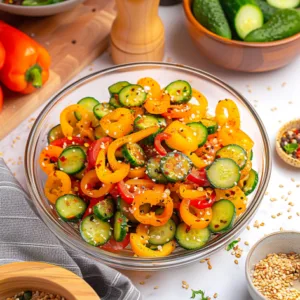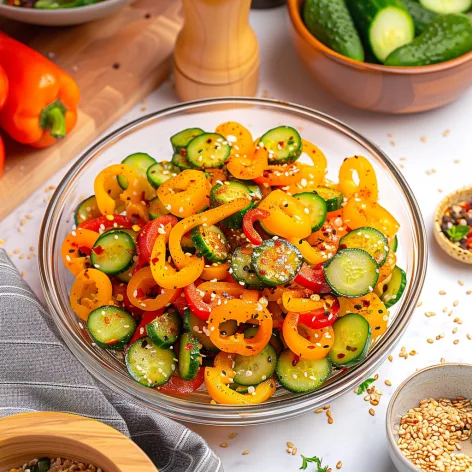
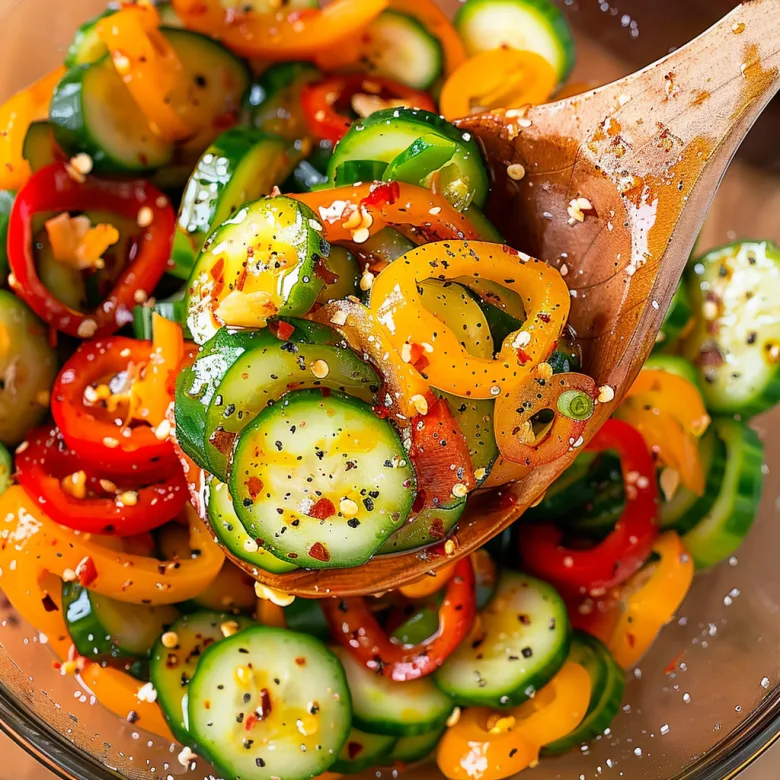
This simple salad is a refreshing and vibrant addition to any meal, especially during warmer months. It’s quick to prepare, requiring no cooking, and brings a delightful crunch and burst of flavor. It’s a recipe I find myself returning to again and again when I need something healthy and satisfying without a lot of fuss.
Why This Cucumber and Sweet Pepper Salad Works
This salad’s appeal lies in its simplicity and freshness. The crispness of the cucumber, combined with the slight sweetness and vibrant color of the bell peppers, creates a delightful textural and visual experience. The light, tangy dressing ties it all together without overpowering the natural flavors of the vegetables.
Ingredients
- 2 large cucumbers (English or seedless varieties are great)
- 2 bell peppers (any color combination you like – red, yellow, orange, or green)
- 1/2 red onion, thinly sliced
- 1/4 cup fresh parsley, chopped
- 1/4 cup fresh dill, chopped
- For the Dressing:
- 1/3 cup olive oil
- 2 tablespoons white wine vinegar (or apple cider vinegar)
- 1 teaspoon Dijon mustard
- 1 teaspoon sugar (or honey/maple syrup for a touch of sweetness)
- Salt, to taste
- Freshly ground black pepper, to taste
Gathering these fresh ingredients is the first enjoyable step in creating this delightful salad. Having everything prepped and ready makes the assembly process smooth and even more efficient.
How to Make It
- Wash and prepare the cucumbers. Depending on the type of cucumber, you might want to peel them. For English cucumbers, the skin is thin and edible, so peeling is optional. If using regular cucumbers, you might prefer to peel them and then scoop out the seeds if they are large or watery. Slice the cucumbers into rounds or half-moons, about 1/4-inch thick. For sturdier cucumbers with thicker skins, you could also choose to halve them lengthwise and then slice them.
- Prepare the bell peppers. Wash the peppers thoroughly. Cut them in half, remove the seeds and membranes, and then slice them into thin strips or dice them into bite-sized pieces. A mix of colors makes the salad visually appealing. I often aim for at least two different colors to add that visual pop.
- Thinly slice the red onion. For a milder onion flavor, you can soak the sliced red onion in cold water for about 10-15 minutes, then drain it well before adding it to the salad. This step is particularly helpful if you find raw onion a bit too pungent.
- Chop the fresh herbs. Finely chop the fresh parsley and dill. These herbs add a wonderful aroma and herbaceous freshness that complements the vegetables beautifully. Don’t be tempted to skip the fresh herbs; they truly elevate this simple salad.
- In a large bowl, combine the prepared cucumbers, bell peppers, red onion, chopped parsley, and chopped dill. Gently toss these ingredients together to distribute them evenly.
- Prepare the dressing. In a small bowl or a jar with a lid, whisk together the olive oil, white wine vinegar, Dijon mustard, and sugar (or your chosen sweetener). Season with salt and freshly ground black pepper to your taste. If using a jar, you can simply secure the lid and shake it vigorously until well combined. For a more emulsified dressing, you can whisk everything in a bowl.
- Pour the dressing over the vegetable mixture. Gently toss the salad again to ensure all the ingredients are lightly coated with the dressing.
- Taste and adjust seasoning. Before serving, give the salad a final taste and add more salt, pepper, or vinegar if needed. Sometimes, depending on the sweetness of the peppers or the tang of the vinegar, it might need a little adjustment.
This straightforward process results in a vibrant and delicious salad, ready to be enjoyed as is or as a flavorful side dish.
Nutrition at a Glance
- Rich in vitamins A and C from the bell peppers.
- Good source of hydration due to the high water content of cucumbers.
- Provides fiber, supporting digestive health.
- Low in calories, making it a healthy lighter option.
- Contains beneficial antioxidants from the colorful vegetables and olive oil.
- Made with simple, whole food ingredients for a naturally wholesome dish.
- The inclusion of herbs adds trace minerals and additional phytonutrients.
- Olive oil provides healthy monounsaturated fats.
- The vinegar in the dressing can aid in digestion for some people.
- Sugar, if used, contributes a small amount of energy, but its quantity is minimal.
- Sodium content can be controlled by adjusting the added salt.
- Protein content is minimal, as expected for a primarily vegetable salad.
- Fat content comes mainly from the olive oil used in the dressing.
- Carbohydrate content is primarily from the vegetables and any added sweetener.
- Fiber content is notable, contributing to satiety.
How to Serve It
- Serve as a light and refreshing side dish alongside grilled chicken, fish, or steak.
- Pair it with your favorite sandwiches or wraps for an added crunch and burst of flavor.
- Enjoy it as a standalone light lunch, perhaps with a slice of crusty bread.
- Incorporate it into a larger spread of mezze or tapas-style appetizers.
- It’s an excellent accompaniment to barbecue fare, cutting through the richness of meats.
- Serve it at potlucks or picnics where a no-cook, vibrant salad is always appreciated.
- It can also be a simple, healthy accompaniment to breakfast or brunch dishes.
- For a more substantial meal, consider adding chickpeas, feta cheese, or cooked quinoa to the salad.
- The vibrant colors make it a visually appealing addition to any dinner table, even for less adventurous eaters.
- It pairs well with Italian dishes, Mediterranean flavors, or any cuisine that benefits from a fresh, acidic counterpoint.
This versatile salad can transform a simple meal into something more complete and enjoyable with its bright flavors and textures.
Common Mistakes
- Over-dressing the salad: Using too much dressing can make the salad soggy and overpower the fresh vegetable flavors. It’s better to start with less and add more if needed.
- Not salting the cucumbers: Salting cucumbers and letting them sit for a bit can draw out excess water, preventing a watery salad. However, for this particular recipe with sweet peppers, this step is often omitted for speed and simplicity, as the goal is a fresh, crisp texture rather than a denser, marinated one.
- Using old or wilted vegetables: The beauty of this salad is in its freshness. Using produce that is past its prime will result in a lackluster dish.
- Chopping vegetables too large or too small: Aim for bite-sized pieces that are easy to eat and that provide a good balance of flavors and textures in each forkful. Consistency in size also makes it more visually appealing.
- Skipping the fresh herbs: While optional, fresh parsley and dill significantly enhance the salad’s aroma and taste. Dried herbs just don’t provide the same bright, fresh note.
- Using a harsh vinegar: While white wine vinegar is standard, a very sharp or inexpensive vinegar can make the dressing taste acrid. Using a good quality vinegar makes a noticeable difference.
- Not tasting and adjusting the dressing: The balance of sweet, sour, and salty is key. Without tasting, you might end up with a dressing that’s too tart, too bland, or too sweet.
- Letting it sit too long before serving: While it can hold up reasonably well, this salad is best enjoyed when the vegetables are still crisp. Extended sitting time, especially with a vinaigrette, can soften the vegetables more than desired.
- Using a knife that’s too dull: For effortlessly slicing through firm vegetables like peppers and cucumbers, a sharp knife is essential. A dull knife can crush the vegetables, making them appear bruised or less appealing.
- Improperly storing potential leftovers: Trapping moisture can lead to a slimy salad. Ensuring proper containers and avoiding over-saturation with dressing are important for longer storage.
Avoiding these common pitfalls will ensure you create the most flavorful and texturally pleasing Cucumber and Sweet Pepper Salad each time you make it.
Check this out: Lentils and Rice Recipe
Storage and Reheating
- Store any leftover salad in an airtight container in the refrigerator.
- It is best consumed within 1-2 days for optimal freshness and crispness.
- If you know you’ll have leftovers, consider keeping the dressing separate and adding it just before serving to maintain the vegetables’ crisp texture. This is especially helpful if you anticipate storing it for longer than a day.
- Do not attempt to reheat this salad. It is a cold dish meant to be enjoyed chilled.
- The vegetables will naturally soften slightly as they sit, even in the refrigerator, so aim to eat it relatively soon after preparation.
- Adding a bit more crunch or freshness by adding some freshly chopped herbs or a few more cucumber slices can help revive leftovers.
- Avoid freezing this salad, as the texture of the cucumbers and peppers will be compromised upon thawing.
- If the salad seems a bit dry after storage, you can add a small drizzle of olive oil or a splash of vinegar to freshen it up.
- When packing for lunch, add the dressing right before you are ready to eat to prevent sogginess.
Properly storing this salad will help preserve its deliciousness and can extend its enjoyment for a short period.
Leftover Ideas
- Toss the leftover salad with some cooked quinoa or farro for a hearty grain salad.
- Add the salad to a pita pocket with some hummus and falafel for a quick and flavorful lunch.
- Use it as a topping for baked potatoes or sweet potatoes, adding a refreshing contrast.
- Incorporate the chopped vegetables into an omelet or frittata for added color and crunch.
- Blend some of the leftover salad into a smoothie for an unexpected twist; the cucumber and herbs can be quite refreshing.
- Mix the chopped vegetables into tuna salad or chicken salad for an extra layer of flavor and texture.
- Serve the leftover salad as a side to breakfast burritos or migas.
- If you have a lot of leftover dressing along with the salad, you can use the dressing for other salads or as a marinade for chicken or fish.
- The chopped vegetables can be stirred into cold pasta salads to add freshness and vibrant color.
- Consider pickling any remaining vegetables from the salad base (if you make extra for this purpose). Cucumbers and peppers can make excellent quick pickles.
With a little creativity, your leftover Cucumber and Sweet Pepper Salad can be the foundation for several other tasty and satisfying dishes.
Cucumber and Sweet Pepper Salad
- Total Time: 15 minutes
- Yield: 4 servings 1x
- Diet: Vegetarian
Description
A simple, refreshing, and vibrant Cucumber and Sweet Pepper Salad with fresh herbs and a light vinaigrette. Perfect as a side dish or a light lunch.
Ingredients
- 2 large cucumbers (English or seedless varieties recommended)
- 2 bell peppers (any color combination)
- 1/2 red onion, thinly sliced
- 1/4 cup fresh parsley, chopped
- 1/4 cup fresh dill, chopped
- For the Dressing:
- 1/3 cup olive oil
- 2 tablespoons white wine vinegar (or apple cider vinegar)
- 1 teaspoon Dijon mustard
- 1 teaspoon sugar (or honey/maple syrup)
- Salt, to taste
- Freshly ground black pepper, to taste
Instructions
- 1. Prepare the cucumbers by washing, peeling (optional, depending on type), and slicing them into 1/4-inch thick rounds or half-moons.
- 2. Wash the bell peppers, remove seeds and membranes, and slice them into thin strips or dice them into bite-sized pieces.
- 3. Thinly slice the red onion. For a milder flavor, soak in cold water for 10-15 minutes and drain well.
- 4. Finely chop the fresh parsley and dill.
- 5. In a large bowl, combine the prepared cucumbers, bell peppers, red onion, parsley, and dill.
- 6. In a small bowl or jar, whisk together olive oil, white wine vinegar, Dijon mustard, and sugar (or sweetener). Season with salt and pepper.
- 7. Pour the dressing over the vegetable mixture and gently toss to coat.
- 8. Taste and adjust seasoning as needed before serving.
Notes
Store any leftover salad in an airtight container in the refrigerator for 1-2 days. For best results, keep dressing separate if storing longer than a day. This salad is best served cold.
- Prep Time: 15 minutes
- Cook Time: 0 minutes
- Category: Salad
- Method: No-cook
- Cuisine: American
Nutrition
- Serving Size: 1 serving
- Calories: 150
- Sugar: 6g
- Sodium: 100mg
- Fat: 12g
- Carbohydrates: 10g
- Fiber: 2g
- Protein: 1g