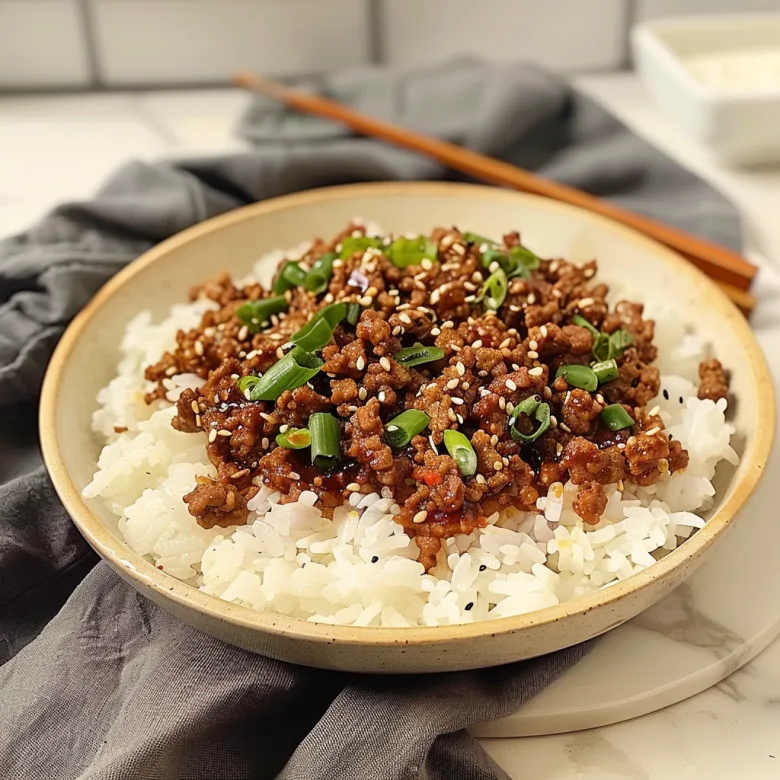
This Korean ground beef bowl has become my go-to weeknight dinner when I need something satisfying but don’t want to spend hours in the kitchen. The sweet and savory sauce transforms ordinary ground beef into something special, while the simplicity means I can have dinner on the table in under 30 minutes.
Why This Korean Ground Beef Bowl Works
The magic happens in the sauce – a blend of soy sauce, brown sugar, and sesame oil that caramelizes beautifully with the beef. Unlike traditional Korean bulgogi that requires marinating time, this version delivers similar flavors quickly. The ground beef absorbs the sauce completely, creating tender, flavorful bites that pair wonderfully with steamed rice.
Ingredients
Here’s what you’ll need for this Korean ground beef bowl:
- 1 pound ground beef (80/20 blend works best)
- 1/3 cup low-sodium soy sauce
- 1/4 cup packed brown sugar
- 2 tablespoons sesame oil
- 2 tablespoons rice vinegar
- 1 tablespoon fresh ginger, minced
- 4 cloves garlic, minced
- 1/2 teaspoon red pepper flakes (adjust to taste)
- 1 tablespoon cornstarch
- 2 tablespoons water
- 4 green onions, sliced thin
- 2 tablespoons sesame seeds
- 4 cups cooked white or brown rice
- 1 cucumber, thinly sliced (optional)
- 1 carrot, julienned (optional)
Most of these ingredients are pantry staples, making this recipe both convenient and budget-friendly for busy weeknight cooking.
How to Make It
- Heat a large skillet or wok over medium-high heat. Add the ground beef and cook, breaking it up with a wooden spoon, until browned and cooked through, about 6-8 minutes. Drain excess fat if needed, leaving about 1 tablespoon in the pan.
- While the beef cooks, whisk together soy sauce, brown sugar, sesame oil, rice vinegar, minced ginger, garlic, and red pepper flakes in a small bowl. The brown sugar may not dissolve completely at this stage, but it will when heated.
- Pour the sauce mixture over the cooked ground beef. Stir well to combine and let it simmer for 2-3 minutes. You’ll notice the sauce beginning to thicken and caramelize around the beef.
- In a small bowl, whisk cornstarch and water together until smooth. This creates a slurry that will help thicken the sauce to the right consistency.
- Add the cornstarch slurry to the beef mixture and stir constantly for 1-2 minutes until the sauce thickens and coats the beef nicely. The mixture should look glossy and well-coated.
- Remove from heat and stir in half of the sliced green onions and half of the sesame seeds. Reserve the remaining portions for garnish.
- Serve immediately over cooked rice, topped with remaining green onions, sesame seeds, and optional cucumber and carrot slices for extra crunch and freshness.
The entire cooking process takes less than 20 minutes, making this an excellent option for those hectic weeknight dinners when time is short but you still want something delicious and homemade.
Nutrition at a Glance
This Korean ground beef bowl offers solid nutrition in a satisfying package:
- High protein content from ground beef supports muscle maintenance and keeps you full longer
- Complex carbohydrates from rice provide sustained energy throughout the evening
- Ginger and garlic offer anti-inflammatory properties and digestive benefits
- Sesame oil provides healthy fats and adds authentic Korean flavor
- Green onions contribute vitamins A and C plus a fresh, mild onion taste
- Optional vegetables like cucumber and carrot add fiber and additional vitamins
- Each serving contains approximately 520 calories with 28g protein
- The sodium content is moderate at about 680mg per serving
- Iron content is excellent due to the ground beef, supporting healthy blood function
How to Serve It
This versatile Korean ground beef bowl adapts well to different serving styles and preferences:
- Serve over steamed white rice for the traditional approach that soaks up all the delicious sauce
- Try it over brown rice or quinoa for added fiber and a nuttier flavor profile
- Create lettuce wraps using butter lettuce leaves for a low-carb alternative
- Add steamed broccoli, snap peas, or bok choy for extra vegetables and color
- Include a side of kimchi for authentic Korean fermented vegetables and probiotics
- Serve with sliced avocado for healthy fats and creamy texture contrast
- Add a fried egg on top for extra protein and richness
- Include pickled vegetables like radish or cucumber for tangy contrast
- Sprinkle with toasted nori sheets cut into strips for additional umami flavor
- Serve alongside miso soup for a more complete Asian-inspired meal
The beauty of this dish lies in its flexibility – you can keep it simple with just rice and beef, or dress it up with multiple accompaniments depending on your mood and what you have available.
Common Mistakes
After making this recipe countless times, I’ve identified several pitfalls that can affect the final result:
- Using lean ground beef (93/7) instead of 80/20 – the extra fat content helps carry flavors and prevents dry, tough meat
- Not draining excess grease properly – too much fat will make the sauce greasy rather than glossy
- Adding the cornstarch slurry too quickly – this can create lumps that won’t dissolve properly in the sauce
- Overcooking after adding the sauce – this can make the beef tough and the sauce too thick or burnt-tasting
- Skipping the fresh ginger – ground ginger doesn’t provide the same bright, fresh flavor that makes this dish special
- Using too much red pepper flakes initially – you can always add more heat, but you can’t take it away
- Not letting the sauce simmer long enough – the flavors need time to meld and the sauce needs time to reduce slightly
- Forgetting to taste and adjust seasonings – sometimes you need a bit more soy sauce or brown sugar depending on your preferences
- Serving over cold rice – warm rice absorbs the sauce better and creates a more cohesive dish
- Adding all the green onions during cooking – saving some for garnish provides better visual appeal and fresh flavor contrast
These mistakes are all easily avoidable once you know what to watch for, and the recipe is forgiving enough that minor adjustments can usually save the day.
Storage and Reheating
This Korean ground beef bowl stores and reheats beautifully, making it excellent for meal prep:
- Refrigerate leftovers in airtight containers for up to 4 days – the flavors actually improve overnight
- Store the beef mixture and rice separately to prevent the rice from becoming mushy
- Freeze portions for up to 3 months in freezer-safe containers or bags
- Reheat in the microwave in 30-second intervals, stirring between each interval to ensure even heating
- Add a splash of water or broth when reheating if the mixture seems too thick
- Reheat on the stovetop over medium-low heat, stirring frequently to prevent sticking
- Fresh garnishes like green onions and sesame seeds should be added after reheating for best texture
- Thaw frozen portions overnight in the refrigerator before reheating for best results
- The sauce may separate slightly during storage – simply stir well when reheating to recombine
- Consider making double batches since the leftovers are so convenient for busy days
The make-ahead nature of this dish makes it particularly valuable for meal planning and busy weeks when homemade meals feel challenging to manage.
Leftover Ideas
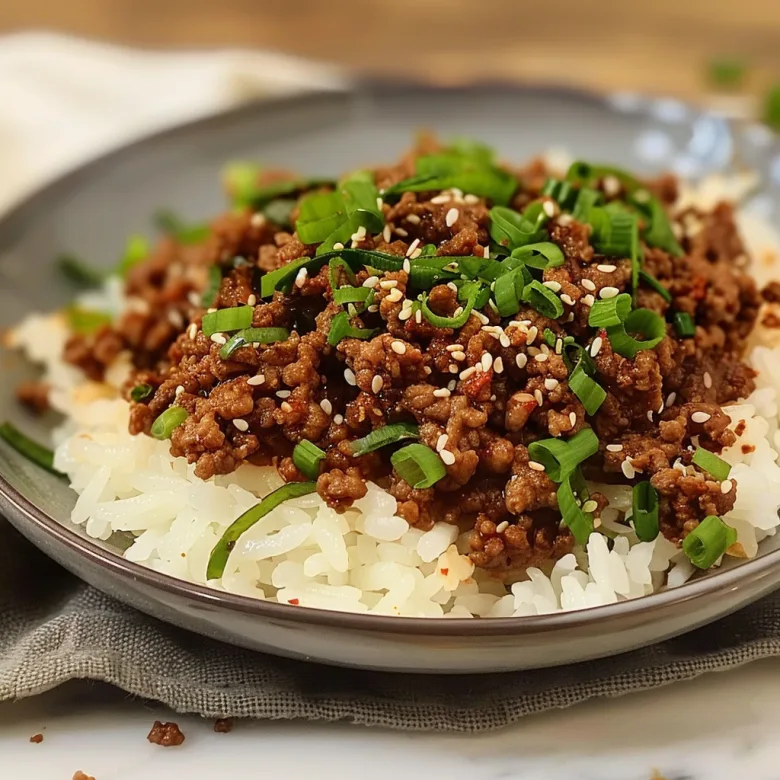
Transform your leftover Korean ground beef into completely different meals with these creative approaches:
- Stuff into flour tortillas with lettuce and cucumber for Korean-Mexican fusion tacos
- Use as a topping for loaded baked potatoes along with sour cream and chives
- Mix into scrambled eggs for a protein-packed breakfast with Asian flavors
- Create Korean beef fried rice by mixing with day-old rice, vegetables, and a fried egg
- Make Korean beef lettuce wraps using butter lettuce cups and additional fresh vegetables
- Layer into grain bowls with quinoa, roasted vegetables, and a drizzle of sriracha mayo
- Stuff into bell peppers with rice and bake until the peppers are tender
- Use as a pizza topping along with mozzarella cheese and green onions on naan bread
- Create Korean beef salad by serving over mixed greens with sesame dressing
- Make Korean beef soup by adding broth, vegetables, and noodles to the leftover beef
- Stuff into pita pockets with cucumber, carrot, and a dollop of Greek yogurt
- Use as a filling for homemade spring rolls with fresh herbs and vegetables
These leftover transformations help prevent food waste while providing variety in your meal planning, ensuring you never get bored with the same flavors served the same way.
PrintKorean Ground Beef Bowl
- Total Time: 25 minutes
- Yield: 4 servings 1x
Description
Quick and flavorful Korean ground beef bowl with sweet-savory sauce served over rice. Ready in 20 minutes with simple pantry ingredients.
Ingredients
- 1 pound ground beef (80/20 blend)
- 1/3 cup low-sodium soy sauce
- 1/4 cup packed brown sugar
- 2 tablespoons sesame oil
- 2 tablespoons rice vinegar
- 1 tablespoon fresh ginger, minced
- 4 cloves garlic, minced
- 1/2 teaspoon red pepper flakes
- 1 tablespoon cornstarch
- 2 tablespoons water
- 4 green onions, sliced thin
- 2 tablespoons sesame seeds
- 4 cups cooked white or brown rice
- 1 cucumber, thinly sliced (optional)
- 1 carrot, julienned (optional)
Instructions
- 1. Cook ground beef in large skillet over medium-high heat until browned, 6-8 minutes. Drain excess fat.
- 2. Whisk together soy sauce, brown sugar, sesame oil, rice vinegar, ginger, garlic, and red pepper flakes.
- 3. Pour sauce over beef and simmer 2-3 minutes.
- 4. Mix cornstarch and water to create slurry.
- 5. Add cornstarch slurry to beef and stir constantly 1-2 minutes until thickened.
- 6. Remove from heat and stir in half the green onions and sesame seeds.
- 7. Serve over rice, topped with remaining green onions, sesame seeds, and optional vegetables.
Notes
Store leftovers separately from rice for up to 4 days. Reheat gently with splash of water if needed.
- Prep Time: 10 minutes
- Cook Time: 15 minutes
- Category: Main Dish
- Method: Stovetop
- Cuisine: Korean
Nutrition
- Serving Size: 1 serving
- Calories: 520
- Sugar: 14g
- Sodium: 680mg
- Fat: 18g
- Carbohydrates: 58g
- Fiber: 2g
- Protein: 28g