There are nights when dinner needs to arrive cooked, comforting, and nearly effortless; this slow cooker beef roast answers that call with hands-off low and a payoff that feeds a family for days. Packed with protein, hearty root vegetables, and a savory gravy, this dish hits the kind of home-cooked nutrition stats families actually care about. Close your eyes for a second and picture the aroma of rosemary and garlic warming the kitchen as the potatoes soak up beefy juices, that smell alone sells the plan. If you want a reliable crowd-pleaser you can set and forget, this is it, and I’ll point you to a sibling recipe for cheesy potato comfort while we go — see a comforting cousin recipe at cheesy ground beef and potatoes.
Print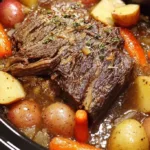
Slow Cooker Beef Roast with Potatoes and Carrots
- Total Time: 495 minutes
- Yield: 6 servings 1x
- Diet: None
Description
A comforting and hands-off slow cooker beef roast with tender vegetables and savory gravy, perfect for weeknight dinners.
Ingredients
- 1 medium onion (cut into wedges)
- 1 pound carrots (cut into large, 2 inch chunks)
- 1.5 pounds baby potatoes (left whole)
- 4 cloves garlic (minced)
- 1 cup beef broth
- 2 tablespoons dijon mustard
- 1 teaspoon salt
- 1 teaspoon dried thyme
- 1/2 teaspoon dried rosemary
- 1/2 teaspoon pepper
- 3–4 pound chuck roast
- 1 tablespoon cornstarch (optional)
Instructions
- In a 6 quart slow cooker, add onion, carrots, potatoes, garlic, and beef broth.
- In a bowl, combine dijon mustard, salt, pepper, thyme, and rosemary. Brush mustard paste on all sides of beef roast and place in slow cooker on top of vegetables.
- Cover and cook on low for about 8-10 hours (or high for 5-6 hours), or until beef roast is tender.
- Optionally, whisk together cornstarch and 1-2 tablespoons of water. Remove roast from slow cooker and add the cornstarch mixture to the beef broth, stirring to thicken into a gravy.
Notes
Pat the roast dry before applying the mustard for better adhesion and flavor. Taste the pan juices before thickening the gravy for seasoning adjustments.
- Prep Time: 15 minutes
- Cook Time: 480 minutes
- Category: Main Course
- Method: Slow Cooking
- Cuisine: American
Nutrition
- Serving Size: 1 serving
- Calories: 500
- Sugar: 5g
- Sodium: 600mg
- Fat: 25g
- Saturated Fat: 10g
- Unsaturated Fat: 10g
- Trans Fat: 0g
- Carbohydrates: 30g
- Fiber: 4g
- Protein: 40g
- Cholesterol: 100mg
Why This Slow Cooker Beef Roast with Potatoes and Carrots Never Fails
There is a quiet joy in knowing a roast will be fork-tender when you walk in the door. This angle is simple: choose the right cut, layer flavors, and let time and low heat do the heavy lifting. The technique removes guesswork — you’re stacking aromatics and starches under the meat so everything braises together and the vegetables finish perfectly. Adopt a few small habits here and it will be your most dependable roast of the season, every time.
Ingredient Lineup
- 1 medium onion (cut into wedges)
- 1 pound carrots (cut into large, 2 inch chunks)
- 1.5 pounds baby potatoes (left whole)
- 4 cloves garlic (minced)
- 1 cup beef broth
- 2 tablespoons dijon mustard
- 1 teaspoon salt
- 1 teaspoon dried thyme
- 1/2 teaspoon dried rosemary
- 1/2 teaspoon pepper
- 3-4 pound chuck roast
- 1 tablespoon cornstarch (optional)
Step-by-Step Method
- In a 6 quart slow cooker, add onion, carrots, potatoes, garlic, and beef broth. Expert tip: Tuck the vegetables into an even layer so the roast sits on top and the juices can bathe them; this prevents the bottom potatoes from becoming gluey.
- In a bowl, combine dijon mustard, salt, pepper, thyme, and rosemary. Brush mustard paste on all sides of beef roast and place in slow cooker on top of vegetables. Expert tip: Pat the roast dry first for better paste adhesion; a thin smear of mustard gives more surface flavor than a heavy coat.
- Cover and cook on low for about 8-10 hours (or high for 5-6 hours), or until beef roast is tender. Time depend on the size and shape of the roast you’re using. Expert tip: If the roast has an odd shape, rotate once halfway through on high, or simply trust low and let the connective tissue break down slowly for the most even tenderness.
- Optionally, whisk together cornstarch and 1-2 tablespoons of water. Remove roast from slow cooker and add the cornstarch mixture to the beef broth, stirring to thicken into a gravy. Expert tip: Taste the pan juices before thickening; a splash of Worcestershire or a pinch of salt can sharpen the gravy. Thickening on low heat prevents lumps.
Nutrition Breakdown
Serving size: about 1 generous plate (approximate, dependent on roast size). Calories: roughly 450-550 per serving, depending on the cut and drippings retained. Protein: ~35-45 grams per serving, mostly from the roast. Carbs: ~25-35 grams, driven by potatoes and carrots. Fat: ~20-30 grams, varies by marbling and how much fat you skim or keep. Fiber: ~4-6 grams from vegetables. Short health insight: This meal balances high-quality protein with root vegetables to keep you satisfied; trim some fat before cooking to cut calories, or serve smaller portions of roast to lower fat without losing flavor.
Perfect Pairings
This roast sings with simple sides and seasonal touches. Serve hot slices spooned with gravy alongside buttered green beans or a crisp winter slaw to add brightness. For a cozy Sunday dinner, pair with a chunky whole-grain roll and a bitter greens salad dressed in lemon vinaigrette. If you want to lean into comfort, mash the potatoes and use the carrots for a sweet accent. For a lighter seasonal moment try roasted Brussels sprouts or a shaved fennel salad in spring. If you need inspiration on hearty pairings with potatoes, the slow cooker creamy chicken soup also makes a warming companion course — see my take on slow cooker creamy chicken soup.
How to Store It Right
Fridge storage: Cool the roast and vegetables within two hours and store in airtight containers for up to 4 days.
Freezer storage: Portion the meat and vegetables into meal-sized containers or freezer bags and freeze for up to 3 months; freeze the gravy separately if possible for easier reheating. Optimal reheating: Reheat gently in a 325 F oven covered, or warm in a saucepan for the gravy and microwave individual servings—add a splash of broth if the meat seems dry.
Freshness tip: To preserve texture, slightly undercook the potatoes if you plan to reheat; they’ll finish warming without turning mushy.
Expert Tips
- Choose the right cut: Chuck roast is ideal because its marbling melts into gelatin, creating a silky gravy; avoid lean roasts which can dry out in long braises.
- Salt timing: Salt the vegetables and roast before cooking, but be measured; slow cooking concentrates saltiness, so start moderate and adjust at the end.
- Browning optional but helpful: Searing the roast in a hot pan for 2 minutes per side adds depth; if you’re short on time, the slow cooker still does fine but flavor will be more one-note.
- Layer for texture: Put dense vegetables under the roast, more delicate ones around the sides later in cooking if you want them firmer.
- Rest before slicing: Let the roast rest 10-15 minutes after removing it so juices redistribute, giving cleaner slices and a saucier plate.
Flavor Experiments
- Gourmet: Add 2 ounces of chopped pancetta or bacon at the base with the vegetables for smoky depth, and finish the gravy with a tablespoon of balsamic for tang.
- Seasonal: In winter, swap half the potatoes for parsnips and add a diced apple for a subtle sweet-sour counterpoint.
- Playful: Stir in a tablespoon of grainy mustard and a splash of beer to the broth before cooking for an easy pub-style twist.
Learn from My Mistakes
- Mistake: Overcrowding the slow cooker with too many vegetables, causing uneven cooking. Fix: Keep a single vegetable layer under the roast so heat circulates evenly.
- Mistake: Adding cornstarch directly to boiling juices without diluting leads to clumps. Fix: Always make a slurry with cold water first and whisk while adding slowly.
- Mistake: Cooking on high to save time but ending with dry edges and gummy veggies. Fix: Use low for longer when possible; it yields a uniformly tender roast.
- Mistake: Forgetting to taste the juices before thickening and seasoning. Fix: Always taste and adjust seasoning after reducing, then thicken.
What to Do with Leftovers
- Roast sandwiches: Thinly slice leftover beef, warm with gravy, and pile on toasted bread with pickled onions for a quick diner-style sandwich.
- Hearty hash: Chop leftover roast and pan-fry with cubed potatoes and onions for breakfast or brunch; top with a fried egg. See an alternate quick beef stir fry idea at beef and cabbage stir fry.
- Soup base: Use shredded leftovers to bolster a vegetable or barley soup; the leftover gravy becomes a flavorful broth foundation.
FAQs
Q: How do I know when the roast is done without a thermometer?
A: Test tenderness with a fork; the roast should pull apart easily and have no resistance. For safety, beef is fine at lower temperatures when slow-cooked long enough, but internal temperature of 145 F is medium rare; for fork-tender braise aim beyond that indirectly via texture rather than temp.
Q: Can I substitute different vegetables?
A: Yes. Root vegetables like parsnips, turnips, or rutabaga hold up well. Add quick-cooking veg such as peas or green beans in the last 30 minutes to avoid overcooking.
Q: Should I brown the roast first?
A: Browning is optional but recommended. It adds caramelized flavor and a richer gravy. If time is tight, skip it; the slow cooker still produces a satisfying meal.
Q: How thick should the gravy be for serving?
A: Medium-thick gravy that coats a spoon is ideal. Start with a light slurry and add gradually; it will thicken further as it cools.