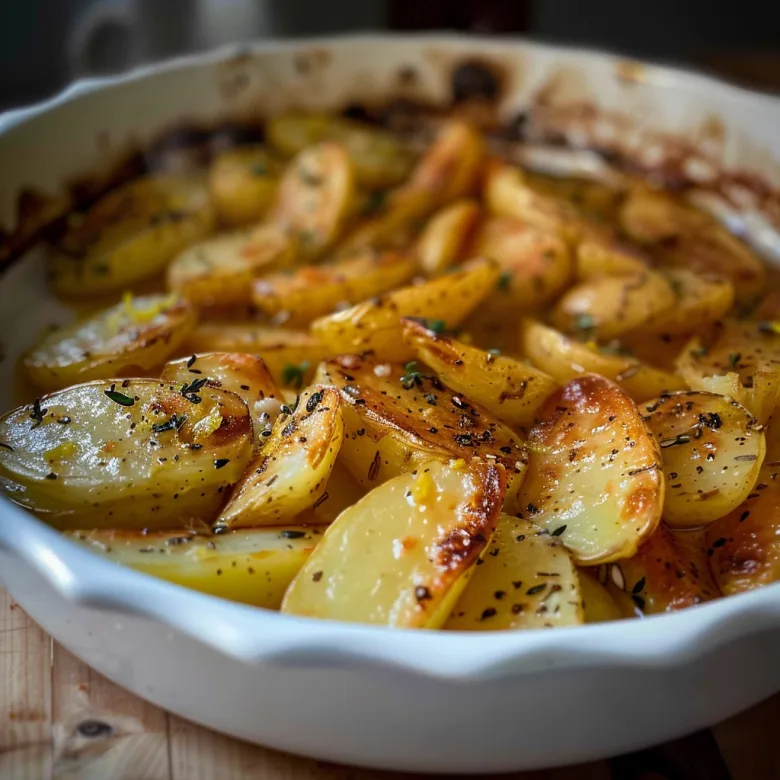
After years of testing different approaches to Greek lemon potatoes, I’ve found the method that creates tender, flavorful potatoes with crispy edges every time. This traditional Greek side dish transforms simple ingredients into something truly special through proper technique and patience.
Why This Greek Lemon Potato Recipe Works
The key lies in using enough olive oil and lemon juice to create a proper braising liquid, then roasting at the right temperature. The potatoes cook in their own flavorful juices while developing golden, crispy surfaces that make this dish memorable.
Ingredients
You’ll need these simple ingredients to make authentic Greek lemon potatoes:
- 3 pounds Yukon Gold potatoes, peeled and cut into wedges
- 1/2 cup extra virgin olive oil
- 1/3 cup fresh lemon juice (about 2 large lemons)
- 1 cup chicken or vegetable broth
- 4 garlic cloves, minced
- 2 teaspoons dried oregano
- 1 teaspoon salt
- 1/2 teaspoon black pepper
- 2 tablespoons fresh parsley, chopped
- Zest of 1 lemon
These ingredients work together to create the signature flavor profile that makes Greek lemon potatoes so beloved in Mediterranean cuisine.
How to Make It
- Preheat your oven to 425°F (220°C) and select a large roasting pan or baking dish that can hold all the potato wedges in a single layer without overcrowding.
- Wash and peel the potatoes thoroughly, then cut each potato lengthwise into 6-8 wedges depending on size. Try to keep the wedges relatively uniform so they cook evenly. Rinse the cut potatoes in cold water to remove excess starch, then pat them completely dry with paper towels.
- In a large mixing bowl, whisk together the olive oil, fresh lemon juice, minced garlic, dried oregano, salt, and black pepper until well combined. The mixture should be well emulsified and fragrant.
- Add the dried potato wedges to the bowl with the lemon-oil mixture and toss thoroughly with your hands or a large spoon, ensuring every piece is well coated. Let the potatoes marinate in this mixture for about 10 minutes while the oven finishes heating.
- Arrange the seasoned potato wedges in your prepared roasting pan in a single layer, cut side down when possible. Pour any remaining marinade from the bowl over the potatoes, then add the broth around the edges of the pan, not directly over the potatoes.
- Place the pan in the preheated oven and roast for 25-30 minutes without disturbing. The potatoes should start developing golden edges and the liquid should be bubbling actively around the pan.
- Carefully turn each potato wedge over using tongs, trying to keep them in a single layer. Return to the oven for another 20-25 minutes, or until the potatoes are tender when pierced with a fork and have developed beautiful golden-brown surfaces.
- Check the liquid level during cooking – if the pan seems to be drying out too much, add a little more broth or water around the edges. You want some liquid remaining for serving, but not so much that the potatoes steam instead of roast.
- Remove from the oven and immediately sprinkle with fresh lemon zest and chopped parsley. Let the potatoes rest for 5 minutes before serving to allow the flavors to settle and the temperature to become manageable.
- Serve the potatoes warm, drizzled with any remaining pan juices that have concentrated during cooking into a flavorful sauce.
This methodical approach ensures your Greek lemon potatoes develop the characteristic tender interior and golden exterior that defines this classic dish.
Nutrition at a Glance
- High in vitamin C from fresh lemon juice and potatoes
- Good source of potassium for heart health
- Contains healthy monounsaturated fats from olive oil
- Provides complex carbohydrates for sustained energy
- Rich in antioxidants from oregano and garlic
- Naturally gluten-free and vegetarian when made with vegetable broth
- Contains vitamin B6 and folate from potatoes
- Low in saturated fat despite the olive oil content
How to Serve It
- Alongside grilled lamb, chicken, or fish for an authentic Greek meal
- As part of a Mediterranean mezze platter with olives and feta
- With roasted vegetables and a simple Greek salad
- As a hearty side dish for holiday dinners
- Topped with crumbled feta cheese and fresh herbs
- With tzatziki sauce for dipping
- As a vegetarian main course with a dollop of Greek yogurt
These potatoes are versatile enough to complement many different main dishes while maintaining their distinctly Greek character.
Common Mistakes
- Using too little olive oil, which prevents proper browning and flavor development
- Overcrowding the pan, leading to steamed rather than roasted potatoes
- Not drying the potatoes thoroughly after rinsing, causing excess moisture
- Using bottled lemon juice instead of fresh, which lacks the bright flavor needed
- Setting the oven temperature too low, resulting in pale, soft potatoes
- Turning the potatoes too frequently, preventing proper caramelization
- Adding too much liquid at once, creating a stewlike consistency
- Skipping the resting time, which allows flavors to meld properly
- Using the wrong potato variety – waxy potatoes work better than russets
Avoiding these pitfalls will help you achieve the authentic texture and flavor that makes Greek lemon potatoes so special.

Storage and Reheating
- Store leftover potatoes in the refrigerator for up to 4 days in an airtight container
- Reheat in a 375°F oven for 10-15 minutes to restore crispiness
- Add a splash of broth or water if the potatoes seem dry when reheating
- Avoid microwaving, which makes the potatoes soggy and unappealing
- Freeze cooked potatoes for up to 3 months, though texture may change slightly
- Thaw frozen potatoes overnight in the refrigerator before reheating
- Store any leftover pan juices separately and warm them for serving
Proper storage and reheating techniques help maintain the quality of your Greek lemon potatoes for future meals.
Leftover Ideas
- Chop and add to omelets or frittatas for a Mediterranean breakfast
- Use as a topping for Greek-style pizza with feta and olives
- Mash with a little milk and olive oil for a lemony potato side
- Add to grain bowls with quinoa, vegetables, and tahini dressing
- Incorporate into potato salad with herbs and Greek yogurt dressing
- Use as filling for breakfast burritos with scrambled eggs
- Add to soups for extra heartiness and flavor
- Serve cold in summer salads with fresh vegetables and herbs
These creative uses help ensure no delicious Greek lemon potatoes go to waste while providing variety in your meal planning.
The Best Greek Lemon Potatoes
- Total Time: 65 minutes
- Yield: 6 servings 1x
- Diet: Vegetarian
Description
Tender, golden Greek lemon potatoes roasted in olive oil with fresh lemon juice, garlic, and oregano for authentic Mediterranean flavor.
Ingredients
- 3 pounds Yukon Gold potatoes, peeled and cut into wedges
- 1/2 cup extra virgin olive oil
- 1/3 cup fresh lemon juice (about 2 large lemons)
- 1 cup chicken or vegetable broth
- 4 garlic cloves, minced
- 2 teaspoons dried oregano
- 1 teaspoon salt
- 1/2 teaspoon black pepper
- 2 tablespoons fresh parsley, chopped
- Zest of 1 lemon
Instructions
- 1. Preheat oven to 425°F (220°C). Cut potatoes into wedges, rinse, and pat dry.
- 2. Whisk together olive oil, lemon juice, garlic, oregano, salt, and pepper in a large bowl.
- 3. Toss potato wedges with the lemon-oil mixture and let marinate 10 minutes.
- 4. Arrange potatoes in single layer in roasting pan, add broth around edges.
- 5. Roast 25-30 minutes, then turn potatoes over.
- 6. Continue roasting 20-25 minutes until golden and tender.
- 7. Sprinkle with lemon zest and parsley before serving.
Notes
Store leftovers in refrigerator up to 4 days. Reheat in 375°F oven to restore crispiness.
- Prep Time: 15 minutes
- Cook Time: 50 minutes
- Category: Side Dish
- Method: Roasting
- Cuisine: Greek
Nutrition
- Serving Size: 1 serving
- Calories: 285
- Sugar: 3g
- Sodium: 420mg
- Fat: 12g
- Carbohydrates: 42g
- Fiber: 4g
- Protein: 5g