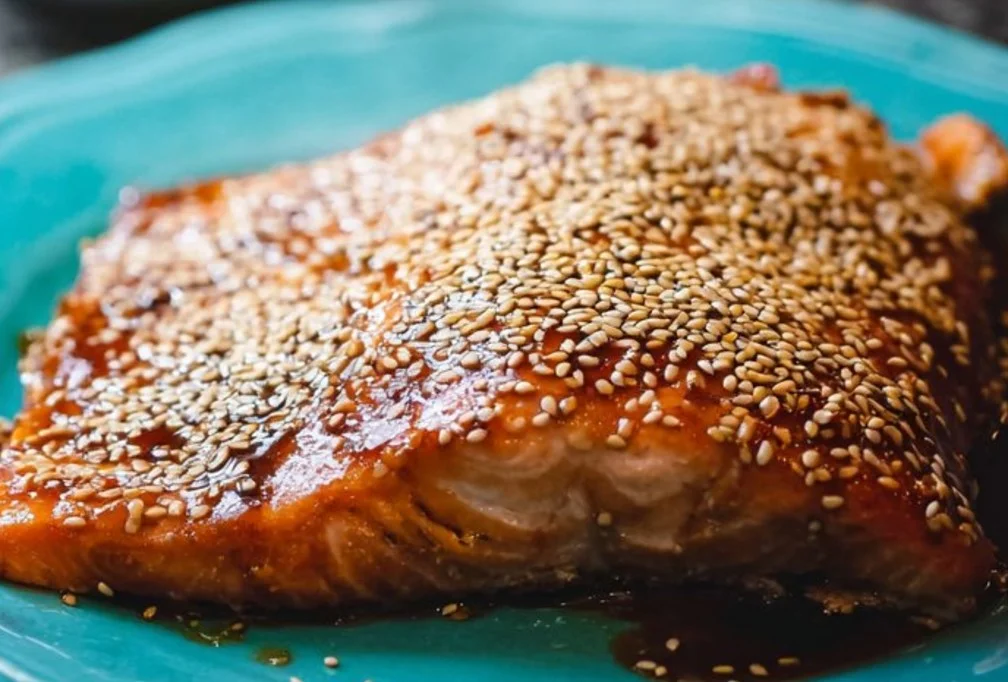
There are nights when dinner needs to arrive like a reliable friend: fast, comforting, and a little impressive. Oven-baked teriyaki salmon delivers on all three, rich in omega-3s, protein-forward (roughly 35–40 grams per pound cooked), and glossy with a caramelized scent that hits the kitchen the moment you open the oven. I’ll walk you through a straightforward method that keeps the fish flaky and the sauce sticky-sweet, with one sensory promise: that first bite should glint and lift with toasted sesame. If you’re curious about a quicker spin on oven salmon, see this 25-minute best oven-baked salmon recipe for a useful comparison.
Print
Oven-Baked Teriyaki Salmon
- Total Time: 35 minutes
- Yield: 2 servings 1x
- Diet: Paleo
Description
Quick and satisfying oven-baked teriyaki salmon, rich in omega-3s and protein, that offers a sticky-sweet glaze and flaky texture.
Ingredients
- 1 lb salmon filet, skin on
- 1/2 cup teriyaki sauce (store bought or homemade)
- 1 tablespoon sesame seeds
- 1/2 cup mirin
- 1/4 cup Japanese soy sauce
- 1.5 tablespoons honey
Instructions
- Combine mirin, soy sauce, and honey in a saucepan over medium-high heat and bring to a boil. Simmer for about 10 minutes until thickened. Let cool for at least 10 minutes.
- Preheat the oven to 400F (200C) and prepare a baking dish.
- Place the salmon skin side down in the baking dish and brush on half of the teriyaki sauce.
- Top with sesame seeds and bake in the middle of the oven for 20 minutes, checking for doneness if the fillet is thicker than 1.5 inches.
- Drizzle remaining teriyaki sauce over the salmon before serving.
Notes
Use even-thickness fillets for even cooking. Rest the fish for 3-4 minutes after baking.
- Prep Time: 15 minutes
- Cook Time: 20 minutes
- Category: Main Course
- Method: Baking
- Cuisine: Japanese
Nutrition
- Serving Size: 1 serving
- Calories: 520
- Sugar: 10g
- Sodium: 600mg
- Fat: 36g
- Saturated Fat: 6g
- Unsaturated Fat: 30g
- Trans Fat: 0g
- Carbohydrates: 12g
- Fiber: 0g
- Protein: 38g
- Cholesterol: 70mg
Why This Oven Baked Teriyaki Salmon Never Fails
This approach is built around two ideas: predictable heat and a sauce that does the heavy lifting. Baking at a steady, moderately high temperature gives the salmon an even cook from edge to center, while brushing with teriyaki before and after baking creates layers of flavor and that signature sticky finish. I’ll show you the small habits (patting the skin dry, letting the homemade sauce cool) that turn a good weeknight dinner into something you’d gladly serve visitors.
What You’ll Need
- 1 lb salmon filet, skin on — a single, even-thickness piece works best.
- 1/2 cup Teriyaki sauce (store bought or homemade) — enough to coat and glaze.
- 1 tablespoon sesame seeds — for toasting and finishing.
- Homemade Teriyaki Sauce (makes 1/2 cup) — keep this in reserve if you want control over sweetness and salt.
- 1/2 cup mirin — the sweet rice wine base for homemade sauce.
- 1/4 cup Japanese soy sauce — low-sodium if you’re watching salt.
- 1.5 tablespoons honey — adjusts stickiness and color naturally.
Step-by-Step Method
- Combine the ingredients for the homemade teriyaki sauce in a saucepan. Place over medium-high heat and bring to a boil. Simmer for about 10 minutes, until thickened and a bit sticky. Let it cool for at least 10 minutes before using. (Tip: Stir constantly in the last 2 minutes to prevent scorching and taste for balance—add a splash of mirin if it’s too salty.)
- Preheat the oven to 200C/400F and prepare a baking dish large enough for the salmon. (Tip: Line the dish with foil or parchment for easier cleanup and to protect the fish’s underside from over-browning.)
- Place the salmon skin side down in the baking dish and brush on half of the teriyaki sauce. (Tip: Pat the skin dry first to help the sauce adhere and to keep the fish from steaming.)
- Top with sesame seeds and bake in the middle of the oven for 20 minutes. (Tip: If your fillet is thicker than 1.5 inches, check at 15 minutes and use a thermometer—125F for medium-rare, 135F for medium.)
- Just before serving, drizzle over some of the remaining teriyaki sauce and serve the rest on the side. (Tip: Warm the reserved sauce slightly and spoon it over the fish to amplify gloss and aroma.)
Nutrition Breakdown
A standard serving (about half of this 1 lb fillet) generally provides approximately 2 servings per recipe. Per serving, expect roughly 520 calories, 38–42 grams protein, 8–12 grams carbohydrates (mostly from the teriyaki and honey), 32–36 grams fat (largely heart-healthy omega-3s), and less than 1 gram fiber. These are estimates because exact values shift with the teriyaki you buy or make and the salmon’s fat content.
Health insight: this dish is a protein-rich, omega-3 dense main course that pairs well with fiber-forward sides to round out the meal and stabilize blood sugar after the teriyaki’s natural sugars.
In case you want a slightly different crust and protein profile, check this parmesan-crusted baked salmon for another take on oven-baked fish: baked parmesan-crusted salmon.
Perfect Pairings
Serve this salmon simply: a mound of steaming jasmine rice or sticky rice will soak up the extra sauce, and a bright cucumber salad (rice vinegar, sesame oil, a pinch of sugar) adds a refreshing crunch. For vegetables, roasted broccolini, sautéed bok choy, or an easy miso-glazed eggplant make dependable partners.
This is an ideal dish for late-spring dinners when asparagus is at its peak, and it also shines in colder months paired with roasted root vegetables and a citrusy slaw to cut the sweetness. If you want a heartier meal, serve over a bed of warm soba noodles and a handful of scallions; another useful idea is this herb-and-parmesan crusted variation for a different texture: baked salmon with parmesan herb crust.
How to Store It Right
Refrigerator: Cool the salmon to room temperature (no more than two hours out) and store in an airtight container for up to 3 days.
Freezer: If you need longer, wrap individual portions tightly in plastic wrap and foil and freeze for up to 2 months—note that texture may soften slightly after freezing.
Reheating: The oven is your friend; reheat at 275F (135C) for 8–12 minutes until just warmed through to avoid drying.
Freshness tip: keep the extra sauce separate from the fish in storage—sauced fish tends to soften and lose its glaze.
Expert Tips
- Use even-thickness fillets so the middle and edges finish together; if your fillet tapers, fold the thin end under to match thickness.
- Toast sesame seeds in a dry pan for 60 seconds until fragrant before sprinkling to boost aroma and create a more pronounced crunch.
- For a glossy finish, finish under the broiler for 30–45 seconds—watch closely so the sugars don’t burn.
- If using store-bought teriyaki, thin with a splash of mirin or water while reducing on heat to concentrate flavor and remove any metallic aftertaste.
- Rest the fish for 3–4 minutes after baking—this settles the juices and makes for neater slices.
Flavor Experiments
- Seasonal: Spring citrus-teriyaki—add 1 tablespoon of fresh orange juice and 1 teaspoon zest to the sauce for a bright seasonal lift that pairs beautifully with asparagus.
- Gourmet: Miso-maple glaze—substitute half the honey with white miso for an umami-rich, savory-sweet finish that plays up the salmon’s natural fattiness.
- Playful: Spicy sesame—stir 1 teaspoon toasted chili paste (gochujang or sambal) into the teriyaki for a kick that also darkens the glaze and adds savory depth.
Learn from My Mistakes
- Mistake: Slathering on sauce and baking immediately. Fix: Let the sauce cool first; hot glaze can cause the fish to steam instead of developing a sticky finish.
- Mistake: Overbaking to “make sure it’s done.” Fix: Use an instant-read thermometer and aim for 125–135F depending on your texture preference—remember carryover heat.
- Mistake: Skipping the skin. Fix: Leave the skin on while baking to protect the flesh and make serving cleaner; remove after cooking if you don’t want to eat it.
- Mistake: Using too much sugar in homemade sauce. Fix: Start with the listed 1.5 tablespoons honey and adjust after simmering; balance with mirin or a splash of rice vinegar if cloying.
What to Do with Leftovers
- Salmon bowls: Flake cold salmon over warm rice, add quick-pickled cucumbers, shredded carrots, and a drizzle of warmed teriyaki for an instant lunch bowl.
- Salmon fried rice: Chop leftover salmon and toss into a hot wok with day-old rice, scallions, a scrambled egg, and a spoon of sauce for a weeknight revival.
- Teriyaki salmon tacos: Flake salmon, add slaw, a squeeze of lime, and a scattering of cilantro in corn tortillas for a playful, portable meal.
Quick Questions
Q: How long should I bake a 1 lb salmon fillet at 400F?
A: For a typical 1 lb fillet about 1–1.5 inches thick, bake at 400F (200C) for roughly 18–20 minutes. Check earlier if the fish is thinner; use an internal thermometer for precision—125F for a slightly translucent center and 135F for fully opaque but still moist.
Q: Can I make the teriyaki sauce ahead and store it?
A: Yes. Homemade teriyaki keeps well in the fridge for up to 1 week in an airtight container. Rewarm gently before glazing the fish; cold sauce will clump and won’t spread evenly.
Q: Is it necessary to use mirin in the recipe?
A: Mirin adds sweetness and acidity that help balance the sauce and create that classic teriyaki sheen, but you can substitute dry sherry or a mix of sake and sugar if needed—adjust sweetness to taste.
Q: Can I broil the salmon instead of baking for caramelization?
A: You can broil for the last 30–60 seconds to caramelize the top, but broil only at the end and keep the fish a few inches from the element to prevent burning the sugars.