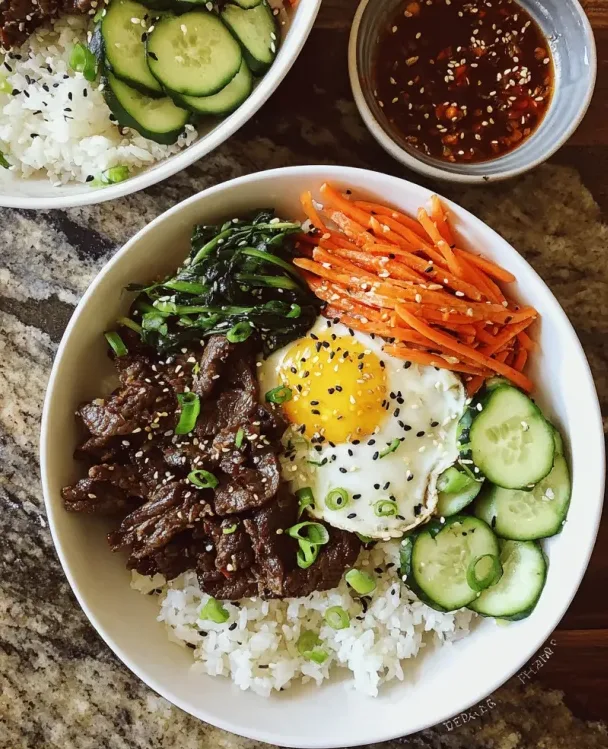
I’ve always been drawn to meals that offer a bit of everything on one plate. The beauty of Korean Beef Bowls, often referred to as simplified bibimbap, lies in its ability to deliver a symphony of textures and flavors in a single, satisfying serving.
Why This Korean Beef Bowl Recipe Works
This recipe streamlines the traditional bibimbap without sacrificing its essence. You get tender, savory marinated beef, a variety of fresh and cooked vegetables, and the essential warm rice, all brought together by a delicious sauce.
Ingredients
- For the Beef Marinade:
- 1 pound thinly sliced beef (such as sirloin, ribeye, or flank steak)
- 1/4 cup soy sauce
- 2 tablespoons mirin (or rice wine)
- 1 tablespoon brown sugar
- 1 tablespoon sesame oil
- 2 cloves garlic, minced
- 1 teaspoon grated fresh ginger
- 1/2 teaspoon black pepper
- For the Rice:
- 2 cups cooked short-grain or medium-grain white rice (sushi rice works well)
- For the Vegetables:
- 1 tablespoon vegetable oil (or other neutral oil) for sautéing
- 1 medium carrot, julienned
- 1 medium zucchini, julienned
- 1 cup spinach, roughly chopped
- 1/2 cup sliced shiitake mushrooms (fresh or rehydrated dried)
- 1/2 cup bean sprouts, blanched (optional but recommended)
- Salt, to taste
- For the Sauce (Gochujang Sauce):
- 3 tablespoons gochujang (Korean chili paste)
- 1 tablespoon sesame oil
- 1 tablespoon rice vinegar
- 1 teaspoon honey or maple syrup
- 1 teaspoon soy sauce
- 1-2 tablespoons water (to reach desired consistency)
- For Garnish (Optional):
- Toasted sesame seeds
- Thinly sliced green onions
- A fried or soft-boiled egg
Once you have all your ingredients assembled, the cooking process is about to begin!
How to Make It
- Marinate the Beef: In a medium bowl, combine the soy sauce, mirin, brown sugar, sesame oil, minced garlic, grated ginger, and black pepper.
- Prepare the Vegetables: While the beef is marinating, prepare your vegetables. Heat 1 tablespoon of vegetable oil in a large skillet or wok over medium-high heat.
- Cook the Beef: Wipe out the skillet if necessary, or use a second skillet. Add a little more oil if needed and heat over medium-high heat.
- Prepare the Gochujang Sauce: While the beef is cooking or the vegetables are being prepped, whisk together the gochujang, sesame oil, rice vinegar, honey (or maple syrup), and soy sauce in a small bowl.
- Assemble the Bowls: Divide the cooked rice among your serving bowls. Arrange the cooked beef and prepared vegetables attractively over the rice.
- Serve: Drizzle generously with the gochujang sauce. Garnish with toasted sesame seeds, sliced green onions, and a fried or soft-boiled egg, if desired. Stir everything together before eating to combine all the flavors and textures.
Following these steps will lead you to a delicious and visually appealing Korean Beef Bowl, ready to be enjoyed.
Nutrition at a Glance
- Calories: This can range from 400 to 700 calories per serving, influenced heavily by the amount of rice, beef, and oil used, as well as optional garnishes like a fried egg.
- Protein: A good source, primarily from the beef and potentially the egg, typically providing 25-40 grams per serving.
- Fat: Contributed by the beef, sesame oil, and any cooking oil. Healthy fats are present, particularly from sesame oil, but intake can vary.
- Carbohydrates: Mostly from the rice, providing a significant portion of your daily needs. The vegetables also contribute carbohydrates but in a much smaller, more nutrient-dense form.
- Fiber: Boosted by the abundance of vegetables, though the amount can differ based on your vegetable selection.
- Sodium: This can be moderate to high, primarily from soy sauce and gochujang.
- Vitamins and Minerals: Rich in various vitamins and minerals from the diverse range of vegetables, including Vitamin A, Vitamin C, iron, and potassium.
How to Serve It
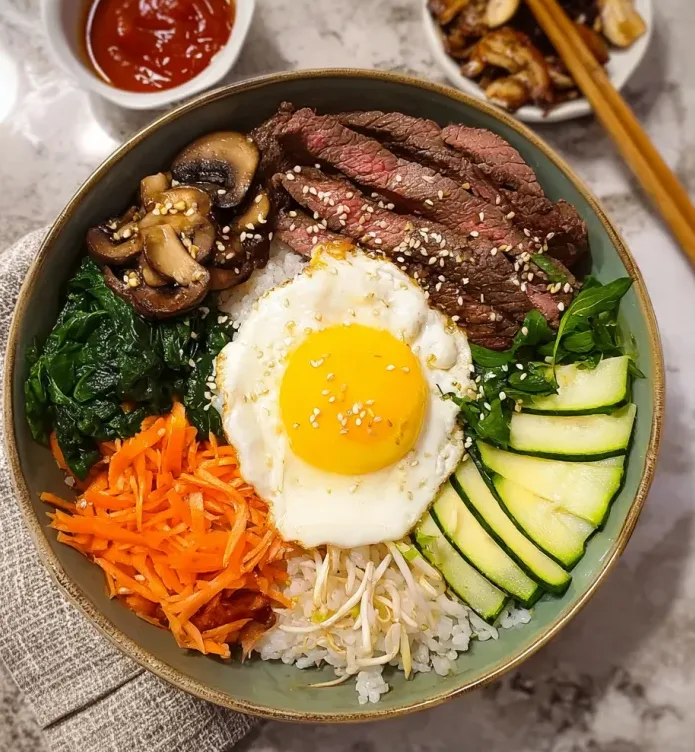
- Bowl Presentation: Start with a generous base of warm, cooked rice in each serving bowl. This provides the foundation for all the other delicious elements.
- Arrangement is Key: Artfully arrange the cooked, marinated beef and the various prepped vegetables in distinct sections around the bowl, atop the rice.
- The Gochujang Drizzle: Generously drizzle your prepared gochujang sauce over the top of everything.
- Optional Garnishes: If you’re using them, add your garnishes as the final touch. A sprinkle of toasted sesame seeds adds a nutty aroma and texture.
- The Grand Finale – The Mix! This is perhaps the most important part of serving and eating bibimbap.
Embrace the interactive nature of this dish when you serve it; the fun is in the preparation and the final delicious melding of flavors.
Don’t miss this delicious recipe: Easy Homemade Stovetop Beef and Noodles Recipe.
Common Mistakes
- Overcooking the Beef: Thinly sliced beef cooks very quickly. Cooking it for too long will result in tough, dry meat.
- Mushy Vegetables: Overcooking the vegetables is another common mistake.
- Skipping the Marinade Time: While you can technically cook the beef without marinating, you’ll miss out on a significant depth of flavor.
- Not Preparing Ingredients in Advance: This is a stir-fry style dish where things cook quickly.
- Under-seasoning: While the gochujang sauce adds a lot of flavor, the individual components need a bit of seasoning too.
- Too Much or Too Little Sauce: The gochujang sauce is key to binding everything together. Too little and the dish can be a bit dry or bland.
Avoiding these common mistakes will lead to a more enjoyable and delicious Korean Beef Bowl experience.
Storage and Reheating
- Storage: For the best quality, store the cooked beef, cooked vegetables, and cooked rice separately in airtight containers in the refrigerator.
- Reheating the Rice: Reheat the rice in the microwave with a splash of water, covered, until steaming hot. Alternatively, you can steam it over a pot of boiling water.
- Reheating the Beef and Vegetables: The beef and vegetables can be gently reheated in a skillet over medium heat with a tiny bit of oil, or in the microwave.
- Reheating as a Bowl: If you prefer to reheat everything together, spoon the cooked rice into a microwave-safe bowl, top with the beef and vegetables, and reheat gently.
- Cold Leftover Option: Sometimes, Korean Beef Bowls are quite enjoyable served cold or at room temperature the next day, especially if you prefer less texture change.
Proper storage and reheating will ensure your leftovers are just as tasty as the first time.
Leftover Ideas
- Bibimbap Fried Rice: Chop up any leftover beef and vegetables into smaller pieces. Heat some oil in a skillet, add the chopped leftovers, and then stir in your leftover cooked rice.
- Savory Lettuce Wraps: Use large lettuce leaves (like romaine or butter lettuce) as wraps. Fill them with your leftover rice, beef, and vegetables.
- Stuffed Bell Peppers: Mix leftover rice, beef, and vegetables with a little extra gochujang or soy sauce.
- Quick Stir-fry: Discard the rice, and use the leftover beef and vegetables as the stars of a quick stir-fry.
- Quesadillas or Tacos: For a fusion twist, use the leftover beef and vegetables as a filling for quesadillas or tacos.
- Savory Omelette Filling: Finely chop the leftover beef and vegetables and use them as a flavorful filling for an omelette or scrambled eggs.
These ideas can help you enjoy every last bit of your Korean Beef Bowl ingredients.
PrintKorean Beef Bowls (Bibimbap)
- Total Time: 40 minutes
- Yield: 4 servings 1x
Description
Learn how to make simple yet delicious Korean Beef Bowls, a fantastic weeknight meal inspired by traditional bibimbap. Tender marinated beef, fresh vegetables, and savory sauce over rice.
Ingredients
- For the Beef Marinade:
- 1 pound thinly sliced beef (such as sirloin, ribeye, or flank steak)
- 1/4 cup soy sauce
- 2 tablespoons mirin (or rice wine)
- 1 tablespoon brown sugar
- 1 tablespoon sesame oil
- 2 cloves garlic, minced
- 1 teaspoon grated fresh ginger
- 1/2 teaspoon black pepper
- For the Rice:
- 2 cups cooked short-grain or medium-grain white rice (sushi rice works well)
- For the Vegetables:
- 1 tablespoon vegetable oil (or other neutral oil) for sautéing
- 1 medium carrot, julienned
- 1 medium zucchini, julienned
- 1 cup spinach, roughly chopped
- 1/2 cup sliced shiitake mushrooms (fresh or rehydrated dried)
- 1/2 cup bean sprouts, blanched (optional but recommended)
- Salt, to taste
- For the Sauce (Gochujang Sauce):
- 3 tablespoons gochujang (Korean chili paste)
- 1 tablespoon sesame oil
- 1 tablespoon rice vinegar
- 1 teaspoon honey or maple syrup
- 1 teaspoon soy sauce
- 1–2 tablespoons water (to reach desired consistency)
- For Garnish (Optional):
- Toasted sesame seeds
- Thinly sliced green onions
- A fried or soft-boiled egg
Instructions
- 1. Marinate the Beef: In a medium bowl, combine the soy sauce, mirin, brown sugar, sesame oil, minced garlic, grated ginger, and black pepper. Add the thinly sliced beef and toss to coat evenly. Let it marinate for at least 15 minutes at room temperature, or up to 2 hours in the refrigerator.
- 2. Prepare the Vegetables: Heat 1 tablespoon of vegetable oil in a large skillet or wok over medium-high heat. Sauté the julienned carrots for 2-3 minutes until slightly tender-crisp. Remove from the skillet and set aside. Add another teaspoon of oil if needed, and sauté the julienned zucchini for another 2-3 minutes until tender-crisp. Remove and set aside. If using shiitake mushrooms, add them to the skillet now and cook until softened and lightly browned, about 3-4 minutes. Season each vegetable lightly with salt as it cooks. For the spinach, I typically just wilt it quickly in the same skillet with a tiny bit more oil for about 30 seconds to a minute until it’s just tender. If using bean sprouts, blanch them briefly in boiling water for about 30 seconds, then drain and rinse with cold water.
- 3. Cook the Beef: Wipe out the skillet if necessary, or use a second skillet. Add a little more oil if needed and heat over medium-high heat. Add the marinated beef in a single layer, cooking in batches if necessary to avoid overcrowding the pan. Cook for 1-2 minutes per side, or until browned and cooked through. The thin slices cook very quickly.
- 4. Prepare the Gochujang Sauce: While the beef is cooking or the vegetables are being prepped, whisk together the gochujang, sesame oil, rice vinegar, honey (or maple syrup), and soy sauce in a small bowl. Add 1-2 tablespoons of water, a little at a time, until you reach your desired drizzling consistency.
- 5. Assemble the Bowls: Divide the cooked rice among your serving bowls. Arrange the cooked beef and prepared vegetables attractively over the rice.
- 6. Serve: Drizzle generously with the gochujang sauce. Garnish with toasted sesame seeds, sliced green onions, and a fried or soft-boiled egg, if desired. Stir everything together before eating to combine all the flavors and textures.
Notes
Store leftover beef, vegetables, and rice separately in airtight containers in the refrigerator for up to 2-3 days. Reheat gently in a skillet or microwave. Enjoy leftovers as fried rice, lettuce wraps, or stuffed peppers.
- Prep Time: 20 minutes
- Cook Time: 20 minutes
- Category: Main Course
- Method: Stovetop
- Cuisine: Korean-Inspired
Nutrition
- Serving Size: 1 serving
- Calories: Approx. 500-600 per serving (varies)
- Sugar: Approx. 10g
- Sodium: Approx. 800mg
- Fat: Approx. 20g
- Carbohydrates: Approx. 50g
- Fiber: Approx. 5g
- Protein: Approx. 30g