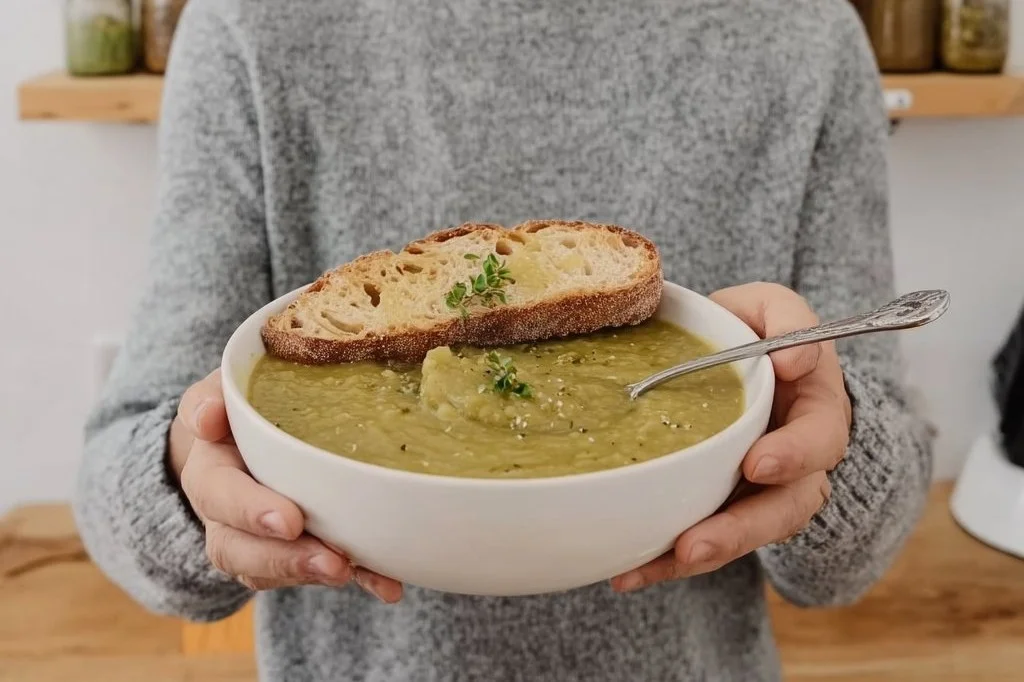
The technique of sautéing the vegetables in olive oil first is essential for building flavor; rushing this step can result in a less aromatic base. Using green split peas gives the soup a creamy texture as they break down during cooking, whereas yellow split peas would yield a different mouthfeel. When finished, the soup has a thick consistency that holds together well but is still spoonable, inviting you to take a hearty bite. You may also find 30 Minute Yellow Split Pea Soup useful.
Ingredient Lineup
- 2 tablespoons extra virgin olive oil
- 2 large carrots, chopped
- 1 large onion, chopped
- 2 stalks celery, chopped
- 4 cloves garlic, grated
- 1½ teaspoon cumin
- 6 cups vegetable broth (start with 4 cups and add more if necessary)
- 2 cups green split peas (dried)
- 1 bay leaf
- 1 teaspoon dried oregano
- ½ teaspoon dried thyme
- 1 teaspoon salt (or more to taste)
- ½ teaspoon black pepper
- ¾ pound potatoes (optional, peeled and cut into bite-sized chunks)
- 5 ounces (5 cups) spinach (optional)
Using fresh ingredients will yield the best flavor and texture. The optional ingredients can enhance texture and nutritional value but are not necessary for a successful outcome. You may also find Absolutely Ultimate Vegetarian Split Pea Soup useful.
How To Make It
- Warm up 2 tablespoons extra virgin olive oil in a large pot until it shimmers, then add the chopped carrots, onion, and celery. Sauté them on medium heat for 5 minutes, stirring often to prevent burning and allowing them to soften.
- Add 4 cloves of grated garlic and 1½ teaspoon cumin to the softened vegetables. Sauté for another minute until the garlic becomes fragrant and nutty, releasing its aroma.
- Pour in 6 cups of vegetable broth (begin with 4 and adjust later), followed by 2 cups of dried green split peas, 1 bay leaf, 1 teaspoon dried oregano, ½ teaspoon dried thyme, 1 teaspoon salt, and ½ teaspoon black pepper. Stir well, cover with a lid, and bring the mixture to a boil.
- Once boiling, crack the lid open slightly, lower the heat, and let the soup simmer on medium-low heat. Allow it to cook for approximately 30 to 45 minutes from the boiling point, stirring occasionally until the split peas are tender.
- As you check for doneness, taste the peas to ensure they are ready. If needed, add more broth to achieve your desired consistency, stirring often to keep it from sticking.
- If using potatoes, incorporate ¾ pound of peeled and chopped potatoes into the soup about 10 minutes after adding the split peas. This will ensure they cook through without becoming mushy.
- For a creamier texture, blend 2 to 3 cups of the soup with an immersion blender until smooth, then stir it back into the pot.
- Give it a final taste and adjust the seasoning for salt and consistency, adding more broth for a thinner soup. Serve in bowls garnished with fresh thyme, a drizzle of extra virgin olive oil, and warm crusty bread.
This soup is also easily adaptable; for a green twist, consider adding spinach in the last few minutes of cooking.
Quick Substitutions
- Green Split Peas → Yellow Split Peas: Expect a different texture; yellow peas tend to break down faster, creating a smoother soup.
- Vegetable Broth → Water: Use water if you lack broth, but be sure to increase seasonings for adequate flavor.
- Fresh Garlic → Garlic Powder: Use 1 to 2 teaspoons of garlic powder; it won’t provide the same depth of flavor and aroma.
- Olive Oil → Coconut Oil: This will impart a subtle sweetness; keep an eye on heat to avoid burning.
- Carrots → Sweet Potatoes: A sweeter alternative, but be cautious as they cook differently, affecting overall texture.
Making these substitutions may slightly alter the characteristics of your soup, but they can yield delightful results with a bit of adjustment.
Tips Before You Start
It’s crucial to allow the vegetables to sauté until soft to develop a deep, savory base for your soup; skipping this step can result in a flat flavor. Similarly, don’t rush the simmering; the split peas need time to soften and thicken the soup properly, so check periodically and add broth as necessary.
Using potatoes can add heartiness, but if you don’t mind a lighter soup, you can omit them and let the split peas serve as the main bulk. When blending, be careful not to over-blend; leaving some bits of peas whole adds a nice texture to the finished soup.
Common Mistakes to Avoid
- Rushing the Sautéing Process: If you don’t fully cook the onions and carrots, they can retain a crunchy texture that detracts from the soup’s depth. Make sure they soften and become fragrant before continuing with the recipe.
- Not Adjusting Broth Level: Forgetting to taste and adjust the liquid can lead to an overly thick soup. If you find the soup too thick during cooking, gradually stir in more broth until you reach your desired consistency.
- Skipping the Bay Leaf: Omitting the bay leaf can result in a less aromatic soup, lacking those subtle, complex flavors. Always remember to include it and extract it before serving to avoid a bitter taste.
Being mindful of these aspects will enhance your cooking experience and result in a more satisfying soup.
Nutrition At A Glance
- Serving size: Approximately 1 cup
- Calories: 200
- Protein: 10g
- Carbohydrates: 35g
- Fat: 3g
- Fiber: 12g
This nutrition breakdown can help you understand the wholesome nature of the ingredients.
Serving Ideas
- Serve with a dollop of sour cream for creaminess that complements the soup’s texture.
- Pair with a side salad for a refreshing contrast; a simple green salad with a vinaigrette works well.
- Optionally garnish with crumbled bacon for a smoky, salty touch to each bowl.
- Add crusty whole grain bread for dipping; it balances the soup perfectly and adds heartiness.
- Top with grated cheese before serving to give a savory finish that melts into the warm soup.
These serving ideas complement the soup and enhance your meal experience.
Storage and Reheating
- Store in the fridge for up to 5 days in an airtight container.
- It can be frozen for up to 3 months; defrost thoroughly before reheating.
- Reheat on the stove over low heat, adding a splash of broth to loosen the soup as it thickens in the fridge.
- Be aware that the texture may become thicker after resting due to the starches in split peas absorbing liquid.
Taking care during storage ensures that you can enjoy leftovers with full flavor.
What to Do With Leftovers
If you have leftover split pea soup, consider using it as a filling for stuffed bell peppers for a hearty meal. Alternatively, it makes an excellent pasta sauce for a unique twist on a traditional dish. Finally, try blending the leftovers with some cream and serving it as a sauce over grilled chicken or fish.
Utilizing your leftovers creatively can lead to delicious new meals with minimal waste.
Conclusion
Through this process, you now understand the importance of sautéing the vegetables thoroughly to build a flavorful foundation for your soup. Next time, trying adding spinach towards the end for a vibrant color and nutritional boost. Making this split pea soup soon will provide a warm, comforting meal that fits perfectly into any night of the week.
Print
Hearty Green Split Pea Soup
- Total Time: 60 minutes
- Yield: 6 servings 1x
- Diet: Vegan
Description
A creamy and flavorful green split pea soup, enriched with sautéed vegetables and herbs for a comforting meal.
Ingredients
- 2 tablespoons extra virgin olive oil
- 2 large carrots, chopped
- 1 large onion, chopped
- 2 stalks celery, chopped
- 4 cloves garlic, grated
- 1½ teaspoon cumin
- 6 cups vegetable broth (start with 4 cups)
- 2 cups dried green split peas
- 1 bay leaf
- 1 teaspoon dried oregano
- ½ teaspoon dried thyme
- 1 teaspoon salt (or more to taste)
- ½ teaspoon black pepper
- ¾ pound potatoes (optional, peeled and cut into bite-sized chunks)
- 5 ounces (5 cups) spinach (optional)
Instructions
- Warm up 2 tablespoons extra virgin olive oil in a large pot until it shimmers, then add the chopped carrots, onion, and celery. Sauté them on medium heat for 5 minutes, stirring often to prevent burning and allowing them to soften.
- Add 4 cloves of grated garlic and 1½ teaspoon cumin to the softened vegetables. Sauté for another minute until the garlic becomes fragrant and nutty, releasing its aroma.
- Pour in 6 cups of vegetable broth (begin with 4 and adjust later), followed by 2 cups of dried green split peas, 1 bay leaf, 1 teaspoon dried oregano, ½ teaspoon dried thyme, 1 teaspoon salt, and ½ teaspoon black pepper. Stir well, cover with a lid, and bring the mixture to a boil.
- Once boiling, crack the lid open slightly, lower the heat, and let the soup simmer on medium-low heat. Allow it to cook for approximately 30 to 45 minutes from the boiling point, stirring occasionally until the split peas are tender.
- As you check for doneness, taste the peas to ensure they are ready. If needed, add more broth to achieve your desired consistency, stirring often to keep it from sticking.
- If using potatoes, incorporate ¾ pound of peeled and chopped potatoes into the soup about 10 minutes after adding the split peas. This will ensure they cook through without becoming mushy.
- For a creamier texture, blend 2 to 3 cups of the soup with an immersion blender until smooth, then stir it back into the pot.
- Give it a final taste and adjust the seasoning for salt and consistency, adding more broth for a thinner soup. Serve in bowls garnished with fresh thyme, a drizzle of extra virgin olive oil, and warm crusty bread.
Notes
Avoid rushing the sauté and simmering steps to develop deep flavors. Consider adding spinach for extra nutrition.
- Prep Time: 15 minutes
- Cook Time: 45 minutes
- Category: Soup
- Method: Stovetop
- Cuisine: Vegetarian
Nutrition
- Serving Size: 1 cup
- Calories: 200
- Sugar: 4g
- Sodium: 600mg
- Fat: 3g
- Saturated Fat: 0.5g
- Unsaturated Fat: 2g
- Trans Fat: 0g
- Carbohydrates: 35g
- Fiber: 12g
- Protein: 10g
- Cholesterol: 0mg