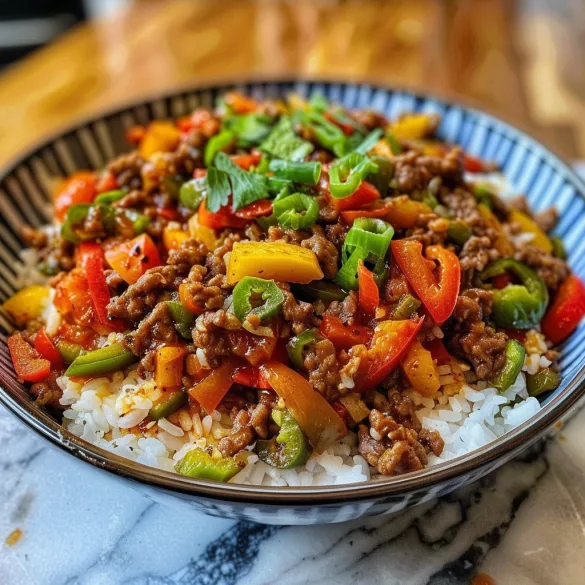
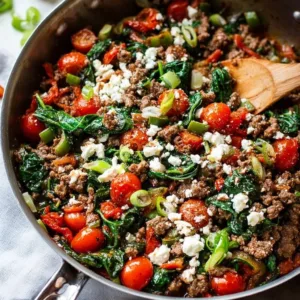
this Healthy Beef and Pepper Rice Bowl has become a regular in my rotation. It’s simple, uses readily available ingredients, and the flavors come together beautifully. I often find myself reaching for this recipe when I need a quick yet wholesome dinner that feels like a treat.
Why This Beef and Pepper Rice Bowl Works
This dish strikes a delightful balance between lean protein, vibrant vegetables, and satisfying carbohydrates.
Ingredients
- 1 pound lean ground beef (90% lean or higher)
- 1 tablespoon olive oil
- 1 large onion, thinly sliced
- 2 bell peppers (any color combination), thinly sliced
- 2 cloves garlic, minced
- 1/4 cup low-sodium soy sauce (or tamari for gluten-free)
- 2 tablespoons oyster sauce (optional, for extra depth of flavor)
- 1 tablespoon rice vinegar
- 1 teaspoon sesame oil
- 1 teaspoon cornstarch (or arrowroot starch for paleo/gluten-free)
- 2 tablespoons water
- 1/2 teaspoon red pepper flakes (optional, for a touch of heat)
- Salt and freshly ground black pepper, to taste
- 4 cups cooked brown rice (or white rice, quinoa, or cauliflower rice)
- Optional garnishes: sliced green onions, sesame seeds, a drizzle of sriracha
Gathering your ingredients is the first step to a successful dish, and this recipe is no exception. Having everything prepped and ready will make the cooking process smooth and enjoyable.
How to Make It
- Cook the Rice: If you haven’t already, prepare your rice according to package directions. Brown rice usually takes longer, so starting that first is a good idea. While the rice cooks, you can move on to preparing the beef and vegetable mixture.
- Sauté the Aromatics: Heat the olive oil in a large skillet or wok over medium-high heat. Add the thinly sliced onion and bell peppers. Cook, stirring occasionally, until they begin to soften and develop a slight char, about 5-7 minutes.
- Add the Garlic: Stir in the minced garlic and cook for another minute until fragrant, being careful not to burn it.
- Brown the Beef: Push the vegetables to the side of the skillet and add the lean ground beef to the center. Break it up with a spoon and cook until it’s browned all the way through. Drain off any excess grease.
- Combine and Season: Stir the cooked beef with the sautéed vegetables.
- Prepare the Sauce: In a small bowl, whisk together the low-sodium soy sauce (or tamari), oyster sauce (if using), rice vinegar, and sesame oil.
- Thicken the Sauce: In a separate tiny bowl, whisk together the cornstarch (or arrowroot starch) with 2 tablespoons of water until smooth. This creates a slurry that will thicken the sauce.
- Add Sauce to Skillet: Pour the soy sauce mixture over the beef and vegetables in the skillet. Stir to coat everything evenly. Bring the mixture to a simmer.
- Thicken and Finish: Pour the cornstarch slurry into the simmering sauce. Stir continuously until the sauce thickens to your desired consistency, which should take about 1-2 minutes. If you like a bit of heat, stir in the red pepper flakes now.
- Season to Taste: Taste the mixture and add salt and freshly ground black pepper as needed. Remember that soy sauce and oyster sauce already contain salt, so season cautiously.
- Assemble the Bowls: Divide the cooked rice among four serving bowls.
- Top and Serve: Spoon the beef and pepper mixture generously over the rice in each bowl.
- Garnish (Optional): If desired, top with sliced green onions, a sprinkle of sesame seeds, or a drizzle of sriracha for an extra kick.
Following these steps will lead you to a delicious and satisfying meal, ready to be enjoyed.
Nutrition at a Glance
- Lean Protein: The ground beef provides a good source of protein, essential for muscle repair and satiety. Using 90% lean or higher minimizes saturated fat intake.
- Vitamins and Fiber: Bell peppers are rich in vitamins A and C, and fiber. Onions contribute beneficial antioxidants and also add fiber.
- Complex Carbohydrates: Brown rice offers whole grains, providing sustained energy and additional fiber.
- Healthy Fats: Olive oil and sesame oil contribute monounsaturated and polyunsaturated fats, which are good for heart health.
- Sodium Awareness: Opting for low-sodium soy sauce helps manage sodium intake, which is important for blood pressure regulation.
- Customizable: Substituting rice with quinoa or cauliflower rice can further adjust the carbohydrate and calorie content to suit individual dietary needs.
How to Serve It
- Classic Bowl: The most straightforward way is to serve the beef and pepper mixture hot over a bed of your chosen rice (brown rice is my usual go-to for its nutty flavor and increased fiber).
- With Garnishes: Enhance the visual appeal and flavor by adding freshly chopped green onions, a sprinkle of toasted sesame seeds for a nutty crunch, or a swirl of sriracha or chili garlic sauce for a touch of heat.
- As a Lettuce Wrap: For a lighter option, serve the beef and pepper mixture in large lettuce cups (like butter or iceberg lettuce) instead of rice. This works well if you’re looking to reduce carbs or want a refreshing take.
- With Quinoa or Cauliflower Rice: To vary the base, serve it over fluffy quinoa for an extra protein boost or over steamed cauliflower rice for a lower-carbohydrate meal.
- Add a Side Salad: A simple side salad with a light vinaigrette can add extra freshness and nutrients to the meal.
This dish is incredibly versatile and can be adapted to various preferences and dietary needs, making it a flexible addition to any meal plan.
Don’t miss this delicious recipe: Slow Cooker Beef Chops with Garlic Parmesan Sauce
Common Mistakes
- Overcrowding the Pan: When browning the beef, don’t add too much at once. This can cause the beef to steam rather than brown, resulting in a less flavorful and more greasy outcome. Cook in batches if necessary.
- Burning the Garlic: Garlic cooks very quickly. Adding it too early or cooking it on too high heat can make it bitter. Stir it in towards the end of the vegetable sautéing process.
- Not Tasting and Adjusting Seasoning: Soy sauce and oyster sauce can vary in saltiness. It’s crucial to taste the sauce before serving and adjust the salt and pepper as needed. Don’t assume it’s perfectly seasoned from the recipe alone.
- Using Too Much Cornstarch: While cornstarch is great for thickening, using too much can result in a gummy or overly thick sauce. Start with the recommended amount and add more only if necessary, gradually.
- Chopping Vegetables Inconsistently: If your vegetables are cut in vastly different sizes, they won’t cook evenly. Try to aim for uniform slicing for both the onions and peppers so they soften at a similar rate.
- Skipping the Rice Preparation: For rice bowls, the rice is a key component. Overcooked or undercooked rice can detract from the overall enjoyment of the dish. Ensure your rice is cooked to al dente perfection.
Avoiding these common pitfalls will help ensure your Healthy Beef and Pepper Rice Bowl turns out delicious and satisfying every time you make it.
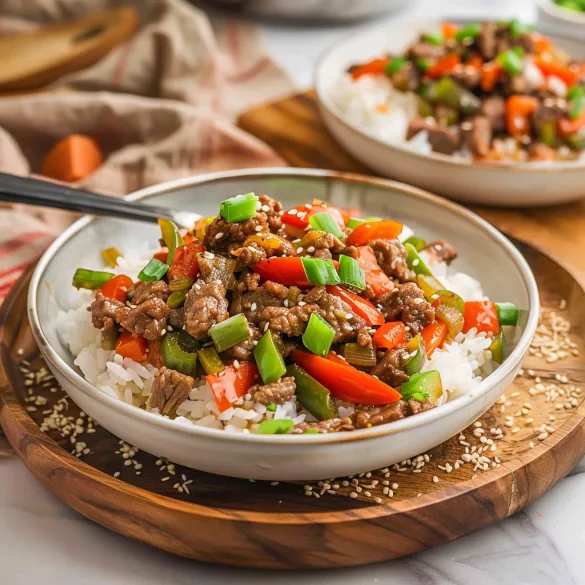
Storage and Reheating
- Cool Completely: Before storing, allow the beef and pepper mixture and the rice to cool down to room temperature completely. This helps prevent the growth of bacteria and maintains the quality of the food.
- Airtight Containers: Store the cooled mixture and rice in separate airtight containers. This prevents them from drying out or absorbing odors from other foods in the refrigerator.
- Refrigerate Promptly: Refrigerate the containers within two hours of cooking.
- Storage Duration: Properly stored leftovers should last for 3-4 days in the refrigerator.
- Reheating Options:
- Stovetop: The best method for reheating is on the stovetop. In a skillet, gently heat the beef and pepper mixture over medium-low heat, stirring occasionally. You can add a tablespoon or two of water or broth if it seems dry. Separately, reheat the rice in a saucepan with a splash of water, or microwave it. Combine the reheated mixture and rice in a bowl.
- Microwave: For a quicker reheat, place the mixture and rice in a microwave-safe dish, cover loosely, and heat in 30-second intervals, stirring in between, until heated through. Be cautious not to overheat, which can make the beef tough.
- Oven: You can also reheat in the oven. Place the mixture and rice in an oven-safe dish, cover with foil, and bake at 325°F (160°C) for about 15-20 minutes, or until heated through.
Proper storage and reheating will ensure your leftovers are just as enjoyable as when they were first made.
Leftover Ideas
- Beef and Pepper Fried Rice: Chop any leftover cooked peppers and onions from the beef mixture. Sauté some fresh garlic and ginger, then add day-old rice, the leftover beef and pepper mixture, and a splash of soy sauce or oyster sauce. Stir-fry until heated through.
- Stuffed Bell Peppers: If you have a bit of the beef and pepper mixture left, you can use it as a filling for stuffed bell peppers. Halve bell peppers, scoop out the seeds, fill them with the mixture, top with a little cheese if desired, and bake until the peppers are tender. Serve with extra rice on the side.
- Beef and Pepper Quesadillas: Chop the leftover beef and pepper mixture into smaller pieces. Layer it with shredded cheese (like cheddar or Monterey Jack) between two tortillas. Cook in a skillet until golden brown and the cheese is melted. Serve with salsa and sour cream.
- As a Salad Topper: Chop the beef and pepper mixture and serve it cold over a bed of mixed greens. Add your favorite salad vegetables like cucumber, cherry tomatoes, or shredded carrots, and dress with a light vinaigrette.
- Beef and Pepper Wraps: Warm up the beef and pepper mixture and place it in whole wheat tortillas with some shredded lettuce, diced tomatoes, and perhaps a dollop of plain Greek yogurt or a light aioli.
- Deconstructed Bowl for Lunch: Pack the beef and pepper mixture and the rice separately in your lunch container. You can add a small container of fresh garnishes like green onions or sesame seeds to add a fresh touch just before eating.
Repurposing leftovers is a fantastic way to reduce food waste and enjoy delicious meals in new ways.
Expanded Dish Variations and Tips
This Healthy Beef and Pepper Rice Bowl is a solid foundation, but the beauty of home cooking lies in its adaptability. Over time, I’ve found a few ways to tweak it to suit different moods, dietary needs, or just what I happen to have in the fridge.
Protein Alternatives
- Ground Turkey or Chicken: Lean ground turkey or chicken breast can be substituted for beef. They tend to be a bit leaner and have a milder flavor. You might need to adjust seasonings slightly to compensate for the less robust taste. I find that a bit more soy sauce or a pinch of smoked paprika can help boost the flavor.
- Shrimp: For a quicker cooking time and a lighter feel, large shrimp are a great option. Add them to the skillet after the vegetables have softened but before adding the sauce, and cook until they just turn pink. Shrimp cook very fast, so be careful not to overcook them, or they can become tough.
- Tofu or Tempeh: For a vegetarian or vegan option, firm or extra-firm tofu, pressed and then cubed or crumbled, works wonderfully. Tempeh, a fermented soybean product, offers a firmer texture and nutty flavor. Both would benefit from being pan-fried until golden before adding the sauce mixture to give them some texture and prevent them from becoming mushy. Ensure you use a vegan-friendly oyster sauce or omit it.
- Pork Tenderloin or Sirloin Steak: If you prefer a more distinct cut of meat, thinly sliced pork tenderloin or sirloin steak can be used. Marinate the strips of meat for at least 15-30 minutes in a mixture of soy sauce, garlic, and a pinch of cornstarch before cooking. Stir-fry the meat first, remove it from the pan, then stir-fry the vegetables and add the meat back in with the sauce.
Vegetable Additions and Substitutions
- Broccoli Florets: Add broccoli florets along with the peppers and onions. They’ll soften nicely and add a good dose of nutrients. Steaming them slightly beforehand can ensure they are tender by the time everything is cooked.
- Mushrooms: Sliced cremini or shiitake mushrooms add an earthy depth. Add them when you add the peppers and onions; they release moisture as they cook, which can help deglaze the pan.
- Snap Peas or Snow Peas: These add a lovely crunch and vibrant green color. Stir them in during the last couple of minutes of cooking to keep them crisp-tender.
- Zucchini or Yellow Squash: Sliced thinly, these vegetables can be added with the peppers and onions. They cook quickly and absorb the flavors of the sauce well.
- Carrots: Julienne or thinly slice carrots to add sweetness and a different texture. They might need to be added slightly earlier than the peppers to ensure they are tender.
- Baby Corn: These add a fun texture and a slightly sweet taste. Add them towards the end of the cooking process.
Sauce Enhancements
- Fresh Ginger: Grate or mince about a teaspoon of fresh ginger and add it to the pan with the garlic for a warm, zesty kick. It pairs exceptionally well with the other Asian-inspired flavors.
- Hoisin Sauce: If you have hoisin sauce on hand, you can substitute some of the soy sauce or oyster sauce with it. Hoisin adds a sweet and savory complexity. Be mindful of its sweetness and adjust accordingly.
- Sriracha or Chili Garlic Sauce: Beyond just a garnish, you can stir a teaspoon or two directly into the sauce mixture for an integrated spicy flavor.
- A Touch of Honey or Maple Syrup: If you prefer a slightly sweeter sauce, a teaspoon of honey or maple syrup can balance the savory notes. This is particularly helpful if you’re omitting the oyster sauce.
- Lime or Lemon Juice: A squeeze of fresh lime or lemon juice added at the very end, just before serving, can brighten up all the flavors and add a fresh zing.
Rice and Grain Variations
- Jasmine Rice: For a more aromatic and slightly sweeter rice, jasmine rice is a delicious choice.
- Quinoa: Cooked quinoa makes for an excellent high-protein, gluten-free base. Its slightly nutty flavor complements the beef and peppers well.
- Cauliflower Rice: For a significantly lower carbohydrate option, serve the mixture over sautéed or steamed cauliflower rice. You can buy it pre-riced or make your own by pulsing cauliflower in a food processor.
- Farro or Barley: These hearty grains offer a chewy texture and a boost of fiber. They take longer to cook than rice, so plan accordingly.
Tips for Perfectly Cooked Vegetables
- High Heat: Cook the vegetables over medium-high heat. This allows them to sear slightly and develop flavor rather than steam.
- Don’t Crowd the Pan: If your skillet isn’t large enough, cook the vegetables in batches. Overcrowding will lower the temperature and cause them to steam.
- Slice Uniformly: Ensure your peppers and onions are sliced to a similar thickness so they cook at the same rate.
- Add More Delicate Veggies Later: If you’re adding ingredients like snap peas or spinach, stir them in during the last 1-3 minutes of cooking.
Tip on Draining Beef Fat
When cooking ground beef, especially if you’re not using the leanest possible option, draining the excess fat is key to a less greasy and healthier dish. After browning the beef, tilt the skillet over a heatproof bowl or a strainer to drain the rendered fat.
Starch Slurry Technique
- Mix Thoroughly: Ensure the starch is completely dissolved in the cold liquid (water in this case) before adding it to the hot pan. Any lumps of dry starch won’t disperse properly and can create a lumpy sauce.
- Add Gradually: Pour the slurry into the simmering sauce while stirring constantly. The sauce will thicken as it heats. If it’s not thick enough after a minute or two, you can make another small slurry and add it, but do so cautiously.
- Simmer Briefly: After adding the slurry, let the sauce simmer gently for another minute or two. This allows the starch to fully activate and bind the sauce, ensuring it coats the ingredients nicely. Over-boiling can sometimes break down the thickening power of the starch.
These expanded insights should give you even more confidence and flexibility when preparing this Healthy Beef and Pepper Rice Bowl. It’s a dish that genuinely rewards a little creativity and attention to detail, making it a favorite in my busy kitchen.
PrintHealthy Beef and Pepper Rice Bowl
- Total Time: 35 minutes
- Yield: 4 servings 1x
Description
A quick and delicious Healthy Beef and Pepper Rice Bowl recipe featuring tender beef, colorful bell peppers, and a savory sauce served over brown rice. Perfect for a nutritious weeknight meal.
Ingredients
- 1 pound lean ground beef (90% lean or higher)
- 1 tablespoon olive oil
- 1 large onion, thinly sliced
- 2 bell peppers (any color combination), thinly sliced
- 2 cloves garlic, minced
- 1/4 cup low-sodium soy sauce (or tamari for gluten-free)
- 2 tablespoons oyster sauce (optional, for extra depth of flavor)
- 1 tablespoon rice vinegar
- 1 teaspoon sesame oil
- 1 teaspoon cornstarch (or arrowroot starch for paleo/gluten-free)
- 2 tablespoons water
- 1/2 teaspoon red pepper flakes (optional, for a touch of heat)
- Salt and freshly ground black pepper, to taste
- 4 cups cooked brown rice (or white rice, quinoa, or cauliflower rice)
- Optional garnishes: sliced green onions, sesame seeds, a drizzle of sriracha
Instructions
- 1. Cook the Rice: Prepare your rice according to package directions.
- 2. Sauté the Aromatics: Heat olive oil in a large skillet or wok over medium-high heat. Add sliced onion and bell peppers. Cook until softened, about 5-7 minutes.
- 3. Add the Garlic: Stir in minced garlic and cook for 1 minute until fragrant.
- 4. Brown the Beef: Push vegetables aside, add ground beef, break it up, and cook until browned. Drain excess grease.
- 5. Combine and Season: Stir beef with vegetables.
- 6. Prepare the Sauce: In a small bowl, whisk together soy sauce, oyster sauce (if using), rice vinegar, and sesame oil.
- 7. Thicken the Sauce: In a separate tiny bowl, whisk cornstarch with water until smooth.
- 8. Add Sauce to Skillet: Pour soy sauce mixture over beef and vegetables. Bring to a simmer.
- 9. Thicken and Finish: Pour cornstarch slurry into simmering sauce. Stir until sauce thickens, about 1-2 minutes. Stir in red pepper flakes, if using.
- 10. Season to Taste: Taste and adjust salt and pepper.
- 11. Assemble the Bowls: Divide rice among four serving bowls.
- 12. Top and Serve: Spoon beef and pepper mixture over rice.
- 13. Garnish (Optional): Top with green onions, sesame seeds, or sriracha.
Notes
Store cooled leftovers in airtight containers in the refrigerator for up to 3-4 days. Reheat on the stovetop, in the microwave, or in the oven until heated through.
- Prep Time: 15 minutes
- Cook Time: 20 minutes
- Category: Main Course
- Method: Stovetop
- Cuisine: American
Nutrition
- Serving Size: 1 serving
- Calories: Approx. 450-550 (depends on rice and leanness of beef)
- Sugar: Approx. 8-10g
- Sodium: Approx. 600-800mg (using low-sodium soy sauce)
- Fat: Approx. 15-20g
- Carbohydrates: Approx. 45-55g
- Fiber: Approx. 5-7g
- Protein: Approx. 30g
1 thought on “Healthy Beef and Pepper Rice Bowl Recipe – Quick & Nutritious Meal”