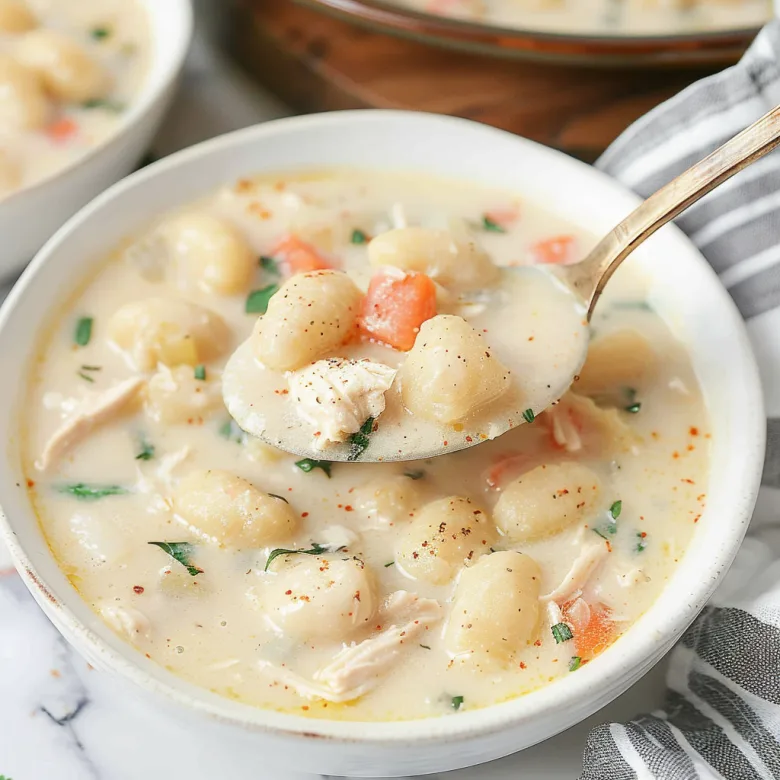
This Olive Garden Chicken Gnocchi Soup is a comforting and flavorful meal that’s surprisingly straightforward to recreate in your own kitchen. It’s become a staple for cozy nights and a dish my family always looks forward to.
Why This Olive Garden Chicken Gnocchi Soup Works
This recipe is a winner because it balances creamy richness with tender chicken and soft, pillowy gnocchi. The subtle herbaceous notes and savory broth make it satisfying without being overly heavy. It delivers that familiar, comforting flavor profile that makes Olive Garden’s version so popular, all from the convenience of home.
Ingredients
* 2 tablespoons olive oil
* 1 pound boneless, skinless chicken breasts or thighs, cut into bite-sized pieces
* 1 medium yellow onion, finely chopped
* 2 medium carrots, peeled and thinly sliced or diced
* 2 celery stalks, thinly sliced or diced
* 2 cloves garlic, minced
* 6 cups low-sodium chicken broth
* 1 teaspoon dried Italian seasoning
* 1/2 teaspoon salt, plus more to taste
* 1/4 teaspoon black pepper, plus more to taste
* 1/2 cup heavy cream
* 1 (16-ounce) package potato gnocchi (shelf-stable or refrigerated)
* 1/4 cup fresh parsley, chopped, for garnish
Let’s break down what makes these ingredients come together so beautifully. The olive oil acts as our base, providing a gentle foundation for sautéing our aromatics and chicken. We want good quality olive oil here, something with a pleasant, mild flavor that won’t overpower the other components. For the chicken, I’ve found that both breasts and thighs work well. Thighs tend to be a bit more forgiving and can yield a juicier result, while breasts are leaner. The key is to cut them into uniform, bite-sized pieces so they cook evenly and are easy to eat with the gnocchi.
The mirepoix – onion, carrots, and celery – is the aromatic backbone of so many soups, and this one is no exception. Finely chopping these vegetables ensures they soften and meld into the broth, releasing their sweet and savory notes. I often find myself slicing them rather than dicing for a slightly different texture, but either works. Carrots add a touch of sweetness and color, while celery provides a subtle earthy background.
Garlic, of course, is non-negotiable for unlocking deep flavor. Mincing it finely allows its pungent essence to distribute throughout the soup. For the liquid base, low-sodium chicken broth is my go-to. It provides the savory chicken flavor without making the soup too salty, giving us better control over the final seasoning.
Italian seasoning is a convenient blend that brings together herbs like oregano, basil, thyme, and rosemary – classic companions to chicken and creamy soups. A little bit of salt and pepper are essential for bringing all the flavors into focus. And then there’s the magic: heavy cream. This is what gives our soup its luxurious, velvety texture. It adds richness and balances the savory elements.
Finally, the star of the show besides the chicken: gnocchi. I prefer to use the shelf-stable kind that comes in a vacuum-sealed package as it’s readily available and cooks quite quickly. Refrigerated gnocchi also work, and fresh gnocchi from a deli counter can be absolutely divine if you have access to them. The type of gnocchi will slightly affect the cooking time, so keep an eye on them. Fresh parsley is our bright, herbaceous finish, adding a pop of color and freshness that cuts through the creaminess.
Try this recipe too: Easy Olive Garden Chicken Gnocchi Soup
How to Make It
1. Heat the olive oil in a large pot or Dutch oven over medium-high heat. Add the chicken pieces and cook until browned on all sides. Remove the chicken from the pot and set aside. This initial searing step is crucial for developing a rich flavor and creating a nice crust on the chicken, which adds depth to the entire soup. Don’t overcrowd the pan; cook the chicken in batches if necessary to ensure it browns properly rather than steams.
2. Add the chopped onion, carrots, and celery to the same pot. Cook, stirring occasionally, until softened, about 6-8 minutes. This is our aromatic base. Allowing these vegetables to sweat and soften gently releases their natural sugars and develops a sweeter, more rounded flavor before we add the liquid. Scrape up any browned bits left from the chicken; these are flavor gold!
3. Stir in the minced garlic and cook for another minute until fragrant. Be careful not to burn the garlic, as this can impart a bitter taste. Just a minute is usually sufficient to release its aromatic oils into the pot.
4. Pour in the chicken broth, scraping up any browned bits from the bottom of the pot. These bits carry a lot of flavor and will dissolve into the broth, enriching it significantly. Add the Italian seasoning, 1/2 teaspoon salt, and 1/4 teaspoon pepper. Bring the soup to a simmer. Giving the broth a moment to heat up allows the dried herbs to start rehydrating and releasing their flavors.
5. Return the browned chicken to the pot. Reduce the heat to low, cover, and let it simmer gently for 10-15 minutes, allowing the chicken to cook through and the flavors to meld. This gentle simmer ensures the chicken is tender and fully cooked without becoming tough or dry. It also allows the flavors from the chicken and vegetables to meld into the broth.
6. Stir in the heavy cream and bring the soup back to a gentle simmer, but do not boil. Warming the cream into the soup slowly is key to achieving a smooth, velvety texture without curdling. Boiling after adding cream can sometimes affect its consistency. A gentle simmer is all that’s needed to heat it through and integrate it.
7. Add the gnocchi to the simmering soup. Cook according to package directions, typically 2-4 minutes, or until the gnocchi float to the surface and are tender. Gnocchi cook very quickly. Overcooking will make them mushy and unappealing, so watch them closely. They are done as soon as they rise to the surface.
8. Taste the soup and adjust seasoning with additional salt and pepper as needed. This is a critical step. The amount of salt needed can vary greatly depending on the broth used and personal preference. Don’t be shy about tasting and adjusting!
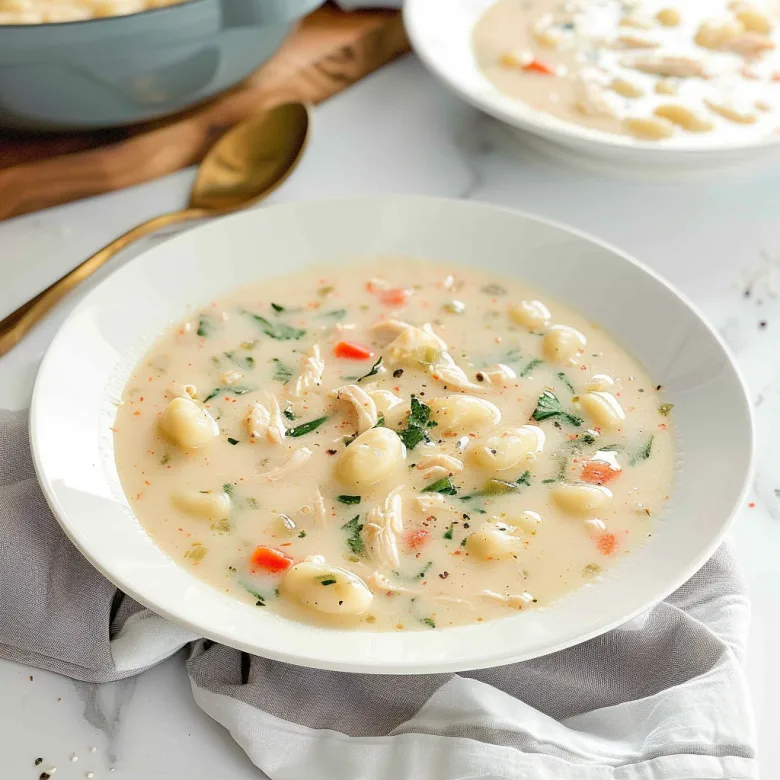
9. Ladle the hot soup into bowls and garnish with fresh chopped parsley before serving. The fresh parsley adds a bright contrast to the creamy soup and a lovely visual appeal.
This carefully orchestrated sequence of steps ensures that each ingredient contributes its best to the final dish. We begin by searing the chicken to lock in its juices and build a flavor base in the pot. Then, the vegetables are softened to release their natural sweetness and aromatics. The broth is added to create the soup’s body, followed by the chicken and seasonings to simmer and meld. The cream is introduced gently to achieve a luscious texture without curdling, and the gnocchi are cooked just until tender and floaty. Finally, a taste and a sprinkle of fresh parsley bring everything together for a truly satisfying bowl.
Nutrition at a Glance
* Calories: Varies based on exact ingredients and portion size, but typically in the range of 400-550 kcal per serving. This range accounts for variations in chicken fat content, the richness of the cream, and the specific type of gnocchi used.
* Protein: A good source, primarily from the chicken, contributing around 25-35g for muscle building and satiety. This makes it a filling and satisfying meal, supporting various bodily functions.
* Fat: Contains healthy fats and some saturated fat from the cream, roughly 20-30g. The type of fat is generally balanced, with monounsaturated fats from olive oil and saturated fats from cream.
* Carbohydrates: Primarily from the gnocchi and vegetables, providing essential energy, around 30-45g. The carbohydrates are a mix of complex from vegetables and simpler starches from the gnocchi.
* Fiber: Contributes a moderate amount from the vegetables, aiding digestion and promoting a feeling of fullness. The carrots and celery are the main contributors here.
* Sodium: Can be controlled by using low-sodium broth and adjusting added salt. This allows for a delicious soup without excessive sodium, making it a healthier choice for many.
It’s important to remember that these are approximate values. The actual nutritional breakdown will depend on the specific brands of ingredients you use, the exact quantities, and the size of your servings. For instance, opting for chicken thighs versus breasts might slightly alter the fat content, and the type of gnocchi can also influence carbohydrate and calorie counts. If you’re monitoring specific macronutrients or dietary needs, it’s always best to calculate them based on the ingredients you put into your soup. The use of low-sodium chicken broth is a key factor in managing sodium intake, and adding extra salt at the end allows for personalized seasoning without overdoing it from the start. The vegetables contribute valuable vitamins and minerals, making this soup more than just a comforting treat. They add essential nutrients like Vitamin A from carrots and various B vitamins and minerals from the other components, enhancing the overall health profile of the dish.
How to Serve It
* Serve hot, immediately after preparing. The texture and temperature of hot soup are at their peak for maximum enjoyment.
* Garnish generously with fresh chopped parsley for a burst of color and freshness. This adds a lively contrast to the rich, creamy soup.
* Accompany with crusty bread for dipping into the creamy broth. A good baguette or a rustic sourdough is ideal for soaking up every last drop of flavor.
* A simple side salad with a light vinaigrette complements the richness of the soup. The crispness of fresh greens provides a refreshing counterpoint to the hearty soup.
This soup is hearty enough to be a main course, especially when paired with some good bread. The freshness of the parsley really brightens the entire dish, so don’t skip that final flourish. The combination of the creamy, savory soup with warm, crusty bread is a classic for a reason – it’s pure comfort. Adding a side salad that isn’t too heavy or dressed can provide essential freshness and balance to the meal, contributing additional fiber and nutrients. Think of a mix of crisp lettuce, cucumber slices, and a light lemon-herb vinaigrette to cut through the creaminess without overwhelming the palate.
Common Mistakes
* Overcooking the Gnocchi: Gnocchi can become mushy if overcooked. They are done when they float to the surface and are tender. Cooking time is very short, often just a few minutes. If they start to break apart, they’ve gone too long.
* Boiling the Cream: Adding cream to a rapidly boiling soup can cause it to curdle. Bring the soup to a gentle simmer after adding cream. Heat it through slowly to maintain a smooth consistency.
* Not Sautéing Aromatics: Skipping the sautéing step for onions, carrots, and celery will result in a less developed flavor profile. This step builds the foundational layers of savory and sweet notes in the soup.
* Under-seasoning: Taste and adjust salt and pepper at the end; this is crucial for bringing out all the flavors. Soups often require more seasoning than you might think, especially after the broth has been diluted by other ingredients.
* Using Too Much Liquid: While you want enough broth, a soup that’s too thin might not have the same comforting body as intended. The balance between broth, cream, and solid ingredients is important for that signature thick, satisfying texture.
Getting the texture and flavor just right often comes down to a few key details. The gnocchi are delicate, and their cooking time is rather short, so paying attention to when they rise to the top is your best indicator. The cream is another sensitive ingredient; while it adds richness, it can be temperamental if subjected to high heat. Building that flavor foundation with the sautéed vegetables is a non-negotiable step for depth. And as always in cooking, tasting and adjusting your seasonings throughout the process, and especially before serving, is vital for a truly delicious outcome. Paying close attention to cooking times for each component ensures optimal texture and flavor integration. For example, the vegetables need enough time to soften and release their sweetness, while the gnocchi need to be cooked just until tender.
Storage and Reheating
* Storage: Store cooled soup in an airtight container in the refrigerator for up to 3-4 days. Ensuring the container is truly airtight will help maintain freshness and prevent odors from transferring. Labeling with the date can be helpful for tracking freshness.
* Reheating: Gently reheat on the stovetop over low heat, stirring occasionally, until heated through. Avoid boiling vigorously, especially after adding the cream. You may need to add a splash more broth or water if the soup has thickened. If the soup is very thick, a gentle simmer is preferred over a rolling boil.
Proper storage is key to enjoying leftovers safely and deliciously. Making sure the soup is completely cooled before transferring it to an airtight container helps prevent condensation and maintains its quality. When reheating, the goal is to warm it through without damaging the texture or curdling the cream. A gentle, slow heat on the stovetop is the best method. If you find the soup has become a bit too thick for your liking after refrigeration, a small amount of liquid can easily bring it back to your desired consistency. For example, a quarter cup of chicken broth or even water can be gradually added until the soup reaches the right texture.
Leftover Ideas
* Soup Base: Use the leftover soup as a base for a chicken pot pie filling by thickening it slightly and adding more cooked chicken and vegetables. The creamy broth is a fantastic starting point for this classic comfort dish, providing a rich, savory foundation.
* Sauce: Thicken any remaining broth and cream without the gnocchi and chicken to create a delicious sauce for pasta or chicken. This transforms the soup into a versatile sauce for weeknight meals, offering a quick and flavorful topping.
* Freezing: While gnocchi doesn’t freeze and reheat particularly well in soup, you can freeze the broth, chicken, and vegetable mixture. Thaw, reheat, and add fresh gnocchi when ready to serve. This method ensures you still enjoy the creamy soup with perfectly cooked gnocchi.
The versatility of this soup extends even to its leftovers. The creamy chicken and vegetable broth can be a foundation for other dishes, adding a comforting layer of flavor. Even if the gnocchi aren’t ideal for extended freezing of the entire soup, the core components still offer a great starting point for future meals. Freezing the broth base without the gnocchi ensures a convenient way to enjoy the soup’s flavors again, by just adding fresh gnocchi at the end of the reheating process. This approach allows you to reduce food waste and get even more enjoyment from this comforting recipe.
PrintOlive Garden Chicken Gnocchi Soup
- Total Time: 45 minutes
- Yield: 6 servings 1x
Description
A creamy and comforting soup featuring tender chicken, soft gnocchi, and wholesome vegetables, a delightful homemade version of the Olive Garden classic.
Ingredients
- 2 tablespoons olive oil
- 1 pound boneless, skinless chicken breasts or thighs, cut into bite-sized pieces
- 1 medium yellow onion, finely chopped
- 2 medium carrots, peeled and thinly sliced or diced
- 2 celery stalks, thinly sliced or diced
- 2 cloves garlic, minced
- 6 cups low-sodium chicken broth
- 1 teaspoon dried Italian seasoning
- 1/2 teaspoon salt, plus more to taste
- 1/4 teaspoon black pepper, plus more to taste
- 1/2 cup heavy cream
- 1 (16-ounce) package potato gnocchi (shelf-stable or refrigerated)
- 1/4 cup fresh parsley, chopped, for garnish
Instructions
- 1. Heat the olive oil in a large pot or Dutch oven over medium-high heat. Add the chicken pieces and cook until browned on all sides. Remove the chicken from the pot and set aside.
- 2. Add the chopped onion, carrots, and celery to the same pot. Cook, stirring occasionally, until softened, about 6-8 minutes.
- 3. Stir in the minced garlic and cook for another minute until fragrant.
- 4. Pour in the chicken broth, scraping up any browned bits from the bottom of the pot. Add the Italian seasoning, 1/2 teaspoon salt, and 1/4 teaspoon pepper. Bring the soup to a simmer.
- 5. Return the browned chicken to the pot. Reduce the heat to low, cover, and let it simmer gently for 10-15 minutes, allowing the chicken to cook through and the flavors to meld.
- 6. Stir in the heavy cream and bring the soup back to a gentle simmer, but do not boil.
- 7. Add the gnocchi to the simmering soup. Cook according to package directions, typically 2-4 minutes, or until the gnocchi float to the surface and are tender.
- 8. Taste the soup and adjust seasoning with additional salt and pepper as needed.
- 9. Ladle the hot soup into bowls and garnish with fresh chopped parsley before serving.
Notes
Store cooled soup in an airtight container in the refrigerator for up to 3-4 days. Gently reheat on the stovetop over low heat, stirring occasionally, until heated through. Avoid boiling vigorously, especially after adding the cream. You may need to add a splash more broth or water if the soup has thickened.
- Prep Time: 15 minutes
- Cook Time: 30 minutes
- Category: Soup
- Method: Stovetop
- Cuisine: American
Nutrition
- Serving Size: 1.5 cups
- Calories: 475
- Sugar: 6g
- Sodium: 950mg
- Fat: 25g
- Carbohydrates: 35g
- Fiber: 3g
- Protein: 30g
2 thoughts on “Easy Olive Garden Chicken Gnocchi Soup Recipe – Homemade Comfort”