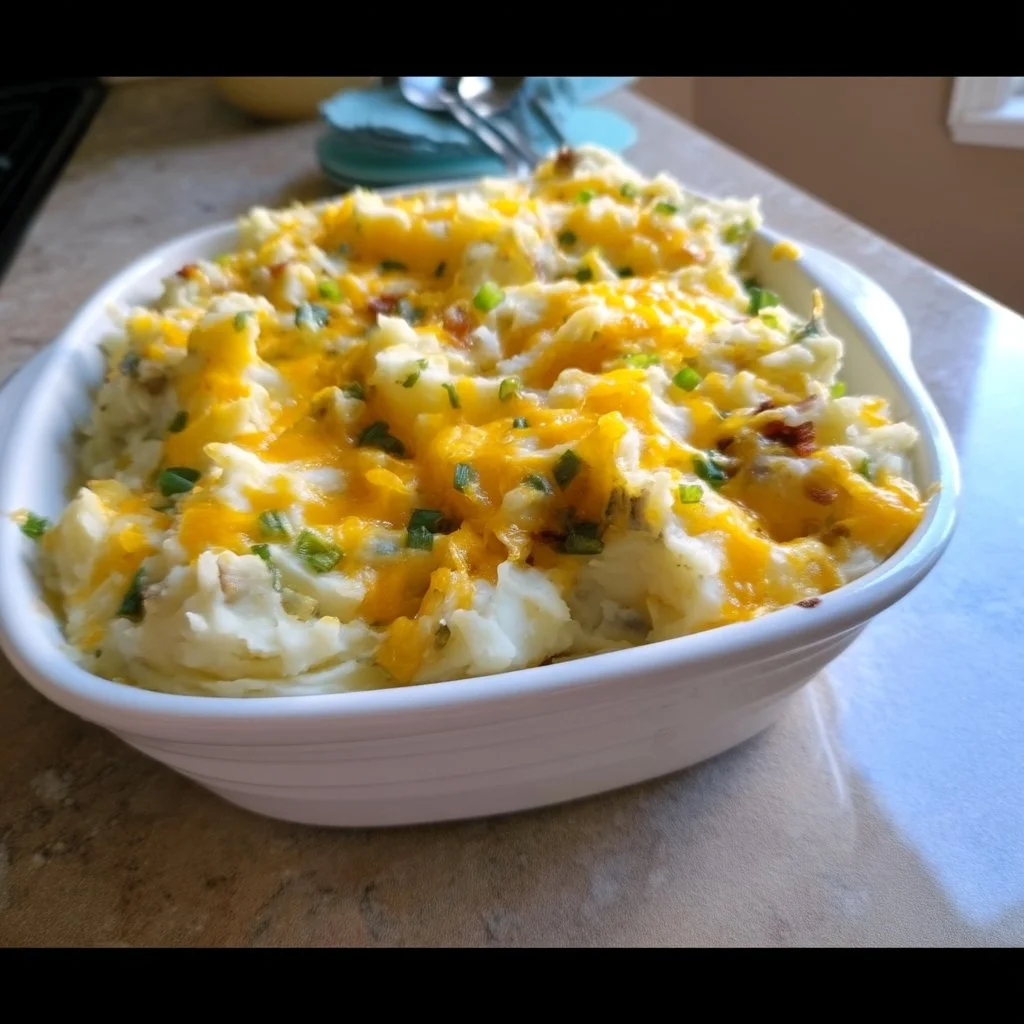
This is what I reach for on the nights I’m running on empty, and I need something warm and filling. Cheese melts as the casserole bakes, and potatoes soften into something creamy. Serve it straight from the pan. Firms up overnight; reheat covered at 350°F. This is easy and good.
What Makes This Casserole Reliable
Mash the potatoes smooth before mixing with cheese; lumpy potatoes ruin the casserole. Use freshly grated cheese, not pre-shredded; it melts better and tastes richer. Mix everything gently so you don’t overwork the potatoes. Bake until the top is golden brown and the edges bubble. Let it rest 5 minutes before serving so it holds together when you scoop it.
Ingredients
- 2 pounds russet potatoes, peeled and cubed
- 1 cup sour cream
- 1 cup shredded cheddar cheese, plus more for topping
- 4 tablespoons butter, softened
- 1 teaspoon garlic powder
- Salt and pepper to taste
- 1/2 cup green onions, sliced (optional)
These ingredients come together to create a tasty casserole that provides both flavor and satisfaction.
How To Make It
- Preheat your oven to 350°F (175°C).
- In a large pot, cover the potatoes with cold water and bring to a boil, cooking until fork-tender, about 15 minutes.
- Drain the potatoes and return them to the pot. Add sour cream, cheddar cheese, butter, garlic powder, salt, and pepper.
- Mash until smooth and creamy, ensuring there are no lumps.
- Transfer the potato mixture to a greased baking dish. Top with additional cheese and green onions if desired.
- Bake for 25-30 minutes, or until the top is bubbly and golden brown.
This straightforward recipe is designed to minimize your effort while maximizing flavor.
Quick Substitutions
- Sour cream → Greek yogurt: This swap adds protein while keeping the creamy texture intact.
- Butter → Olive oil: A healthier fat option that still provides moisture.
- Cheddar cheese → Monterey Jack: For a milder flavor that melts beautifully.
- Green onions → Chives: Similar taste with a more delicate profile.
These substitutions allow for flexibility based on your preferences or pantry staples.
A Few Things Worth Knowing
Before diving into this recipe, consider that the creaminess of the casserole relies heavily on the mashing technique. Don’t rush; a well-mashed potato results in a smoother, more uniform texture. If you use pre-shredded cheese, be aware that it often contains anti-caking agents that can affect the melt. I learned the hard way that not allowing the casserole to cool slightly before serving can result in a messy dish; the texture solidifies as it sets.
What Can Go Wrong
- Using overcooked potatoes: This leads to a gluey texture. To avoid this, watch your cooking time closely.
- Not seasoning adequately: Under-seasoned mashed potatoes can taste bland. Always taste and adjust as necessary.
- Skipping the baking step: This step solidifies the mixture and enhances the flavors. Baking is vital for that perfect top layer.
Avoiding these pitfalls will elevate your dish.
Nutrition At A Glance
- Serving Size: 1 cup
- Calories: 300
- Protein: 8g
- Carbohydrates: 45g
- Fat: 12g
- Fiber: 3g
Understanding the nutritional aspect can help balance your meal planning.
Ways to Serve This
- With grilled chicken: The richness of the casserole offsets the light protein from the chicken.
- Alongside a hearty salad: This provides contrast in texture and freshness.
- As part of a holiday feast: It brings warmth and comfort to any gathering.
These pairing suggestions can enhance the overall dining experience.
How to Store It
- Fridge: Store leftovers in an airtight container for up to 3 days.
- Freezer: Can be frozen for up to 2 months for longer storage.
- Reheating: To reheat, bake at 350°F (175°C) for about 20 minutes, adding a splash of milk for creaminess. Expect the texture to be slightly different after chilling, but it will still be delicious.
Storing properly can extend the life of your dish while maintaining quality.
Using What’s Left
If you find yourself with leftover casserole, consider turning it into potato pancakes by mixing in an egg and pan-frying until crispy. Another great way to use leftovers is to make a shepherd’s pie variant by layering them under cooked ground beef or turkey. You can also enjoy them in a wrap with sautéed vegetables for a hearty lunch option.
In making this cheesy mashed potato casserole, you will learn the importance of mashing techniques and ingredient substitutions for the perfect texture. For your next attempt, try incorporating some sautéed vegetables into the mix to add a different dimension of flavor. This dish not only satisfies hunger, but it’s also a way to bring joy to a table, making it a solid addition to your recipe repertoire.
Print
Cheesy Mashed Potato Casserole
- Total Time: 45 minutes
- Yield: 6 servings 1x
- Diet: Vegetarian
Description
A warm and filling cheesy mashed potato casserole that softens into creamy goodness, perfect for serving straight from the pan.
Ingredients
- 2 pounds russet potatoes, peeled and cubed
- 1 cup sour cream
- 1 cup shredded cheddar cheese, plus more for topping
- 4 tablespoons butter, softened
- 1 teaspoon garlic powder
- Salt and pepper to taste
- 1/2 cup green onions, sliced (optional)
Instructions
- Preheat your oven to 350°F (175°C).
- Cover the potatoes with cold water and bring to a boil, cooking until fork-tender, about 15 minutes.
- Drain the potatoes and return them to the pot. Add sour cream, cheddar cheese, butter, garlic powder, salt, and pepper.
- Mash until smooth and creamy, ensuring there are no lumps.
- Transfer the potato mixture to a greased baking dish. Top with additional cheese and green onions if desired.
- Bake for 25-30 minutes, or until the top is bubbly and golden brown.
Notes
Allow the casserole to rest for 5 minutes before serving for better texture. Consider using freshly grated cheese for optimal melting.
- Prep Time: 15 minutes
- Cook Time: 30 minutes
- Category: Side Dish
- Method: Baking
- Cuisine: American
Nutrition
- Serving Size: 1 cup
- Calories: 300
- Sugar: 2g
- Sodium: 500mg
- Fat: 12g
- Saturated Fat: 7g
- Unsaturated Fat: 4g
- Trans Fat: 0g
- Carbohydrates: 45g
- Fiber: 3g
- Protein: 8g
- Cholesterol: 30mg