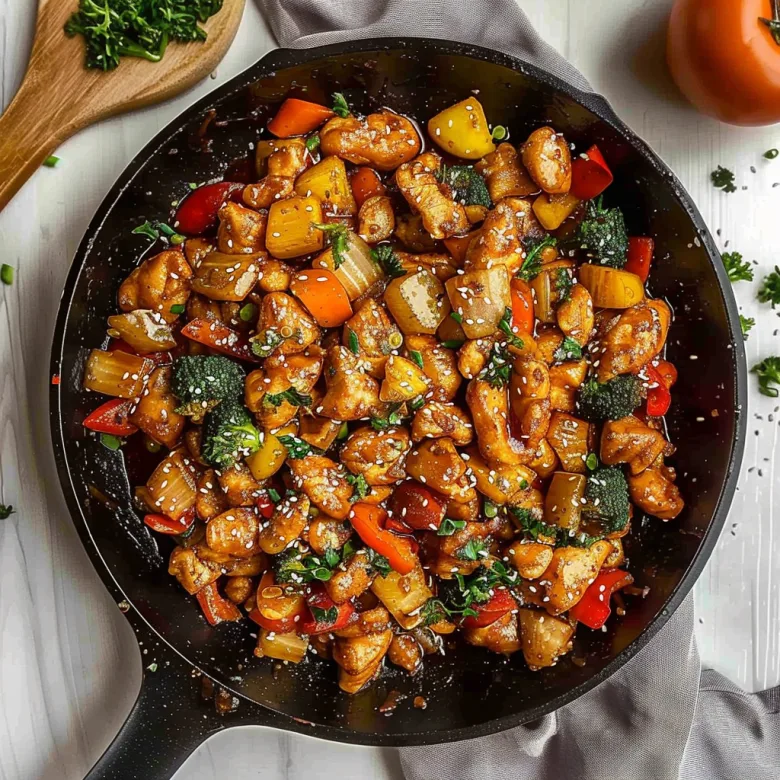
After years of ordering expensive takeout that always left me wanting more flavor, I cracked the code on what makes restaurant-style chicken stir fry actually work at home. The secret isn’t fancy techniques or hard-to-find ingredients—it’s getting the sauce ratios exactly right and understanding how heat affects each component.
Why This Easy Chicken Stir Fry Works
Most home stir fries fail because people dump everything in the pan at once, creating a steamy mess instead of the crispy, saucy dish you’re craving. This method uses proper timing and a balanced sauce that coats without overwhelming. The chicken stays tender, vegetables keep their bite, and every piece gets evenly coated.
Ingredients
For the chicken and vegetables:
- 1½ pounds boneless, skinless chicken thighs, cut into bite-sized pieces
- 2 tablespoons cornstarch
- 1 teaspoon salt
- 3 tablespoons vegetable oil, divided
- 1 large red bell pepper, sliced into strips
- 1 large yellow bell pepper, sliced into strips
- 1 medium onion, sliced
- 3 cloves garlic, minced
- 1 tablespoon fresh ginger, minced
- 3 green onions, sliced diagonally
For the sauce:
- ¼ cup low-sodium soy sauce
- 2 tablespoons oyster sauce
- 1 tablespoon rice vinegar
- 1 teaspoon sesame oil
- 1 tablespoon brown sugar
- 1 tablespoon cornstarch
- 2 tablespoons water
- ¼ teaspoon red pepper flakes (optional)
These ingredients create the foundation for a stir fry that rivals any restaurant version, with each component playing a specific role in building layers of flavor and texture.
How to Make It
- Prepare the chicken: In a medium bowl, toss the chicken pieces with cornstarch and salt until evenly coated. This coating helps the chicken brown nicely and creates small pockets that hold onto the sauce. Let it sit for 10 minutes while you prep everything else.
- Make the sauce: In a small bowl, whisk together soy sauce, oyster sauce, rice vinegar, sesame oil, brown sugar, cornstarch, water, and red pepper flakes if using. Whisk until the cornstarch completely dissolves and no lumps remain. Set aside within easy reach of your stove.
- Prep all vegetables: Cut the bell peppers into uniform strips, slice the onion, mince the garlic and ginger, and slice the green onions. Having everything ready before you start cooking is crucial since stir frying moves quickly once you begin.
- Heat your pan: Heat 2 tablespoons of oil in a large wok or heavy-bottomed skillet over medium-high heat. The pan should be hot enough that a drop of water sizzles and evaporates immediately, but not smoking.
- Cook the chicken: Add the chicken pieces in a single layer, making sure not to overcrowd. Let them cook undisturbed for 3-4 minutes until golden brown on the bottom. Flip and cook another 2-3 minutes until cooked through. The internal temperature should reach 165°F. Transfer chicken to a plate.
- Cook the aromatics: Add the remaining tablespoon of oil to the same pan. Add minced garlic and ginger, stirring constantly for 30 seconds until fragrant. Don’t let them burn or they’ll become bitter.
- Add the vegetables: Add the sliced onion first and stir-fry for 2 minutes until it starts to soften. Then add the bell peppers and continue stir-frying for 3-4 minutes until they’re tender-crisp. The vegetables should still have some bite to them.
- Combine everything: Return the cooked chicken to the pan and toss with the vegetables. Give the sauce mixture a quick stir since the cornstarch settles, then pour it over the chicken and vegetables.
- Finish the dish: Stir everything together and cook for 1-2 minutes until the sauce thickens and coats all the ingredients evenly. The sauce should be glossy and cling to each piece without being gummy. Remove from heat and immediately sprinkle with sliced green onions.
- Serve immediately: Transfer to a serving platter or individual bowls and serve right away while everything is hot and the vegetables still have their crisp texture.
This method ensures each component cooks properly without overcooking the others, resulting in a balanced dish with varied textures and deep flavor throughout.
A recipe worth trying: Teriyaki Chicken Stir Fry
Nutrition at a Glance
- High protein content: Each serving provides approximately 35 grams of protein from the chicken thighs, supporting muscle maintenance and satiety
- Vitamin-rich vegetables: Bell peppers are loaded with vitamin C, providing more than 100% of your daily needs per serving
- Lower sodium option: Using low-sodium soy sauce reduces the total sodium content compared to typical takeout versions
- Balanced macronutrients: The combination of protein, healthy fats, and moderate carbohydrates creates a satisfying meal
- Antioxidant benefits: Garlic, ginger, and colorful peppers provide anti-inflammatory compounds
- Portion control: Home cooking allows you to control serving sizes and ingredient quality
- No artificial preservatives: Unlike restaurant versions, you control exactly what goes into your food
How to Serve It
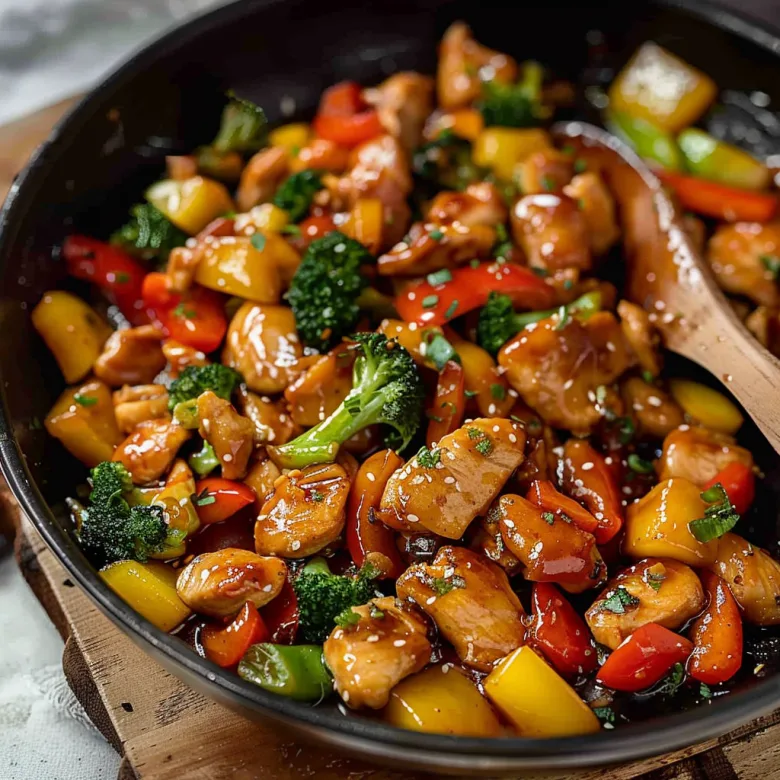
- Over steamed rice: Jasmine or brown rice soaks up the sauce beautifully and makes the meal more filling
- With rice noodles: Cooked rice noodles turn this into a complete one-bowl meal with different texture
- Alongside quinoa: For extra protein and a nuttier flavor profile that complements the Asian-inspired sauce
- In lettuce cups: Butter lettuce leaves make excellent low-carb wraps for a lighter option
- Over cauliflower rice: A lower-carb alternative that still absorbs the flavorful sauce
- With steamed broccoli: Add extra vegetables by serving over or alongside steamed broccoli florets
- In meal prep containers: Divide into individual portions with rice for easy weekday lunches
The versatility of this stir fry makes it suitable for various dietary preferences and serving styles, from casual family dinners to meal prep containers.
Common Mistakes
- Overcrowding the pan: This causes steaming instead of searing, resulting in soggy chicken and vegetables that lack the characteristic stir-fry texture
- Adding sauce too early: Pouring sauce over raw or partially cooked ingredients dilutes flavors and creates excess moisture
- Not preheating the pan enough: A properly heated pan is essential for achieving the slight char that gives stir fry its distinctive flavor
- Skipping the cornstarch coating: This step helps the chicken brown properly and creates surfaces that hold onto the sauce
- Overcooking the vegetables: Vegetables should retain some crunch; mushy peppers and onions indicate overcooking
- Not having ingredients prepped: Stir frying happens quickly, so having everything cut and ready prevents burning while you’re chopping
- Using the wrong oil: Oils with low smoke points break down under high heat, affecting flavor and creating smoke
- Making sauce too thick: Too much cornstarch creates a gluey consistency rather than a glossy coating
Avoiding these pitfalls ensures your stir fry has the right texture, flavor balance, and visual appeal that makes it superior to most takeout versions.
Storage and Reheating
- Refrigerator storage: Store leftovers in airtight containers for up to 4 days in the refrigerator
- Freezer storage: Freeze portions in freezer-safe containers for up to 3 months, though vegetables may lose some crispness
- Reheating in skillet: The best method is reheating in a large skillet over medium heat, stirring frequently until heated through
- Microwave reheating: Use 50% power in 1-minute intervals, stirring between each interval to heat evenly
- Adding moisture: If the dish seems dry when reheating, add a tablespoon of water or chicken broth
- Refreshing vegetables: Add fresh green onions or cilantro after reheating to brighten the flavors
- Portion control: Store in individual serving sizes for easy grab-and-go meals
Proper storage and reheating techniques help maintain the dish’s quality and ensure food safety while preserving as much of the original texture as possible.
Leftover Ideas
- Fried rice base: Chop the leftover stir fry and use it as a protein and vegetable component in fried rice
- Grain bowl topping: Serve cold or reheated over fresh greens, quinoa, or brown rice with additional vegetables
- Wrap filling: Use as filling for tortillas or flatbread with added lettuce and cucumber for crunch
- Soup addition: Add to chicken broth with noodles or rice for a quick Asian-inspired soup
- Omelet filling: Chop finely and use as a protein-rich filling for morning omelets
- Pizza topping: Use as a unique pizza topping with a light coating of hoisin sauce as the base
- Pasta integration: Toss with cooked noodles and a splash of sesame oil for fusion-style pasta
- Stuffed pepper filling: Mix with cooked rice and use to stuff bell peppers for a complete meal
These leftover transformations extend the life of your stir fry while creating entirely new meals that don’t feel like repeats.
The beauty of mastering this chicken stir fry lies not just in the immediate satisfaction of a well-cooked meal, but in the confidence it builds for tackling other stir fry combinations. Once you understand the timing and technique, you can swap proteins and vegetables based on what’s in your refrigerator or what’s on sale at the market. The sauce ratio remains consistent, serving as your reliable foundation for countless variations.
This recipe has become my go-to solution for busy weeknights when I want something more satisfying than basic grilled chicken but don’t want to spend an hour in the kitchen. The active cooking time is only about 15 minutes, but the results taste like you’ve been working much longer. The key is in the preparation and understanding that stir frying is about controlled high-heat cooking rather than simply throwing ingredients together.
I’ve served this to friends who regularly order Chinese takeout, and they’re always surprised by how much better the homemade version tastes. There’s something about the freshness of the vegetables, the quality of the chicken, and the balanced sauce that commercial kitchens often can’t match, especially when the food has to travel and sit in containers before reaching your table.
The sauce ratio in this recipe is the result of many experiments and adjustments. Too much soy sauce makes it overly salty, while too little leaves the dish bland. The oyster sauce adds depth without overwhelming other flavors, and the touch of rice vinegar provides just enough acidity to brighten everything up. The sesame oil, added at the end, gives that distinctive Asian flavor without becoming overpowering.
Temperature control throughout the cooking process makes the difference between restaurant-quality results and disappointing home attempts. The chicken needs to sear properly to develop flavor and maintain its texture, while the vegetables require just enough heat to become tender without losing their vibrant color and slight crunch. Managing these different requirements in the same pan is what separates successful stir fry from the soggy, overcooked versions that give home cooking a bad reputation.
PrintWhy This Easy Chicken Stir Fry Beats Takeout (It’s the Sauce Ratio)
- Total Time: 30 minutes
- Yield: 4 servings 1x
Description
A perfectly balanced chicken stir fry with tender chicken thighs, crisp vegetables, and a glossy sauce that coats every piece. The secret is proper timing and getting the sauce ratios exactly right.
Ingredients
- 1½ pounds boneless, skinless chicken thighs, cut into bite-sized pieces
- 2 tablespoons cornstarch
- 1 teaspoon salt
- 3 tablespoons vegetable oil, divided
- 1 large red bell pepper, sliced into strips
- 1 large yellow bell pepper, sliced into strips
- 1 medium onion, sliced
- 3 cloves garlic, minced
- 1 tablespoon fresh ginger, minced
- 3 green onions, sliced diagonally
- ¼ cup low-sodium soy sauce
- 2 tablespoons oyster sauce
- 1 tablespoon rice vinegar
- 1 teaspoon sesame oil
- 1 tablespoon brown sugar
- 1 tablespoon cornstarch
- 2 tablespoons water
- ¼ teaspoon red pepper flakes (optional)
Instructions
- 1. Toss chicken pieces with cornstarch and salt. Let sit 10 minutes.
- 2. Whisk together all sauce ingredients until smooth. Set aside.
- 3. Prep all vegetables and have them ready near the stove.
- 4. Heat 2 tablespoons oil in large wok or skillet over medium-high heat.
- 5. Cook chicken in single layer for 3-4 minutes per side until golden and cooked through. Transfer to plate.
- 6. Add remaining oil to pan. Stir-fry garlic and ginger for 30 seconds.
- 7. Add onion and stir-fry 2 minutes, then add bell peppers and cook 3-4 minutes until tender-crisp.
- 8. Return chicken to pan and toss with vegetables.
- 9. Stir sauce and pour over everything. Cook 1-2 minutes until sauce thickens.
- 10. Remove from heat and garnish with green onions. Serve immediately.
Notes
Store leftovers up to 4 days refrigerated. Best reheated in a skillet over medium heat. Chicken thighs stay more tender than breasts in this recipe.
- Prep Time: 15 minutes
- Cook Time: 15 minutes
- Category: Main Dish
- Method: Stir Fry
- Cuisine: Asian-Inspired
Nutrition
- Serving Size: 1 serving
- Calories: 380
- Sugar: 12g
- Sodium: 850mg
- Fat: 18g
- Carbohydrates: 22g
- Fiber: 3g
- Protein: 35g