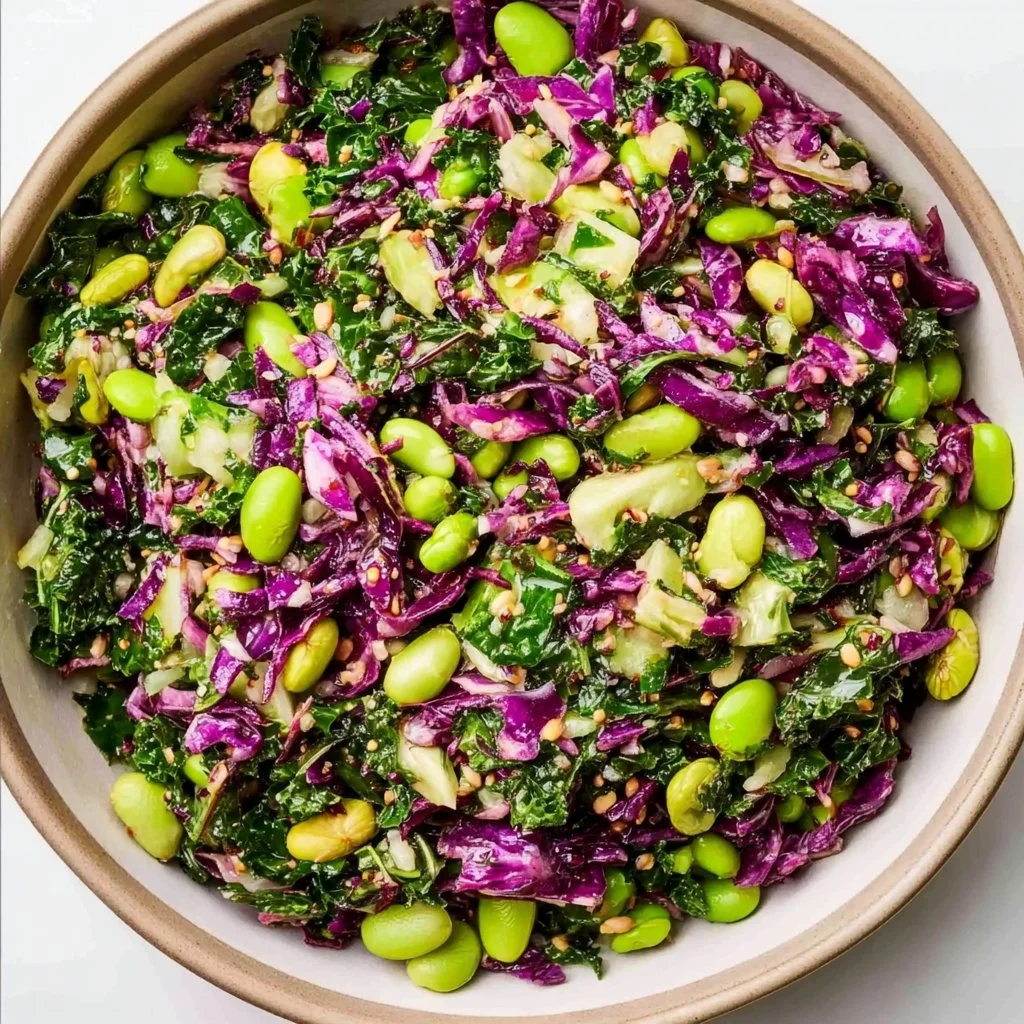
One crucial technique in this recipe involves properly preparing the soba noodles; skipping this step can lead to a clumpy texture that doesn’t complement the vibrant vegetables. The choice of white miso significantly impacts the depth of flavor, creating a subtle umami richness that balances the freshness of kale and cabbage. When finished, the bowl presents a visually appealing array of colorful ingredients, with the noodles warm and tender, while the vegetables remain crisp and vibrant.
Ingredient Lineup
- 1 large bunch kale ((about 4 packed cups chopped))
- 1/2 medium red cabbage ((about 4 packed cups chopped))
- 10 ounces shelled frozen edamame
- Drizzle of olive oil (or lemon juice)
- 1 teaspoon onion powder (optional)
- 1 teaspoon garlic powder (optional)
- 3/4 teaspoon sumac (optional)
- 1/2 teaspoon salt-free seasoning (or salt to taste)
- 3 scallions (thinly sliced (white and light green parts))
- 1/2 cup chopped cilantro (or parsley, mint, or basil)
- 1 tablespoon sesame seeds
- 1/2 cup unsalted peanuts (roughly chopped (optional))
- 1 1/2 tablespoons white miso (or mellow miso)
- 1 tablespoon tamari (or soy sauce (preferably reduced sodium))
- 3 tablespoons rice vinegar
- 2 cloves garlic (minced)
- 1 1/2 inches ginger (minced or grated)
- 1 tablespoon maple syrup (or date syrup (or to taste))
- 8 ounces soba noodles (or vermicelli noodles, quinoa, farro, or kamut (see notes))
Each ingredient plays a vital role in achieving the desired texture and flavor.
How To Make It
- For the raw salad: In a large bowl, combine chopped kale, red cabbage, edamame, chopped scallions, and cilantro. Toss everything until it evenly mixes, getting a good mix of colors and textures.
- For the cooked salad: Prepare soba noodles according to package instructions; they should be tender yet firm to the bite. Drain and rinse under cold water to stop the cooking process, so they don’t clump together.
- For the dressing: In a small bowl, whisk together miso, tamari, rice vinegar, minced garlic, ginger, and maple syrup. The mixture should have a smooth texture, and a fragrant aroma will tell you it’s ready.
- Combine everything: Add the cooked soba noodles to the bowl with the raw salad ingredients. Drizzle the dressing over the top and toss well to ensure that all components are coated.
- Optional for serving: Top with sesame seeds and chopped peanuts for added crunch and flavor. The bowl is ready once everything is well mixed and garnished.
This dish creates a harmony of flavors and textures.
Quick Substitutions
- Kale → Spinach: Spinach wilts down more quickly, so reduce cooking time to maintain freshness.
- Soba noodles → Quinoa: Quinoa absorbs more dressing; adjust the amount used to avoid overdressing.
- Tamari → Coconut aminos: Coconut aminos are sweeter, so reduce the maple syrup slightly to balance flavors.
- Maple syrup → Honey: Honey enhances sweetness but will change the texture slightly when mixed in.
Each substitution brings its own unique qualities to the dish, so feel free to experiment.
Tips Before You Start
When preparing the soba noodles, make sure not to overcook them; they should be al dente to prevent a mushy final dish. Also, if you add the dressing too early, the vegetables will wilt and lose their crispness, so wait until just before you serve to coat the salad. I once learned the hard way to taste as I go — a little more miso can enhance the overall depth, but too much can overwhelm the other flavors.
Common Mistakes to Avoid
- Overcooking the soba noodles: If they become too soft, they will lose their structure and texture. Keep an eye on the cooking time and taste them a minute before the package suggests.
- Adding the dressing too early: This can cause the vegetables to wilt and lose their vibrant colors. Always add the dressing just before serving to maintain freshness.
- Chopping vegetables too finely: Finely chopped veggies can get lost among the noodles, making for a less appealing bite. Aim for a variety of sizes to create a more visually interesting and texturally satisfying salad.
Nutrition Overview
- Serving size: 1 bowl
- Calories: 350
- Protein: 15g
- Carbohydrates: 45g
- Fat: 15g
- Fiber: 10g
This dish offers a balance of nutrients that can fuel your day.
Serving Ideas
- A light citrus vinaigrette pairs well as an added drizzle for zesty flavor.
- Grilled chicken or tofu makes a protein-rich addition that complements the existing ingredients.
- Steamed edamame sprinkled with sea salt enhances the overall snack factor.
- Serve it with a side of baked sweet potato for a sweet contrast.
This colorful feast can be paired with various sides to elevate meals.
Storage and Reheat
- Refrigerate leftovers in an airtight container for up to 3 days.
- Freezing is not recommended, as the texture will change significantly upon thawing.
- To reheat, warm gently in a pan over low heat, adding a splash of water to revitalize the noodles’ texture.
- Expect the flavors to deepen and meld overnight, enhancing the dish’s overall taste.
Enjoy the dish right away for the best texture and flavor.
What to Do With Leftovers
Use leftover salad as a filling for wraps with whole-grain tortillas, packed with additional greens for crunch. Alternatively, blend the leftovers into a nutrient-rich smoothie for a quick meal option that doesn’t waste any ingredients. These creative options ensure nothing goes to waste and provide delightful ways to revamp your leftovers.
If you’re looking for a hearty and nutritious meal, this Miso Bowl is a fantastic choice to whip up quickly.
Conclusion
Knowing the right timing for cooking soba noodles significantly impacts the texture of your Miso Bowl, making each bite a delightful experience. Consider trying a variation with different herbs, such as basil or mint, to switch up the flavor profile next time. The unique blend of ingredients and textures makes this dish a must-cook soon, especially for health-conscious meals that are satisfying and filling.
For further reading, explore this high-protein rice bowl with oven-baked miso tofu for another delicious take on integrating protein into your meals, or check out the miso ginger rice bowl for a different flavor twist.
Print
Miso Soba Noodle Bowl
- Total Time: 25 minutes
- Yield: 4 servings 1x
- Diet: Vegetarian
Description
A colorful Miso Soba Noodle Bowl packed with vibrant vegetables, tender noodles, and a delicious umami dressing.
Ingredients
- 1 large bunch kale (about 4 packed cups chopped)
- 1/2 medium red cabbage (about 4 packed cups chopped)
- 10 ounces shelled frozen edamame
- Drizzle of olive oil (or lemon juice)
- 1 teaspoon onion powder (optional)
- 1 teaspoon garlic powder (optional)
- 3/4 teaspoon sumac (optional)
- 1/2 teaspoon salt-free seasoning (or salt to taste)
- 3 scallions (thinly sliced, white and light green parts)
- 1/2 cup chopped cilantro (or parsley, mint, or basil)
- 1 tablespoon sesame seeds
- 1/2 cup unsalted peanuts (roughly chopped, optional)
- 1 1/2 tablespoons white miso (or mellow miso)
- 1 tablespoon tamari (or soy sauce, preferably reduced sodium)
- 3 tablespoons rice vinegar
- 2 cloves garlic (minced)
- 1 1/2 inches ginger (minced or grated)
- 1 tablespoon maple syrup (or date syrup, to taste)
- 8 ounces soba noodles (or vermicelli noodles, quinoa, farro, or kamut)
Instructions
- Combine chopped kale, red cabbage, edamame, chopped scallions, and cilantro in a large bowl. Toss until evenly mixed.
- Prepare soba noodles according to package instructions; they should be tender yet firm. Drain and rinse under cold water.
- Whisk together miso, tamari, rice vinegar, minced garlic, ginger, and maple syrup in a small bowl until smooth.
- Add the cooked soba noodles to the raw salad mixture. Drizzle the dressing over and toss to coat thoroughly.
- Top with sesame seeds and chopped peanuts if desired. Serve immediately.
Notes
Make sure not to overcook the soba noodles for the best texture. Add the dressing just before serving to keep the vegetables crisp.
- Prep Time: 15 minutes
- Cook Time: 10 minutes
- Category: Main Course
- Method: Bowling
- Cuisine: Asian
Nutrition
- Serving Size: 1 bowl
- Calories: 350
- Sugar: 5g
- Sodium: 400mg
- Fat: 15g
- Saturated Fat: 2g
- Unsaturated Fat: 10g
- Trans Fat: 0g
- Carbohydrates: 45g
- Fiber: 10g
- Protein: 15g
- Cholesterol: 0mg