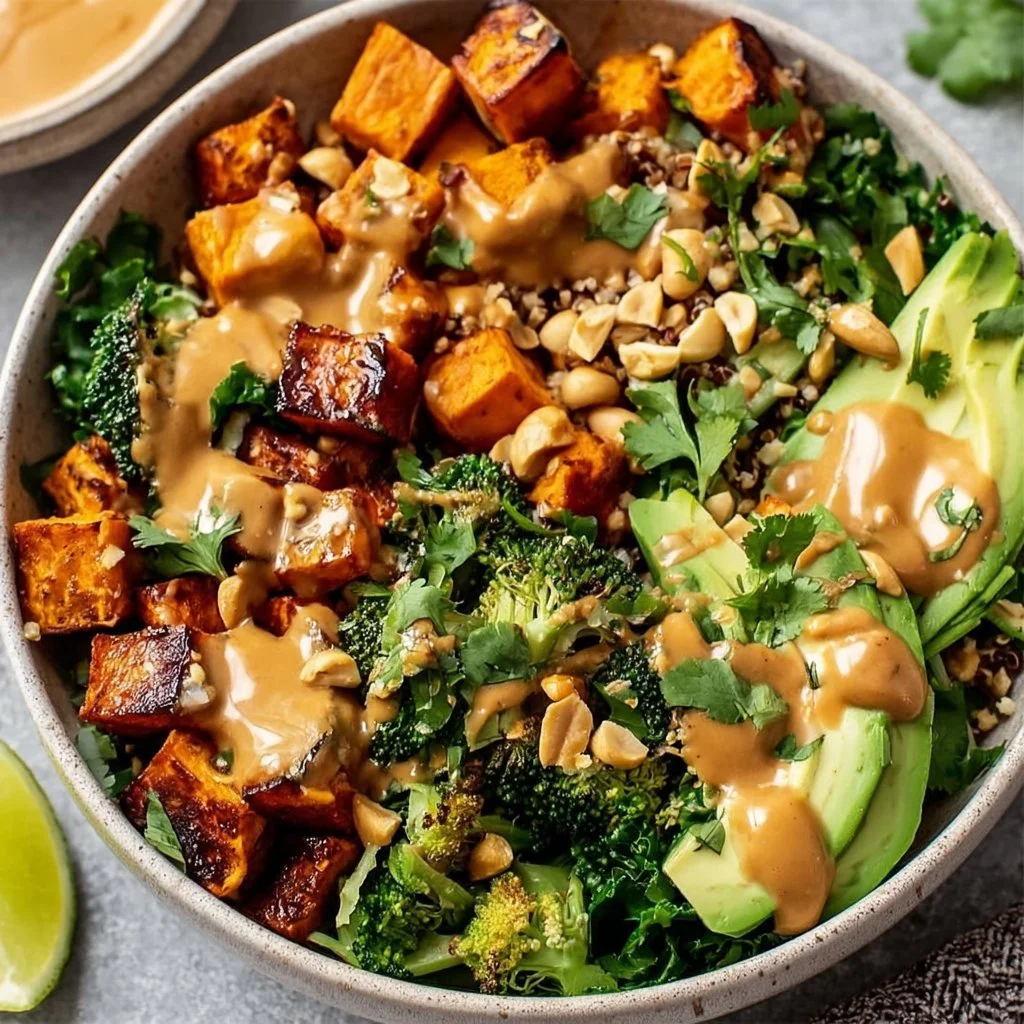
This Thai Peanut Sweet Potato Buddha Bowl makes for an excellent weeknight meal that comes together quickly. Roasting the sweet potatoes transforms them into a tender, caramelized component that combines beautifully with fresh, crunchy vegetables and a creamy peanut sauce. It’s the kind of dish that fits perfectly into a busy Tuesday or a relaxed Saturday evening, and it even shines as a meal prep option for the week ahead.
Why This Works
One of the keys to success in this dish is fully roasting the sweet potatoes. If you skip this step, you miss out on their rich, sweet flavor and necessary softness that balances the crunch of the other vegetables. Choosing ripe, colorful veggies such as red bell peppers and broccoli not only enhances the visual appeal but also adds layers of texture and nutrients to the final bowl. You’ll end up with a dish that’s both inviting and nutritious.
Ingredients
- 2 medium sweet potatoes, cubed
- 1 cup broccoli florets
- 1 red bell pepper, sliced
- 1 carrot, julienned
- 2 tablespoons olive oil
- Salt and pepper to taste
- 1 cup cooked quinoa or rice (for serving)
- 1/2 cup peanuts, chopped
- 1/4 cup fresh cilantro, chopped
- For the peanut sauce:
- 1/4 cup peanut butter
- 2 tablespoons soy sauce
- 1 tablespoon maple syrup
- 1 tablespoon lime juice
- Water to thin as needed
These ingredients provide a nutritious and colorful variety essential for a balanced meal. The sweetness of the potatoes pairs excellently with the savory peanut sauce.
How To Make It
- Preheat your oven to 400°F (200°C).
- Toss the cubed sweet potatoes with olive oil, salt, and pepper, and spread them on a baking sheet.
- Roast in the oven for about 25-30 minutes, or until they are fork-tender and slightly caramelized.
- Meanwhile, prepare the peanut sauce by whisking together peanut butter, soy sauce, maple syrup, lime juice, and enough water to achieve your desired consistency.
- In a large bowl, combine the roasted sweet potatoes, broccoli, red bell pepper, and carrot.
- Add cooked quinoa or rice to the bowl and drizzle with peanut sauce to taste.
- Top with chopped peanuts and fresh cilantro before serving.
Serving this dish warm showcases the lovely textures you’ve created throughout the cooking process.
Quick Substitutions
- Sweet Potatoes → Butternut Squash: This swap offers a similar sweetness but a slightly firmer texture.
- Broccoli → Green Beans: You’ll get a different crunch and cooking time; blanch them to maintain crispness.
- Red Bell Pepper → Carrots: If you prefer, use more carrots for added sweetness, though the final color will shift.
- Peanut Butter → Almond Butter: This will produce a similar creamy texture, with a milder flavor.
- Quinoa → Brown Rice: While slightly denser, brown rice provides a nutty flavor that works well with the dish.
These alternatives make it easy to customize based on personal preferences or what you have available.
Tips Before You Start
Before diving into this recipe, ensure your sweet potatoes are cubed uniformly for even cooking. It’s easy to overlook the importance of uniformity, but larger pieces will take longer to roast, resulting in an uneven texture. If you’re short on time, consider microwaving the sweet potatoes for a few minutes before roasting to speed things up. This dish also allows for flexibility in the veggies; if you have leftover vegetables in your fridge, feel free to throw them in. I’ve experimented with adding spinach before, and it works surprisingly well.
Common Mistakes to Avoid
- Skipping the Roasting Step: If you skip roasting the potatoes and just steam or boil them, you’ll lose the caramelization that adds depth to the flavor. Always allow enough time for them to roast properly.
- Not Adjusting for Sauce Thickness: Failing to thin the peanut sauce can result in a pasty mixture that clings unappealingly to the vegetables. Always add water gradually until it reaches your preferred consistency.
- Overcrowding the Baking Sheet: Packing too many sweet potatoes on a single sheet will lead them to steam instead of roast. Spread them out to ensure even exposure to the heat.
Avoiding these pitfalls will help you make a dish that’s not just good but genuinely enjoyable.
Nutrition At A Glance
- Serving Size: 1 bowl
- Calories: 450
- Protein: 15g
- Carbohydrates: 68g
- Fat: 18g
- Fiber: 10g
This overview gives you a snapshot of what nutrition you’re packing into each serving, supporting a balanced diet.
Serving Ideas
- With a Green Salad: A crisp and light salad balances the richness of the peanut sauce perfectly.
- Steamed Edamame: These add protein and a fresh, salty taste that complements the sweetness of the bowl.
- Coconut Rice: For a different take, serve it over coconut rice for a creamy, tropical nuance.
- Pickled Vegetables: Add crunch and acidity with a side of pickled cucumbers to cut through the richness.
These accompaniments help diversify your meal and can bring out the ingredients’ individual flavors even more.
Storage and Reheating
- Fridge Time: Store in an airtight container for up to 3 days.
- Freezing: Can be frozen for up to 2 months; just be aware that some vegetables may lose their crispness once thawed.
- Reheating: Reheat in the microwave at 350°F (175°C) for about 10 minutes, adding a splash of water to keep it moist. Expect the texture of the ingredients to soften slightly the next day.
While reheating, the sweet potatoes might become a bit mushy compared to their fresh state, but the flavors will continue to meld beautifully.
Leftover Ideas
Don’t let extras go to waste! Turn leftover roasted sweet potatoes into a hearty breakfast by mashing them with eggs for a filling scramble. Alternatively, mix them into a soup for added thickness and sweetness or toss them into a wrap with fresh greens and a drizzle of the remaining peanut sauce to make an easy lunch.
Making this Thai Peanut Sweet Potato Buddha Bowl will change how you approach weeknight meals, as you now understand the significance of proper roasting and balancing flavors. Next time you prepare this dish, consider adding a drizzle of sriracha to spice things up; it can add an excellent kick that complements the peanut sauce! Make it soon for a nourishing meal that fits seamlessly into your busy life.
Explore another wholesome option for dinner.
Print
Thai Peanut Sweet Potato Buddha Bowl
- Total Time: 45 minutes
- Yield: 4 servings 1x
- Diet: Vegetarian
Description
A nutritious and colorful Buddha bowl featuring roasted sweet potatoes, fresh vegetables, and a creamy peanut sauce.
Ingredients
- 2 medium sweet potatoes, cubed
- 1 cup broccoli florets
- 1 red bell pepper, sliced
- 1 carrot, julienned
- 2 tablespoons olive oil
- Salt and pepper to taste
- 1 cup cooked quinoa or rice (for serving)
- 1/2 cup peanuts, chopped
- 1/4 cup fresh cilantro, chopped
- 1/4 cup peanut butter (for the sauce)
- 2 tablespoons soy sauce (for the sauce)
- 1 tablespoon maple syrup (for the sauce)
- 1 tablespoon lime juice (for the sauce)
- Water to thin the sauce as needed
Instructions
- Preheat your oven to 400°F (200°C).
- Toss the cubed sweet potatoes with olive oil, salt, and pepper, and spread them on a baking sheet.
- Roast in the oven for about 25-30 minutes, or until they are fork-tender and slightly caramelized.
- Meanwhile, prepare the peanut sauce by whisking together peanut butter, soy sauce, maple syrup, lime juice, and enough water to achieve your desired consistency.
- In a large bowl, combine the roasted sweet potatoes, broccoli, red bell pepper, and carrot.
- Add cooked quinoa or rice to the bowl and drizzle with peanut sauce to taste.
- Top with chopped peanuts and fresh cilantro before serving.
Notes
Ensure sweet potatoes are cubed uniformly for even cooking. Consider microwaving them briefly before roasting to save time.
- Prep Time: 15 minutes
- Cook Time: 30 minutes
- Category: Main Course
- Method: Baking
- Cuisine: Thai
Nutrition
- Serving Size: 1 serving
- Calories: 450
- Sugar: 10g
- Sodium: 600mg
- Fat: 18g
- Saturated Fat: 4g
- Unsaturated Fat: 12g
- Trans Fat: 0g
- Carbohydrates: 68g
- Fiber: 10g
- Protein: 15g
- Cholesterol: 0mg