
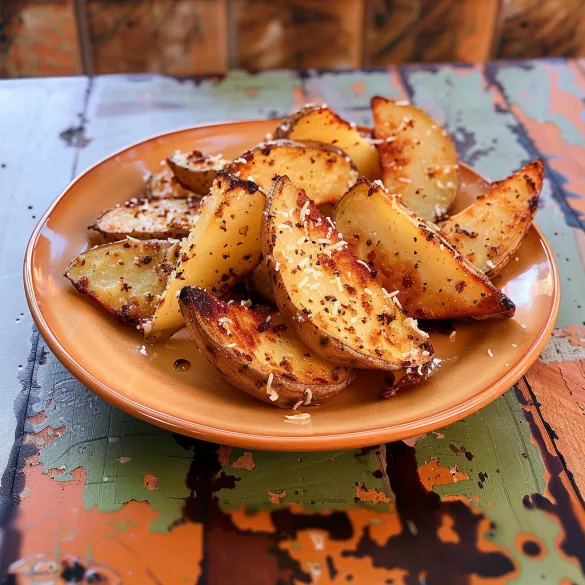
There are some dishes that just scream comfort. They’re the ones you crave after a long day, the side dishes that elevate a simple meal, and the snacks that always hit the spot. Garlic Parmesan Potato Wedges fall squarely into that category.
Why These Garlic Parmesan Potato Wedges Work
This recipe hits all the right notes for a fantastic baked potato side. The key is in how we prepare the potatoes: a good coating of oil ensures crispiness, while the combination of garlic and Parmesan delivers a deeply savory experience.
Ingredients
- Potatoes: About 2 pounds of starchy or all-purpose potatoes. Yukon Golds, Russets, or even red potatoes work well. The choice of potato can influence the final texture; Russets tend to be fluffier, while Yukon Golds offer a creamier texture.
- Olive Oil: 3-4 tablespoons. A good quality extra virgin olive oil is always a great choice for flavor, but any good cooking olive oil will do. The oil is crucial for achieving those desirable crispy edges.
- Garlic Powder: 1-2 teaspoons. Fresh garlic can be a bit tricky to coat evenly and can burn easily in the oven, so garlic powder is my go-to for consistent flavor throughout. It distributes much more evenly over the potato wedges, ensuring every bite gets a good dose of that garlicky aroma and taste.
- Salt: 1 teaspoon, or to taste. This is essential for bringing out the natural flavor of the potatoes and enhancing all the other seasonings. I use kosher salt as it’s easier to grip and sprinkle, and its larger flakes dissolve well. Adjust this based on your preference and the saltiness of your Parmesan.
- Black Pepper: 1/2 teaspoon, or to taste. Freshly ground black pepper generally has a more potent flavor than pre-ground. It adds a subtle warmth and a touch of complexity that complements the other flavors.
- Grated Parmesan Cheese: 1/2 cup. Use freshly grated Parmesan for the best flavor and melting quality. Pre-shredded cheeses often contain anti-caking agents that can affect how well they melt. I like to use a combination of finely grated Parmesan for distribution and then a slightly coarser grate for more distinct cheesy bits.
- Fresh Parsley: 2 tablespoons, chopped (optional, for garnish). A sprinkle of fresh parsley at the end adds a pop of color and a fresh, herbaceous note that brightens the whole dish. It’s purely for aesthetic and a subtle flavor boost, but it does make a difference visually.
This simple list of ingredients allows us to create something truly special. The quality of your ingredients, especially the olive oil and Parmesan, will certainly impact the final outcome, so using good ones is always encouraged.
How to Make It
- Preheat the Oven and Prepare the Baking Sheet: Begin by preheating your oven to 400°F (200°C). This temperature is crucial for getting the potatoes nicely browned and crispy. I recommend lining a large baking sheet with parchment paper or aluminum foil. This not only makes cleanup a breeze but also helps prevent the potato wedges from sticking, ensuring they brown evenly. You want a baking sheet that gives the wedges enough space; overcrowding them will steam the potatoes instead of roasting them, leading to a less desirable texture.
- Wash and Cut the Potatoes: Thoroughly wash the potatoes under cool running water. You can peel them if you prefer, but I often leave the skins on for added fiber and a more rustic presentation. Cut each potato in half lengthwise, and then cut each half into wedges. Aim for wedges that are roughly 1/2 to 3/4 inch thick. Consistency in size is important so that all the wedges cook evenly. If some are much thicker than others, they might not be as crispy as their thinner counterparts. I find that cutting them into about 6-8 wedges per potato usually works well, depending on the potato’s size.
- Season the Potatoes: In a large bowl, toss the potato wedges with the olive oil, garlic powder, salt, and black pepper. Ensure each wedge is evenly coated. This step is critical for flavor and crispiness. I like to use my hands for this, ensuring every surface and crevice of the potato is touched by the oil and seasonings. If the bowl feels too small, transfer the mixture to a larger one. You want to make sure there’s enough room to toss without crushing the wedges.
- Arrange on the Baking Sheet: Spread the seasoned potato wedges in a single layer on the prepared baking sheet. Make sure the cut sides are mostly facing down, if possible, to maximize contact with the hot pan and promote crisping. Again, avoid overcrowding the pan. If necessary, use two baking sheets, as this is essential for achieving crispy edges rather than steamed, soft potatoes. Proper spacing allows hot air to circulate around each wedge, leading to that coveted golden-brown exterior.
- First Bake: Place the baking sheet in the preheated oven and bake for 20 minutes. This initial bake starts the cooking process and begins to soften the potatoes while kickstarting the browning.
- Add Parmesan and Continue Baking: After 20 minutes, carefully remove the baking sheet from the oven. Sprinkle the grated Parmesan cheese evenly over the potato wedges. Gently toss the wedges on the baking sheet to distribute the cheese and expose different sides to the heat. Return the baking sheet to the oven and bake for another 15-20 minutes, or until the potatoes are tender on the inside, golden brown, and crispy on the outside, and the Parmesan cheese is melted and slightly browned. Keep an eye on them during this second bake, as ovens can vary, and you don’t want the cheese to burn.
- Garnish and Serve: Once done, remove the wedges from the oven. If using, sprinkle with fresh chopped parsley for a touch of color and freshness. Serve immediately while hot and crispy.
These steps, when followed, result in wedges that are wonderfully textured and full of flavor, making them a reliable favorite.
Don’t miss this delicious recipe: Easy Hasselback Potatoes Recipe
Nutrition at a Glance
- Calories: Typically in the range of 200-300 calories per serving, depending on portion size and potato type.
- Carbohydrates: A primary source of energy, with complex carbohydrates offering sustained fuel.
- Fiber: Especially when skins are left on, contributing to digestive health.
- Protein: A modest amount, mainly from the Parmesan cheese.
- Fat: Primarily from the olive oil and Parmesan, contributing to satiety and flavor.
- Vitamins and Minerals: Potatoes contain potassium, Vitamin C, and B vitamins. Parmesan cheese adds calcium.
It’s important to remember that this is a side dish, and its nutritional profile should be considered within the context of the entire meal.
How to Serve It
- With Grilled or Roasted Meats: They are a classic accompaniment to steaks, burgers, chicken, pork chops, and roasts. Their heartiness stands up well to richer flavors.
- Alongside Fish: Baked or pan-seared fish, like salmon or cod, also benefits from the comforting texture and savory notes of these wedges.
- With Sandwiches and Wraps: Elevate a simple sandwich or wrap by serving these wedges instead of fries. They offer a more sophisticated flavor profile.
- As a Vegetarian Main (with additions): For a vegetarian meal, serve them with a large salad or alongside grilled Halloumi or a hearty lentil loaf. You could also top them with extra cheese, chives, or sour cream for a more substantial dish.
- Party Appetizer: Served in a bowl with a dipping sauce (like aioli or a spicy ketchup), they make a fantastic appetizer for gatherings.
Their comforting nature makes them suitable for almost any meal, from casual weeknight dinners to more festive occasions.
Common Mistakes
- Overcrowding the Baking Sheet: This is probably the most frequent mistake. When wedges are packed too tightly, they steam instead of roast, resulting in a soft, limp texture rather than crispy edges. Always ensure there’s ample space between each wedge for air circulation. Using two baking sheets is often better than cramming them onto one.
- Not Preheating the Oven Properly: A hot oven is essential for achieving crispiness. If the oven isn’t fully preheated, the potatoes won’t start to brown and crisp as quickly, compromising the final texture. Give your oven at least 15-20 minutes to reach the target temperature.
- Cutting Wedges Inconsistently: If your wedges are of varying thicknesses, they will cook at different rates. Some may become overcooked and burnt before others are even tender. Try to cut them as uniformly as possible for even cooking.
- Skipping the Olive Oil or Using Too Little: The oil is key for browning and crisping. Without enough oil, the potatoes can stick to the pan and won’t develop that appealing golden-brown exterior. Ensure each wedge is well-coated.
- Burning the Parmesan: While we want the cheese to melt and get a little golden, it can burn quickly if the oven temperature is too high in the final stages, or if left in for too long. Keep an eye on them during the last 10-15 minutes of baking.
- Not Seasoning Enough: Potatoes, especially without salt, can be quite bland. Don’t be shy with the salt and pepper; it truly enhances the natural flavor of the potato and balances the richness of the cheese.
Avoiding these common errors will set you on the path to consistently delicious Garlic Parmesan Potato Wedges.
Storage and Reheating
- Storage: Once fully cooled, store any leftover potato wedges in an airtight container or a resealable plastic bag in the refrigerator. They will typically keep for 3-4 days. It’s important to ensure they are completely cool before storing to prevent condensation, which can make them soggy.
- Reheating: For the best results, reheat them in a single layer on a baking sheet in a preheated oven at around 375°F (190°C) for 10-15 minutes. This helps to crisp them up again. Alternatively, you can use an air fryer at a similar temperature for about 5-8 minutes, checking frequently. Microwaving is an option for a quick reheat, but it will result in a softer texture, so it’s usually my last resort for these.
Proper storage and reheating are key to enjoying these wedges even after their initial cooking.
Leftover Ideas
- Potato and Egg Scramble/Frittata: Chop up the leftover wedges and add them to your morning scramble or a frittata. The garlic and Parmesan flavors will meld beautifully with the eggs.
- Shepherd’s Pie Topping: If you’re making a small Shepherd’s Pie or Cottage Pie, these wedges can be mashedup or layered on top as a quick and flavorful alternative to traditional mashed potatoes.
- Loaded Potato Wedges: Reheat the wedges and top them with your favorite loaded potato toppings like shredded cheese, bacon bits, sour cream, and chives for a quick and satisfying snack or light meal.
- Soup Croutons: Slice or chop the wedges into smaller pieces, re-crisp them in the oven or air fryer until very firm, and use them as interesting, flavorful croutons for hearty soups like French onion or a creamy broccoli soup.
- Side Dish Remix: Simply reheat and serve as a side dish again, perhaps with a different main course or an added dollop of pesto or sriracha mayo for a twist.
By thinking creatively, you can transform leftovers into entirely new and enjoyable meals.
Garlic Parmesan Potato Wedges: Easy Baked Comfort Food Side Dish
- Total Time: 50-55 minutes
- Yield: 4–6 servings 1x
- Diet: Vegetarian
Description
Learn how to make crispy, golden Garlic Parmesan Potato Wedges. This easy baked comfort food side dish recipe is simple, flavorful, and pairs with almost any meal. Perfect for weeknights or gatherings!
Ingredients
- 2 pounds starchy or all-purpose potatoes (Yukon Gold, Russet, or red potatoes)
- 3–4 tablespoons olive oil
- 1–2 teaspoons garlic powder
- 1 teaspoon salt, or to taste
- 1/2 teaspoon black pepper, or to taste
- 1/2 cup grated Parmesan cheese
- 2 tablespoons fresh parsley, chopped (optional, for garnish)
Instructions
- 1. Preheat your oven to 400°F (200°C). Line a large baking sheet with parchment paper or aluminum foil.
- 2. Wash the potatoes thoroughly. You can peel them if desired, but leaving the skins on is recommended for fiber and texture. Cut each potato in half lengthwise, and then cut each half into wedges approximately 1/2 to 3/4 inch thick.
- 3. In a large bowl, toss the potato wedges with olive oil, garlic powder, salt, and black pepper until evenly coated. Ensure every wedge is well-seasoned.
- 4. Arrange the seasoned potato wedges in a single layer on the prepared baking sheet, cut sides down if possible, ensuring they are not overcrowded. Use two baking sheets if necessary for even cooking and crisping.
- 5. Bake for 20 minutes.
- 6. Remove the baking sheet from the oven and sprinkle the grated Parmesan cheese evenly over the potato wedges. Gently toss the wedges on the baking sheet to distribute the cheese and expose different sides to the heat.
- 7. Return the baking sheet to the oven and bake for another 15-20 minutes, or until the potatoes are tender on the inside, golden brown, and crispy on the outside, and the Parmesan cheese is melted and lightly browned. Keep a close eye on them to prevent burning.
- 8. Remove from the oven. If using, sprinkle with fresh chopped parsley. Serve immediately while hot and crispy.
Notes
Store cooled leftovers in an airtight container in the refrigerator for up to 3-4 days. Reheat in a 375°F (190°C) oven for 10-15 minutes for best crispy results, or use an air fryer. Avoid microwaving if crispiness is desired.
- Prep Time: 15 minutes
- Cook Time: 35-40 minutes
- Category: Side Dish
- Method: Baked
- Cuisine: American
Nutrition
- Serving Size: 1 serving
- Calories: 250
- Sugar: 2g
- Sodium: 450mg
- Fat: 12g
- Carbohydrates: 30g
- Fiber: 4g
- Protein: 5g